Author name: Dheeraj

makhana-for-belly-fat-loss
Health

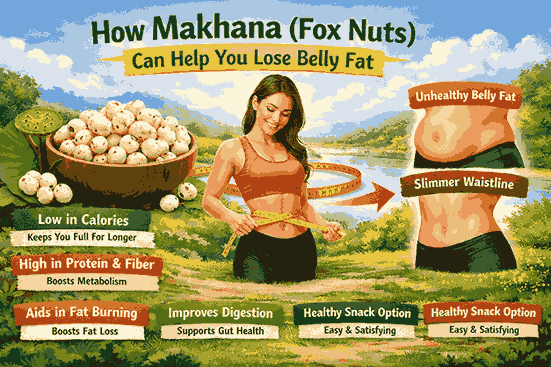
How Makhana (Fox Nuts) Can Help You Lose Belly Fat

Losing stubborn belly fat is a challenge many of us face, and surprisingly one tasty answer comes from an ancient snack: makhana (also called fox nuts or lotus seeds). These popped lotus seeds are very low in fat and calories yet rich in protein, fiber and other nutrients, making them an ideal snack for weight management. By keeping you fuller for longer and providing slow-release energy, fox nuts can help reduce overall calorie intake and specifically target abdominal fat. In this article we explore the science and benefits behind fox nuts for belly fat loss, compare its nutrition to common snacks, and share tips on how to enjoy it. Nutritional Powerhouse: What’s in Makhana? Makhana seeds are mostly starchy carbohydrates with a good amount of protein and almost no fat. Research shows typical fox nuts is about 70–77% carbs, 8–11% protein, and <0.5% fat by weight. In practical terms, 100 g of plain roasted fox nuts yields roughly 350–360 kcal, with about 9–10 g protein and virtually 0–1 g fat. By contrast, high-fat snacks like potato chips pack ~547 kcal and 37 g fat per 100 g. The very low fat and moderate protein in fox nuts means most calories come from complex carbs and fiber, not unhealthy fats. Moreover, makhana is a fiber-rich seed. Some sources estimate about 14–15 g fiber per 100 g. This high fiber content contributes bulk and slow digestion. Makhana also provides essential minerals – notably magnesium, potassium, calcium and iron – and antioxidants like gallic and ellagic acid. These micronutrients support metabolic health (magnesium and calcium are linked to better weight control). Overall, fox nuts is a nutrient-dense, low-calorie food, making it a smart snack choice for calorie control and satiety. Makhana vs Common Snacks (Nutrition Comparison) To see why makhana stands out, consider how it compares to other popular snacks. The table below compares 100 g servings of plain roasted fox nuts, air-popped popcorn, potato chips, and roasted peanuts: Snack Calories (per 100 g) Protein (g) Carbs (g) Fat (g) Fiber (g) Roasted Makhana ~350–360  ~9–10 ~76–77 ~0–1 ~14–15 Air-Popped Popcorn 387 12.9 77.8 4.5 14.5 Potato Chips 547 6.6 49.7 37.5 4.4 Roasted Peanuts 567 25.8 16.1 49.2 8.5 Table: Nutritional values per 100 g of makhana versus other snacks. Compared to chips or nuts, makhana is far lower in fat and calories. For example, potato chips have ~547 kcal and 37 g fat per 100 g, whereas makhana is around 350 kcal with <1 g fat. In terms of protein and fiber, makhana holds its own: it has about 9–10 g protein and a remarkable ~14–15 g fiber per 100 g, comparable to popcorn. High fiber and moderate protein mean more fullness for fewer calories. In practice, a small handful of roasted makhana (30–40 g) makes a crunchy snack that fills you up without blowing your calorie budget. Why Makhana Supports Belly Fat Loss 1. Low Energy Density, High Satiety A key to trimming belly fat is controlling overall calorie intake while staying satisfied. Makhana’s low fat and high fiber/protein make it energy-sparse yet filling. Nutrition experts note that foods with low calories per gram let you eat more volume for fewer calories. Indeed, makhana’s “low energy value per gram” means you can snack on a decent bowl without packing on calories. The fibrous bulk and protein also curb hunger: protein suppresses appetite by stabilizing blood sugar and hormone signals, while fiber slows digestion, prolonging fullness. In short, makhana helps you eat fewer snacks overall by making each serving more satisfying. 2. Complex Carbs & Stable Blood Sugar Unlike sugar-heavy snacks, makhana’s carbohydrates are complex and slow-digesting, which helps keep blood sugar steady. Times of India notes that fox nuts’ carbs release energy slowly, stabilising blood sugar and reducing sudden hunger pangs. This steady release prevents the insulin spikes and crashes that can trigger overeating. In effect, eating makhana means your body gets a slow burn of energy rather than a quick spike, which can help prevent the abdominal fat-storing hormones from flaring up. 3. Protein Content Protects Muscle and Metabolism Maintaining muscle mass is crucial when losing fat (including belly fat) because muscle burns more calories. Makhana offers a good plant protein boost for a snack. 100 g delivers around 9–10 g protein. Incorporating makhana into your diet “enhances your intake of protein,” helping to reduce cravings and preserve lean mass. In other words, its protein helps you stay toned and keeps your metabolism humming while you slim down. 4. High Fiber Fuels Gut Health and Fat Loss Fiber is a well-known ally in weight and belly-fat loss. Diets high in fiber predict better weight loss and dietary adherence, and research shows higher fiber intake is linked to less belly fat. Makhana’s high fiber content (~14 g per 100 g) acts as a natural appetite suppressant. Soluble fiber (which makhana contains) even feeds healthy gut bacteria; studies suggest good gut diversity is tied to lower belly fat. By keeping you full and supporting digestion, makhana’s fiber helps prevent overeating and targets abdominal fat reduction. 5. Beneficial Amino Acids (Fat “Burners”) Beyond macros, makhana contains amino acids that play roles in fat metabolism. Research on makhana composition finds it rich in leucine, lysine, methionine, etc.. Leucine (9–10 g per 100 g) is known to boost muscle synthesis and fat oxidation. Lysine and methionine are precursors to carnitine, a compound that helps transport fat into cells to be burned. One study notes that regular intake of makhana could “lead to production of the fat burner… carnitine” in the body. In short, eating makhana helps supply the building blocks for fat-burning processes. 6. Micronutrients that Aid Metabolism Makhana also provides key micronutrients linked to weight control. It contains notable magnesium (around 20 mg per 100 g in some varieties). Low magnesium status has been associated with obesity, while adequate intake supports healthy metabolism. Calcium and potassium in makhana further support fat metabolism and blood pressure control. Thus, by providing these minerals along with its low-sugar profile, makhana supports the metabolic balance needed to shed belly fat. Incorporating Makhana: Tips & Tricks Dietitians note that swapping in makhana for refined or fried snacks is a smart move. For example, instead of reaching for a pack of chips or cookies, munch on a bowl of roasted makhana. Its bulk and crunch feel like eating a lot (good

makhana-can-improve-digestion
Health

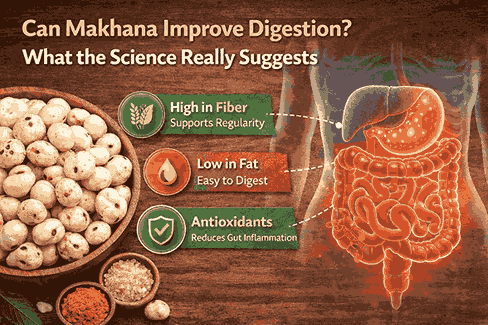
Can Makhana Improve Digestion? What the Science Really Suggests

If your stomach feels heavy after regular snacks, makhana can feel like a small relief. It is light, crunchy, easy to season, and far less greasy than many packaged munchies. But can fox nuts really improve digestion, or is that just another healthy-snack claim? The honest answer is this: makhana is not a miracle fix for digestive issues, but it may support better digestion in a few practical ways. Research suggests fox nuts are low in fat, contain fiber, and may provide some resistant starch. Those qualities matter because fiber helps stool move more easily through the digestive system, while resistant starch can act like food for beneficial gut microbes. Low-fat foods may also feel gentler for people who struggle with heaviness after oily snacks. That means the better question is not “Does fox nuts cure digestion problems?” but “Can makhana be a smarter snack choice for digestive comfort?” For many people, the answer is yes. Makhana vs Typical Snacks: Why Digestion Feels Different A lot of digestion trouble starts with the snack itself. Heavy namkeen, fried chips, overly spicy mixtures, and sugary treats can leave you feeling bloated, sluggish, or oddly unsatisfied. Makhana works differently because its basic profile is much simpler: low fat, decent fiber, and easy portion control. Research and industry summaries describe fox nuts as a low-fat, high-fiber food with strong protein digestibility. Quick comparison table Snack How it often feels after eating Digestion-friendly angle Deep-fried chips Heavy, greasy, easy to overeat Often harder on people who dislike oily foods Sugary biscuits Quick energy, low satiety Not much fiber; easy to snack mindlessly Spicy namkeen Tasty, but can feel irritating for some Salt, oil, and spice may not suit sensitive stomachs Makhana Light, airy, easier to portion Low fat, some fiber, versatile seasoning This does not mean makhana works the same way for everyone. If you roast it in too much butter, drown it in masala, or eat a huge bowl too fast, even fox nuts can feel uncomfortable. Digestion is not only about the ingredient; it is also about quantity, cooking style, and your own triggers. What in Makhana May Support Digestion? 1) Fiber may help bowel regularity One of the strongest reasons people link makhana with digestion is fiber. Lotus seed reviews report notable fiber content, and broad digestive-health guidance from NIDDK, NHS, and Mayo Clinic explains that fiber helps support bowel movement, adds bulk to stool, and lowers the risk of constipation when paired with enough fluid. So if your usual snacks are low in fiber, replacing some of them with makhana can be a practical improvement. Why this matters in real life Many people do not have a dramatic “digestive disease.” They just deal with: In that everyday context, a lighter, fiber-containing snack can make a difference over time. 2) Resistant starch may help feed the gut microbiome A review on underutilized therapeutic foods noted that fox nut starch contains resistant starch. Resistant starch is important because it escapes digestion in the small intestine and reaches the colon, where gut microbes ferment it. Mayo Clinic Press and a 2024 review describe resistant starch as a type of fuel for beneficial gut bacteria. This is one of the most interesting parts of the makhana story. Why that is exciting Resistant starch does not mean instant symptom relief. What it suggests is that fox nuts may fit into a gut-friendly eating pattern, especially when paired with other smart foods like curd, fruit, oats, or vegetables. In simple words:fox nuts may not “fix” your gut overnight, but it can play a supportive role in a digestion-friendly diet. 3) It is low in fat, which can feel lighter Digestive comfort is not only about fiber. For many people, greasy foods are the real problem. NIDDK notes that fatty or greasy foods can worsen indigestion symptoms in some people. Since makhana is naturally low in fat, it often feels easier than fried snacks, especially as an evening option. That “light” feeling is one reason makhana has such a strong word-of-mouth reputation. 4) Good digestibility adds to the appeal Recent reviews describe makhana as having good protein digestibility and high starch digestibility, which supports the idea that it can be a practical, easy-to-use snack ingredient. That does not make it medicinal. It simply means makhana is nutritionally easier to work into a balanced meal plan than many heavily processed alternatives. When Makhana May Help Digestion Most Makhana can be especially useful in these situations: As a replacement snack If you swap fried namkeen or chips for dry-roasted makhana, your stomach may feel less burdened simply because you reduced grease and improved snack quality. For portion-controlled snacking Makhana looks voluminous, so a modest serving can feel satisfying without the heaviness of oily snacks. In a simple gut-friendly combo Try makhana with: The overall meal pattern matters more than one “superfood.” When Makhana May Not Help This is where many blog posts become too generic, so let’s be real. Makhana may not help if: Also, adding more fiber too quickly can increase bloating for some people. Public health guidance recommends increasing fiber gradually and drinking enough fluids so your body adjusts properly. So yes, makhana can support digestion, but only inside a broader routine. Best Ways to Eat Makhana for Digestion Keep it simple The more heavily flavored it becomes, the less “gentle” it usually feels. Better options Less helpful options Chew it properly This sounds basic, but it matters. Eating too fast can make even light snacks feel uncomfortable. Pair it with water Fiber works better when your overall fluid intake is decent. A Fresh Perspective: Makhana Is Best Seen as a “Digestive Upgrade,” Not a Cure One reason makhana is worth talking about is that it solves a modern problem: people want a snack that feels enjoyable without wrecking their stomach. That is the real power of makhana. It is not a medicine. It is not a guaranteed remedy for bloating. It is not a substitute for

makhana-vs-protein-snacks
Fitnes

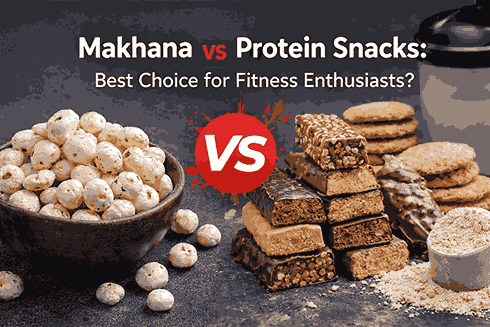
Makhana vs Protein Snacks: Best Choice for Fitness Enthusiasts?

Fitness fanatics often debate snack options: should you reach for crunchy makhana (fox nuts) or grab a high-protein bar? Makhana – the popped lotus seeds popular in South Asian diets – have surged in popularity as a “natural” healthy snack. But how do they truly compare to protein-rich alternatives? This deep dive examines the nutrition profiles, pros and cons, and expert insights on fox nuts vs common protein snacks, helping you choose the best fit for your workout goals. We’ll look at calories, macros, fibre, and micronutrients, and even share practical tips and snack ideas. Let’s crunch the numbers and debunk the myths, so you can snack smart. What Is Makhana (Fox Nut)? Makhana – also known as fox nuts or lotus seeds – are harvested from the aquatic lotus plant. They’re puffed by dry-roasting, producing a light, crisp texture (think popcorn-like crunch). Key facts: They’re naturally gluten-free, low in fat, and have a mild, nutty flavor. In Ayurvedic tradition and modern health circles, fox uts has earned a “superfood” reputation for its nutrient content and filling nature. According to Medanta Hospital’s nutrition team, 100g of plain, roasted makhana contains roughly 347 calories, 9.7g protein, 76.9g carbs and 14.5g fibre, with almost negligible fat (0.1g). In practical terms, one cup (about 32g) of these popped seeds has only ~106 calories and ~4.9g protein. This means you can enjoy a generous portion for relatively few calories, especially compared to oily chips or even some nuts. The high fibre and protein give fox nuts real substance – studies note that “adding makhana seeds to your diet can help increase your intake of protein and fibre… that may benefit weight loss”. Aside from macros, makhana packs micronutrients: calcium (≈60mg/100g), magnesium (≈67mg), phosphorus (≈188mg) and potassium (~500mg). These minerals support bone health and muscle function. Makhana also boasts antioxidants (like kaempferol and gallic acid), which may reduce exercise-induced oxidative stress. In short, while not a protein powerhouse, makhana is a nutrient-dense, low-fat snack that delivers steady carbs and fibre – a combo praised by dietitians for appetite control. Typical High-Protein Snacks Fitness enthusiasts have many snack options to boost protein intake. Popular choices include nuts and seeds, legumes, dairy, and dedicated protein products. For comparison: In practice, you might snack on a handful of nuts, a boiled egg (6g protein each), a scoop of protein powder, or turkey jerky. The common thread is protein density, which is often higher than makhana’s ~10–15% protein content. Nutrition Comparison The table below summarizes typical macronutrients for 100g servings of makhana and other popular protein snacks. (All values are approximations from credible sources.) Snack (100g) Calories Protein (g) Carbs (g) Fat (g) Fibre (g) Makhana (Fox Nuts) 347 9.7 76.9 0.1 14.5 Roasted Chana (Chickpeas) 355 18.6 58.6 6.3 16.8 Dry Roasted Peanuts 585 23.7 21.5 49.7 8.0 Greek Yogurt (Nonfat) 92 9.5 5.7 3.6 0 Protein Bar (avg) 350 33 37 12 5 Data sources: Medanta (makhana), FatSecret & USDA entries for chickpeas, peanuts, yogurt, and FitCommit (protein bar). This comparison highlights key differences: In short, makhana is a lightweight, high-volume snack: you can eat a large bowl for fewer calories. But it doesn’t compete with pure protein sources in protein content. Protein bars and animal/dairy-based snacks will best meet strict protein goals, whereas makhana shines as a low-fat, high-fibre filler. Fitness Pros and Cons Why fitness fans love makhana: They provide clean energy and satiety with minimal calories. Multiple experts note that makhana’s high complex carb and fibre content helps control appetite and stabilize blood sugar during workouts. For example, Healthline points out that adding makhana “can help increase your intake of protein and fiber… that may benefit weight loss”. A dietitian in an Apollo clinic similarly praises makhana’s low energy density: you get satisfying crunch and volume without excess fat or additives. In practice, this means swapping potato chips for roasted makhana lets you snack with fewer calories, aiding weight or fat loss goals. Makhana’s micronutrients are a bonus. It’s a good source of calcium and magnesium – key for bone strength and muscle function. Sundried Nutrition notes that makhana’s protein (albeit moderate) combined with its minerals “contribute to muscle repair and rebuilding after exercise”. Its flavonoids (kaempferol, gallic acid) have anti-inflammatory and antioxidant effects, which could help reduce post-workout soreness. Furthermore, makhana’s low glycemic index means its carbs release slowly. For endurance training, this is ideal: it provides sustained fuel without spiking insulin. Sundried suggests that consuming makhana as a pre-workout snack can “sustain energy throughout demanding training sessions”. Practically, munching on makhana 30–60 minutes before exercise can keep energy steady. Even indulgence is somewhat “cleaner” with makhana: plain roasted makhana contain no added sugar and very low sodium (unless heavily salted). This contrasts with many bars or chips that hide sugars, oils or preservatives. In the words of NDTV’s experts: “Fox nuts are low in calories, high in protein, and rich in antioxidants,” making them a preferred snack that “doesn’t make you gain weight” (as long as it’s minimally seasoned). Drawbacks of makhana: The trade-off is protein. At roughly 10g per 100g, you’d need to eat 3–4 servings of makhana to match one protein bar’s protein. For hard-training athletes or bodybuilders who target 1.2–1.6g/kg protein daily, makhana alone isn’t sufficient. (For perspective, a 70kg person might need ~84–112g protein/day.) Additionally, makhana has virtually no fat – which is good for calories but means you miss out on the healthy fats found in nuts and seeds that also support hormone and joint health. On the other side, traditional protein snacks have their own trade-offs: A dietitian quoted in the Hindustan Times highlights this balance: “Roasted makhana are light yet protein-rich, perfect for winter snacking. They are easy to digest and can be flavoured with mild spices”. The keyword here is “yet protein-rich” – lighter than most bars or nuts, but still contributing to protein needs. Other snacks like a boiled egg or yogurt might deliver similar protein without fat, but makhana offers that crispy snack experience. Incorporating Makhana into Your Fitness Diet How should a fitness enthusiast actually eat makhana? Here are some practical tips: Calories and nutrition aside, personal preference

makahan-fox-nuts
Basic

Where Are Fox Nuts (Makhana) Grown in India? The Untold Story Behind India’s

Introduction: The Hidden Journey of Makhana If you’ve ever enjoyed a bowl of crunchy makhana, you might have wondered—where does this unique snack actually come from? Unlike almonds or peanuts, fox nuts doesn’t grow on trees or underground. It comes from water. Yes, the humble fox nut (makhana) is an aquatic crop, deeply rooted in India’s traditional farming systems. India is not just a producer—it’s the global leader in fox nuts cultivation, contributing nearly 80–90% of the world’s supply. And at the heart of this industry lies one state: Bihar. But the story doesn’t end there. Let’s explore where fox nuts is grown in India, why certain regions dominate, and how this ancient crop is shaping livelihoods today. Where Is Makhana Grown in India? (Core Regions Explained) 1. Bihar – The Primary Source of Makhana in India When we talk about fox nuts, Bihar is the undisputed king. These regions fall under the Mithila belt, where natural wetlands and ponds create the perfect ecosystem for fox nuts cultivation. Why Bihar dominates: Fun insight: fox nuts farming here is not just agriculture—it’s a cultural identity. Many families have been cultivating it for decades. 2. West Bengal – The Emerging Player West Bengal is slowly becoming a strong contributor to fox nuts production. Why it works: 3. Assam & Northeast India – Untapped Potential The Northeast has huge potential but remains underutilized. Advantages: Challenges: 4. Eastern Uttar Pradesh – Small but Growing Some districts in eastern UP are experimenting with makhana farming: This region shares similar climatic conditions with Bihar, making it suitable for expansion. Comparison: Makhana Growing Regions in India Region Production Share Key Strength Growth Potential Bihar ⭐⭐⭐⭐⭐ (~80%) Expertise + natural wetlands High West Bengal ⭐⭐⭐ Similar geography + support High Assam/Northeast ⭐⭐ Untapped water resources Very High Uttar Pradesh ⭐⭐ Expanding cultivation Moderate Why Makhana Grows Only in Specific Regions? Not every place can grow fox nuts. It requires very specific conditions: Climate Requirements Water Conditions Soil Type This is why regions like Rajasthan or Punjab are not suitable for fox nuts cultivation. The Farming Process: Why It’s So Unique Makhana farming is unlike any other crop. Step-by-step: This labor-intensive process is why makhana is often considered a premium snack. Economic & Livelihood Impact Makhana is not just a crop—it’s a rural economy driver. According to data from organizations like the Indian Council of Agricultural Research, fox nuts cultivation is being promoted as a high-value crop for income growth. GI Tag & Bihar’s Global Identity Did you know? Bihar’s makhana has received a Geographical Indication (GI) tag, which means: This makes “Bihar Makhana” a premium global product. Key Insights You Should Know ✔ India dominates global fox nuts production✔ Bihar alone contributes ~80%✔ Makhana grows in water, not soil fields✔ Farming is labor-intensive but highly profitable✔ Northeast India could be the next big hub Conclusion: From Ponds to Premium Snack The journey of makhana is truly fascinating. From the still ponds of Bihar to modern snack shelves, it represents a perfect blend of tradition and nutrition. As demand for healthy snacks rises, fox nuts is not just surviving—it’s thriving. And for brands like Golmoti, this is a golden opportunity. Understanding where makhana is grown helps you build a strong brand story, something that connects emotionally with your audience. Call-to-Action (CTA) Loved learning about makhana’s origin? Share this article with someone who loves healthy snacks Explore more insights on Golmoti Or better—try premium makhana and experience the crunch yourself

Makhana-for-Skin-Glow
Health

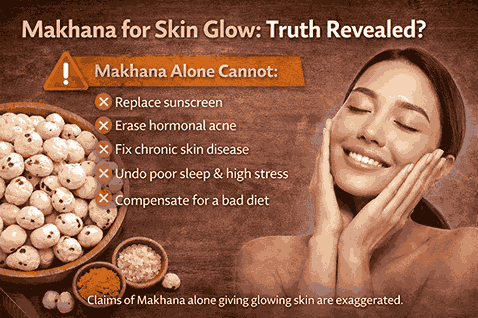
Makhana for Skin Glow: Truth Revealed?

Introduction: The idea sounds tempting: eat a handful of makhana every day, and your skin will start looking clearer, fresher, and more radiant. It is the kind of claim that spreads fast because it is simple, hopeful, and easy to remember. But skin does not work like a magic switch. A “glow” usually reflects a mix of factors: hydration, sleep, sun protection, hormones, stress, skincare habits, and overall diet. So the real question is not whether makhana is a miracle beauty food. The better question is this: can makhana support skin health as part of a balanced routine? Based on current nutrition and dermatology evidence, that is the more honest and useful answer. Reviews of fox nut nutrition describe fox nuts as a nutrient-dense food containing carbohydrates, protein, fiber, minerals, and polyphenols, while dermatology guidance emphasizes that healthy skin is supported by overall nutrition rather than one single food. So yes, makhana may have a place in a skin-friendly diet. But no, it should not be sold as a direct shortcut to instant glow. The Real Meaning of “Skin Glow” When people say their skin is “glowing,” they usually mean one or more of these things: Dermatology sources consistently tie healthy-looking skin to broader lifestyle foundations such as balanced nutrition, hydration, gentle skin care, and sun protection. The American Academy of Dermatology says that if you are a healthy adult without deficiencies, the best way to get the nutrients your skin needs is from a well-balanced diet, not from chasing miracle supplements. Mayo Clinic similarly recommends healthy eating, hydration, and daily skin-protection habits for better skin appearance. That is why makhana should be seen as one useful food in the bigger picture, not the whole picture. Makhana vs Beauty Claims: Where the Hype Goes Too Far This is where many articles get carried away. Some websites directly claim that makhana gives “radiant skin” or “anti-ageing glow,” but those claims often leap beyond what the strongest evidence actually proves. What research does support is that fox nuts contain antioxidant-related compounds and useful nutrients. What it does not clearly prove is that eating makhana alone will noticeably brighten your skin in a dramatic or guaranteed way. That distinction matters. A smarter, more credible claim is this: Makhana may support skin health indirectly because it contributes antioxidants and fits well into a balanced, less-processed diet. That is a strong statement because it is realistic. What in Makhana Could Support Skin Health? 1) Antioxidants may help reduce oxidative stress One reason makhana gets linked to skin glow is its antioxidant profile. Reviews of Euryale ferox describe the presence of polyphenols and other bioactive compounds, and lotus-seed research also highlights antioxidant activity in seed extracts. Oxidative stress is relevant to skin because it is associated with premature aging and visible damage over time. Nutrition-in-skin reviews note that antioxidants are among the dietary factors studied for their role in supporting skin health. This does not mean antioxidants from makhana act like a cosmetic filter. It means makhana can contribute to an eating pattern that helps the body handle oxidative stress better. 2) Minerals matter more than people think Skin health is not just about “glow foods.” It is also about whether your body has enough of the nutrients involved in repair, immunity, and barrier function. Broad nutrition guidance from the NHS and NIH notes the importance of minerals such as zinc and other micronutrients in normal body function, while nutritional dermatology reviews identify zinc and vitamins A, C, D, and E as key nutrients connected to skin health. Makhana is not the only source of those nutrients, and it is not necessarily the richest one either. But as a minimally processed snack, it can help move your diet in a better direction than ultra-processed alternatives. 3) A better snack choice can improve the “skin environment” Sometimes the skin benefit of makhana is less about what it adds and more about what it replaces. If makhana replaces heavily fried chips, sugar-heavy biscuits, or refined packaged snacks, your overall diet quality improves. Mayo Clinic notes that diets high in refined carbohydrates and heavily processed foods may contribute to poorer skin-aging outcomes, while balanced eating supports overall skin appearance. That is a practical point many people miss:the glow benefit may come partly from upgrading your snack habits, not from makhana acting like a skincare treatment. Comparison: Makhana vs Common Snack Choices for Skin-Friendly Eating Snack What it often offers Skin-friendly perspective Fried chips High palatability, easy to overeat Often more processed and oily Cream biscuits Sugar + refined carbs Low satiety and not nutrient-dense Namkeen mixtures Tasty and crunchy Can be heavy in oil and salt Makhana Light, airy, easy to roast Better fit for a cleaner snack routine This table does not mean makhana is “perfect.” It simply shows why it has earned a healthier reputation. Reviews describe makhana as nutrient-dense and rich in bioactive compounds, making it easier to include in a whole-food eating pattern than many heavily processed snack foods. Can Makhana Directly Make Skin Glow? Here is the truth revealed: not directly in the way social media often suggests. There is no strong dermatology evidence showing that eating makhana alone will reliably create a visible “glow” in the short term. However, it can support several background processes that influence how skin looks over time: So the honest answer is: Makhana may support healthier-looking skin, but it is not a stand-alone glow hack. A Fresh Perspective: Glow Is Usually a Pattern, Not a Product This is where makhana becomes more interesting. The real skin story is not about one snack. It is about consistency. People often search for a single “beauty food” because it feels easier than fixing five daily habits at once. But dermatology and nutrition guidance point in the opposite direction: skin responds best to patterns. Balanced food. Enough sleep. Sun protection. Hydration. Less smoking. Less stress. Gentle skincare. In that pattern, makhana works well because it is simple. It is easy to

makhana-for-hair-growth
Health

Makhana for Hair Growth: Does It Work?

Ever looked at a bowl of roasted makhana and wondered whether this light, crunchy snack could do something bigger for your body—like support thicker, healthier hair? It is an appealing idea. After all, makhana already has a “healthy snack” halo around it, and in beauty conversations, foods that are high in minerals, antioxidants, and plant compounds often get promoted as miracle fixes. But hair growth does not work like a switch you flip with one snack. Here is the honest answer: makhana is not a proven hair-growth food on its own, but it can still play a useful supporting role in a hair-friendly diet. That distinction matters. If your hair loss is tied to stress, iron deficiency, hormonal changes, poor protein intake, or scalp inflammation, no single ingredient—not even a nutritious one—will solve everything. Still, makhana can fit into a smarter routine because it offers protein, minerals, and antioxidant compounds without the sugar crash or deep-fried heaviness of many snack foods. This post breaks down where makhana may help, where the claims get exaggerated, and how to use it realistically if your goal is stronger, healthier hair. Quick answer: Does makhana help hair growth? Not directly in the way viral wellness claims often suggest. There is no strong clinical evidence showing that makhana itself stimulates new hair growth. What it may do is support the conditions that healthy hair needs: steady nutrition, better snack choices, and a diet that does not crowd out more important nutrients. Hair strands are made mostly of protein, and the hair-growth cycle is influenced by iron, zinc, vitamin D, overall calorie intake, thyroid health, and hormones. Nutritional deficiencies are a recognized contributor to hair shedding, and research in dermatology has repeatedly shown that correcting deficiencies can improve some forms of hair loss. Reviews in journals indexed by PubMed have discussed links between hair loss and nutrients such as iron, zinc, vitamin D, selenium, and protein balance. That does not make makhana a treatment. It makes it a supportive food, especially when it replaces ultra-processed snacks that add very little nutritional value. Think of makhana like a helpful side character, not the hero of the story. It can support the environment in which hair grows, but it cannot override underlying medical causes. What is makhana, exactly? Makhana, also called fox nuts or popped lotus seeds, comes from the seeds of Euryale ferox. It is popular across South Asia, especially as a roasted snack. Its biggest advantage is that it is light, versatile, and easy to digest for many people. You can eat it savory, mildly spiced, or even mixed into trail snacks. From a nutrition perspective, makhana is usually praised for being relatively low in calories, low in saturated fat, and a source of small amounts of protein and minerals. Depending on portion size and preparation, it can fit nicely into a balanced eating pattern. That matters more than it sounds. Many people trying to “eat for hair growth” focus only on adding superfoods, when the real win often comes from swapping out foods that work against overall health. A bowl of roasted makhana is not just about what it contains. It is also about what it may replace: chips, sugary biscuits, or highly salted snacks that leave you full but undernourished. Why do people connect makhana with hair health The logic usually goes like this: healthy hair needs nutrients, makhana contains nutrients, so makhana must grow hair. That sounds neat, but biology is messier. Hair health depends on a full system. The scalp needs circulation and a healthy skin barrier. Hair follicles rely on protein-derived amino acids to support healthy growth. The body needs enough iron to carry oxygen effectively, enough zinc for tissue repair, and enough energy overall to keep hair in its active growth phase. Severe dieting, chronic stress, and illness can push hair into increased shedding, a condition often called telogen effluvium. The American Academy of Dermatology and dermatology literature both stress that hair loss is often multifactorial, not caused by one “missing” food. Still, the reason people talk about makhana is not completely random. It may contribute in three indirect ways: it offers some protein, it provides minerals in modest amounts, and it can help people snack better without feeling deprived. Makhana vs foods that are actually more powerful for hair growth Here is where perspective matters. “If you’re wondering which foods deliver the most nutrients for healthier hair, this is the question to ask.” makhana is helpful, but not top-tier. Food Why it helps hair Relative strength for hair nutrition Eggs Rich in protein and biotin High Greek yogurt Protein plus supportive nutrients High Lentils/beans Protein, iron, folate High Pumpkin seeds Zinc, healthy fats, minerals Moderate to high Salmon/sardines Protein, omega-3 fats, vitamin D High Makhana Light snack with some protein and minerals Moderate support Chips/cookies Low nutrient density Very low That table tells the real story. Makhana is better than junk snacks, but it is not stronger than eggs, legumes, seeds, dairy, or fish when the goal is hair nourishment. The nutrients in makhana that may matter for hair Protein: useful, but not enough on its own Hair is built from keratin, a structural protein. That means inadequate protein intake can affect hair strength and growth over time. Makhana does contain protein, which is a plus, especially in plant-forward diets. The catch is that the amount per serving is modest. You would not rely on makhana alone to meet your daily protein needs. A more realistic approach is to treat makhana as a bridge food. For example, pair it with yogurt, a handful of nuts, or roasted chickpeas. Suddenly it becomes part of a snack that is much more meaningful for hair health. Minerals and antioxidants: supportive, not magical Makhana is also associated with minerals such as magnesium, phosphorus, and smaller amounts of other trace nutrients. Antioxidant-rich foods may help reduce oxidative stress, which has been explored in aging and some hair and scalp concerns. That sounds promising,

what-is-makhana
Basic

What is makhana (fox nuts)? The surprisingly deep story behind India’s crunchy “water seed”

Introduction If you’ve ever grabbed a handful of makhana and thought, “This is popcorn—but… softer, cleaner, oddly elegant,” you’re not imagining it. Makhana (fox nuts) does “pop,” but its origin story is completely different: it comes from an aquatic plant, not a grass like corn.  That small detail changes how you should think about fox nuts—its flavor, its texture, its nutrition, and even the livelihoods behind it. In India, the crop has long been rooted in the wetlands of Bihar, and recent policy and market attention has accelerated its move from a regional staple to a national and global snack.  What follows is a deeper, more grounded answer to a simple question: what is makhana—really? What is makhana? At its core, makhana (fox nuts) is the popped, expanded kernel/seed of the gorgon nut—a water plant scientifically known as Euryale ferox.  The plant lives in still or slow-moving freshwater (think ponds and wetlands), and the edible seed is transformed through heat into the white, lightweight “puffs” we recognize as makhana (fox nuts).  Botanically, Euryale ferox is part of the water-lily order and the family Nymphaeaceae, and its accepted native range stretches from northern India to Taiwan, according to the Kew-backed reference database.  In India, the crop is strongly associated with Bihar—especially the Mithila region—where it has traditionally supported a large wetland-based cultivation and processing ecosystem.  How makhana becomes “puffed” Makhana is famous for being simple to eat, but surprisingly complex to make well. Research on gorgon nut processing describes the traditional sequence as a multi-step workflow that can include drying → roasting → tempering (resting) → a second roasting → popping, with the best-grade recovery coming from that full sequence rather than a single heat step.  That “puff” you experience is not random—it’s engineered by moisture, heat, timing, and technique. That’s also why the same brand of makhana (fox nuts) can taste cardboard-dry one month and beautifully crisp the next: small changes in processing and storage can show up dramatically in texture. One common confusion to clear up You’ll sometimes see makhana casually described as “lotus seeds” in food conversations, especially outside India. But makhana (fox nuts) is specifically tied to Euryale ferox (gorgon nut).  If you’re shopping internationally, this matters because “lotus seed” products can refer to other plants and have different cooking behavior (often chewier, less airy, and not naturally “popped” in the same way). Makhana compared with popcorn and nuts A good comparison does two things: it respects what makhana (fox nuts) is, and it avoids forcing it into the wrong category. Makhana is a “puffed snack” like popcorn—but nutritionally it behaves more like a very low-fat, starch-forward seed. It also gets marketed like a “dry fruit” (nuts category), even though its fat profile is dramatically different from almonds or cashews. A recent APEDA report (focused on India’s makhana (fox nuts)value chain and exports) publishes a clean, side-by-side snapshot that’s useful for reality-checking the hype.  Nutrient (per 100 g) Almond Cashew Popcorn Popped makhana Protein (g) 18.41 18.78 12.9 11.03 Fat (g) 58.49 45.2 4.54 0.33 Carbohydrates (g) 3.04 25.46 77.8 84.87 Fiber (g) 13.06 3.86 14.5 3.26 Sodium (mg) 1.5 9.0 8.0 4.06 What this table quietly implies is the most important insight for everyday eating: Makhana isn’t here to replace nuts — it’s here to replace your crunch cravings.“If you snack on nuts for fats (satiety) and minerals, makhana won’t mimic that. But if you snack for volume + crunch and you want to keep added fat low, makhana (fox nuts) has a real advantage.  Key insights that most “superfood” posts miss A lot of content online treats makhana like a magic food. The better story is more practical: mukhana is a smart base ingredient—if you understand what it is and what you’re adding to it. The glycemic index story is real, but nuanced One of the most cited benefits of makhana (fox nuts) is its relationship to blood sugar. Here’s what the better evidence says: An open-access, peer-reviewed study measured the glycemic index of roasted fox nuts in human subjects (n=10) and reported a GI around 37, which falls into the commonly recognized “low GI” category (≤55).  But nuance matters: A helpful mental model: makhana is “carb-forward,” but not necessarily “spike-forward,” especially when eaten plain and roasted versus sugar-coated or deep-fried. The “healthy snack” can flip when you add oils, sugar, or heavy seasoning This is where makhana’s reputation rises or falls. Plain popped makhana (fox nuts) is extremely low in fat.  That’s why it feels so “light,” and why it’s easy to snack mindlessly. But it also means many people instinctively make it taste better by adding: None of those choices are “bad”—but they re-write the nutrition story. A useful benchmark: World Health Organization recommends adults keep sodium under 2000 mg/day (about 5 g/day of salt).  If your makhana is coming from heavily salted, flavored packets (or you’re free-pouring seasoning), it’s worth reading labels—because the base is low sodium, but the product might not be. The supply chain angle: makhana is also a livelihood crop The most overlooked “unique insight” about makhana isn’t nutritional—it’s economic. A major 2025 report on India’s makhana exports notes that India accounts for about 90% of global makhana production, with Bihar contributing 85–90% of India’s production, yet only a small portion (around 1–2%) is exported.  That gap explains why you’re seeing rapid innovation: shelf-stable formats, better grading, and products designed for export consistency. It also explains why makhana pricing can swing: when a crop is concentrated in one geography and processing is specialized, supply shocks (weather, labor availability, storage) can ripple fast. On the policy side, the same export report flags that India’s Union Budget 2025 announcements included the establishment of a dedicated makhana board (with an initial allocation mentioned), signaling institutional support for formalizing the sector.  Finally, to connect culture and commerce: the report also notes Geographical Indication (GI) recognition for “Mithila Makhana” in 2022, which boosted visibility and credibility.  Conclusion and call to action So, what is makhana? It’s the popped seed of an aquatic water-lily relative (Euryale ferox), shaped by a precise processing tradition (drying, roasting, resting, and popping) into a snack that’s uniquely low in fat, high in carbohydrates, and surprisingly versatile in both savory and sweet foods.  The best way to enjoy it is also

Fox-nuts-benefits-for-female
Health

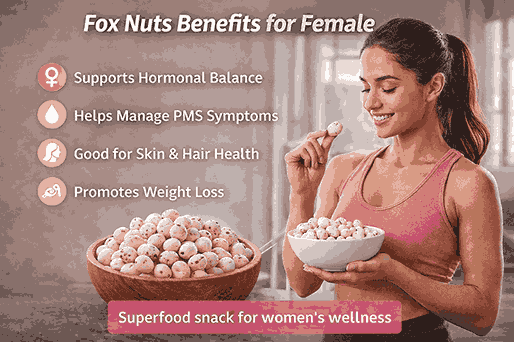
Fox Nuts Benefits for Female

Introduction If you’ve ever stood in front of the pantry thinking “I want something crunchy… but I don’t want to feel heavy or guilty after,” you’re not alone. That exact moment—between hunger and habit—is where Fox Nuts can quietly become a game-changer.  Fox Nuts (also called makhana/phool makhana) sit in a rare sweet spot: they’re light, snackable, and surprisingly nutrient-dense for how “airy” they feel. And for women—whose nutrition needs shift across the menstrual cycle, pregnancy, postpartum, and menopause—small, repeatable snack upgrades can make a bigger difference than chasing one “perfect” superfood.  Before we get to benefits, one quick clarity point that most blog posts skip: you’ll often see makhana labeled “lotus seeds.” They’re frequently confused with true lotus seeds; a widely read piece from Down To Earth explains that lotus seeds come from Nelumbo nucifera, while fox nuts/makhana are from the prickly water lily (Euryale ferox) and are typically roasted/popped before eating.  Comparison Fox Nuts aren’t “better” than every snack in every scenario. They’re better at specific jobs—especially the ones many women care about: managing cravings, avoiding blood-sugar whiplash, and adding minerals without adding a ton of oil.  What Fox Nuts look like nutritionally A serving example cited by Healthline: one cup (32 g) of dried lotus seeds/makhana provides about 106 calories and 4.93 g protein, plus minerals like calcium (52.2 mg) and magnesium (67.2 mg).  A key nuance: how you prepare them changes the math. A human study on roasted fox nuts reported that roasting decreased bulk density and increased calorie density (partly because moisture drops), which matters if you snack by “handfuls” instead of measuring.  Fox Nuts vs common snacks This table isn’t here to crown a winner—it’s here to make trade-offs obvious. Snack (typical serving) Calories Protein Fat What this means for women Fox Nuts / makhana (1 cup / 32 g) ~106 ~4.93 g Noted as low-fat in this serving More “volume per bite,” helpful for crunchy cravings; includes minerals like magnesium/calcium.  Air-popped popcorn (1 cup) ~31 ~1.04 g ~0.36 g Very low-calorie per cup; can be a great “volume snack,” but usually less mineral-dense and easy to over-salt.  Almonds (1 oz / 28 g) ~164 ~6 g ~14.2 g Higher protein and healthy fats; more calorically dense—great when you need satiety, less ideal if you snack mindlessly.  Potato chips (1 oz) ~155 ~1.86 g ~10.62 g Designed for “crave + repeat.” Higher fat and typically high sodium; easy to overshoot without feeling full.  The most underrated comparison: glycemic response In a small human trial (n=10), roasted fox nuts had a glycemic index around 37, which falls in the “low GI” category (GI < 55).  That matters because many women notice their appetite and energy feel different when snacks spike glucose and crash later—particularly in phases like late luteal/PMS, during perimenopause, or when managing insulin resistance. (Fox nuts aren’t a cure—but low-GI snack patterns can be a practical lever.)  Key insights A “snack job” Fox Nuts do well: crunchy cravings without the oil load A lot of women don’t actually crave food—they crave the experience of crunch, salt, and “something to do with my hands.” Fox nuts match that sensory profile while staying relatively light compared with fried snacks.  Here’s the fresh perspective I’d offer: think of Fox Nuts as a craving container. They let you keep the ritual (crunch + spice + downtime) while changing the nutritional outcome. What helps this work in real life is how you season them. The same study that measured GI also did consumer acceptability testing and found seasoning improved “liking,” which matters because a “healthy snack” you don’t enjoy won’t become a habit.  Minerals that show up in women’s health conversations: magnesium and calcium Magnesium isn’t a trendy add-on; it’s a core mineral involved in hundreds of enzyme systems, including muscle and nerve function and blood glucose regulation.  For adult women, magnesium RDAs are commonly 310–320 mg/day (and higher in pregnancy depending on age). A 1-cup serving of makhana in the example above provides ~67 mg magnesium—not “magic,” but meaningful as part of a day’s intake.  Calcium matters too, especially because requirements shift with age and because postmenopausal women are specifically noted as a group that can have more trouble maintaining calcium balance over time. Adults commonly need around 1,000 mg/day, while women ages 51–70 are listed at 1,200 mg/day in consumer guidance. Makhana’s calcium contribution (about 52 mg per cup in the example) is modest—but it’s additive, particularly for women who don’t eat much dairy.  A careful but useful connection: nutrition research reviews in gynecologic contexts often discuss minerals (including magnesium, sometimes alongside calcium and vitamin D) in relation to menstrual symptom strategies—but effects vary by study, dose, and population, and supplement-level doses differ from food-level intake. That’s why Fox Nuts are best framed as foundation support, not treatment.  Iron, energy, and “why women feel tired” is bigger than one snack If there’s one mineral that makes the question “benefits for female?” feel uniquely female, it’s iron. The Office of Dietary Supplements lists that teenage girls, pregnant women, and premenopausal women are among groups at risk of insufficient iron intake, and it also notes that heavy menstrual bleeding increases iron-deficiency risk.  It also gives the reality check on targets: women ages 19–50: 18 mg/day, and pregnancy: 27 mg/day.  Fox nuts contain some iron (about 1.13 mg per cup in the cited example), which is roughly a small single-digit percentage of daily needs for many women—helpful, but not enough to “fix” low iron by itself.  Two practical takeaways that do move the needle: So the “female benefit” here is not that Fox Nuts are an iron supplement—it’s that they can be part of an iron-aware snack strategy (more on that below).  Blood sugar steadiness and the women’s-health ripple effect The human GI finding (GI ~37 for roasted fox nuts) is one of the more concrete, non-hand-wavy data points in the makhana conversation.  Why it’s relevant for women specifically: Important honesty: a lot of “fox nut benefits” content leans on animal or extract studies. Even Healthline notes that some blood-sugar findings come from animal research using concentrated extracts, and more human research is needed for typical dietary intakes.  So, the clean claim you can make is: Fox Nuts can be a low-GI snack option when roasted plainly, which may

Fox-Nuts-Snacks-for-Gym-&-Fitness
Health

Fox Nuts Snacks for Gym & Fitness: The Smart Fuel You’re Missing

Fox Nuts (also known as makhana or lotus seeds) are a crunchy, traditional Indian snack that’s becoming a secret weapon for gym enthusiasts and fitness buffs. Light, gluten-free, and rich in nutrients, these puffed lotus seeds deliver a surprising blend of protein, fiber, and antioxidants. In this blog, we break down why.With strong nutritional benefits, practical tips, and expert-backed insights, Fox Nuts are an excellent snack to include in your fitness routine. Fox Nuts (roasted makhana) make a light, crunchy snack option for fitness enthusiasts. What Are Fox Nuts? (Nutritional Overview) Fox Nuts are healthy, edible seeds that come from the Euryale ferox plant, also known as lotus seeds, popular in fitness diets. When roasted, they puff up like mini popcorns. They may look like plain white puffs, but nutritionally they pack a punch for their size. One cup (about 32g) of roasted makhana contains roughly 106 calories, 5 g protein, and a burst of minerals like calcium, magnesium, and potassium. This makes them relatively high in protein and micronutrients for a snack, especially compared to typical chips or popcorn. In short, Fox Nuts are a nutrient-dense snack: low in calories yet loaded with protein, fiber, and antioxidants. This combo is rare among grab-and-go snacks. Fox Nuts vs Other Gym Snacks (Nutrition Comparison) To see how Fox Nuts stack up against popular gym snacks, consider this comparison: Snack Calories (per 100g) Protein Fat Fiber Best Use Fox Nuts 83 kcal 9.7 g 0.5 g 7.6 g Low-calorie energy/fat loss Almonds 576 kcal 21 g 49 g 12 g Bulking/higher fat diets Protein Bar ~350 kcal/bar ~20 g ~8 g ~5 g Quick protein boost Popcorn ~387 kcal 12 g 4 g 14 g Low-fat, whole-grain snack Table: Fox Nuts (makhana) are uniquely low in fat and calories yet supply both protein and fiber. Compared to nuts like almonds, makhana have dramatically fewer calories for a similar crunch factor. As the table shows, Fox Nuts deliver protein without excess fat or calories. Many fitness snacks (like nuts or bars) pack more calories and fat. Even granola or trail mix can be calorie-dense. By contrast, makhana give you crunch and sustenance without derailing a diet. Key Insight: makhana combine a “popcorn-like” feel with nut-like nutrition – ideal for cutting or lean gains. They provide slow energy release (see next section) and support satiety without loading on extra calories. ✔️ Benefits of Fox Nuts for Gym & Fitness Here’s why fitness experts and nutritionists are giving makhana a thumbs-up: Fact: One cup (~30g) of roasted makhana is just ~106 calories. Even a 100g serving (~3 cups) is only about 330 calories. A dietitian warns that going over this (eating excessive bowls) could pack on unwanted carbs. But in moderation, Fox Nuts are a “guilt-free” crunch. Pre- and Post-Workout Ideas “What is the ideal time to consume fox nuts (makhana)?” In short, think of Fox Nuts as a clean, portable fuel pellet: enough carbs to energize and enough protein/fiber to satisfy hunger and support recovery. 💡 Key Takeaways In essence, Fox Nuts punch above their weight as a gym-friendly snack. They’ve been dubbed a “superfood” for athletes for good reason – they combine healthy macros with antioxidants in a portable form. Roasted Fox Nuts are lightly seasoned and ready for snacking – a tasty way to fuel workouts. Frequently Asked Questions Q: Why are Fox Nuts considered good for fitness and gym-goers? A: Fox Nuts offer a unique mix of nutrients that benefit active people. They have a low calorie density but deliver protein and fiber, which can keep you full during a workout. The protein (about 5g per cup) helps with muscle repair, while complex carbs supply sustained energy without spikes. They’re also rich in minerals like magnesium and calcium that support muscle function. Plus, the antioxidants in Fox Nuts (gallic acid, ellagic acid, etc.) fight exercise-induced oxidative stress, potentially aiding recovery. Q: Are Fox Nuts good for weight loss? A: Yes, in moderation. Fox Nuts are relatively low in calories and fat compared to nuts and chips. A modest serving (around 30g) is just ~106 calories. Their fiber and protein content also promote satiety, helping control appetite. Healthline points out that adding fox nuts to your diet boosts protein and fiber intake – nutrients known to support weight loss. Caution: They still contain carbs, so overeating (like munching 100g+) can add up. One nutritionist notes that 100g of makhana is okay for weight loss only if portion is controlled. In practice, use them as a filling snack instead of higher-calorie snacks, not in addition to your diet. Q: How do Fox Nuts compare to other gym snacks? A: Fox Nuts stand out for being light yet nutrient-rich. For example, per 100g they have only ~83 kcal and ~9.7g protein, whereas 100g of almonds has 576 kcal and 21g protein. This makes fox nuts better for cutting or low-fat diets. Compared to protein bars or granola (often 300–500+ calories), a serving of Fox Nuts is far leaner. They’re also free of added sugars and preservatives that some bars contain. In summary, Fox Nuts give you crunch and macro balance without the calorie load of many “fitness” snacks. Q: How can I eat Fox Nuts? Any fun ways to include them in my diet? A: There are many tasty options! The most popular method is roasting. Simply dry-roast or light-oil roast fox nuts in a pan, then season with salt, pepper, or spices like turmeric or chili for a crunchy snack. You can enjoy them plain or make a trail mix by combining roasted makhana with nuts and dried fruit. Some people blend roasted Fox Nuts into smoothies or shakes for extra texture. They also work well tossed into salads (for crunch) or soups. In Indian cuisine, they’re even added to curries or sweet rice dishes (kheer). The versatility means you can snack on them alone or sprinkle them onto meals – a gym-friendly “popcorn”! Q: Are there any downsides or side effects to eating Fox Nuts? A: Generally, Fox Nuts are safe and healthy, but

Fox-Nuts-(Makhana)-Benefits-for-Men’s-Health
Food / Recipe Topics

Fox Nuts Benefits for Men’s Health

Introduction Forget kale smoothies—Fox Nuts (makhana) are the crunchy, low-fat snack that men are snacking on for a reason. This ancient puffed seed from the lotus plant packs surprising nutrition for muscle, heart, and reproductive health. Think of it as the “India’s popcorn” that’s gluten-free, high-fiber, and boasts antioxidants. Men looking for an edge in diet often ask: Can fox nuts help boost testosterone, energy or sperm health? In this post we’ll deep-dive into science-backed benefits of fox nuts for men, cutting through the hype with hard data and expert insights. Fox Nuts (makhana) are roasted, puffy lotus seeds that deliver protein, minerals, and antioxidants. Men often use them as a savory post-gym snack. Fox nuts : Nutritional Comparison How do fox nuts stack up nutritionally against other popular foods? Let’s compare key macros for 100 g of each: Food Protein Fat Carbs Fiber Comments Fox Nuts (popped) ~10–14 g ~0.1 g ~77 g ~8–14 g High protein for a snack, very low fat. Air-popped popcorn 12.9 g 4.5 g 78 g 14 g High fiber, low fat, moderate protein. Almonds (dry) 21 g 50 g 22 g 12 g Very high protein and high healthy fats. Chicken breast (roast) 31 g 3.6 g 0 g 0 g Very lean, nearly all protein. Sources: USDA-derived data. The key takeaway: fox nuts offer more protein than typical carb-heavy snacks, but far less fat than nuts. They’re closer to popcorn in macros, except popcorn has more fat. This means men get a satiating, crunchy snack without a calorie bomb of oil. Even with two handfuls, fox nuts stay relatively low-calorie (360 kcal per 100g) thanks to minimal fat. Plus, a single 100g serving provides 8–14g fiber, which helps control blood sugar and appetite. All that fiber (and low GI) means fox nuts won’t spike your glucose – a boon for metabolic health. Key Benefits for Men 1. Fox nuts : Muscle & Energy Support Men building or maintaining muscle need steady protein and energy. Fox nuts provide about 10–14 g protein per 100g, more than popcorn or potatoes. It’s not as high as meat or legumes, but for a snack-sized serving it’s notable. The carbs in fox nuts are mostly complex starches and fiber, giving slow energy release — perfect for a pre- or post-workout boost without a sugar crash. Anecdote: “After swapping my afternoon chips for roasted makhana, I noticed I could power through my gym session without crashing,” many men report. Its blend of protein and carbs is a natural pick-me-up. 2. Fox nuts : Heart & Metabolic Health Heart disease is a top concern for men, and diet plays a big role. Fox nuts score high on heart-friendly points: In short, swap chips for fox nuts and your heart will thank you. The absence of unhealthy oils and the presence of fiber/antioxidants make makhana a smart snack for men watching their ticker. 3. Fox nuts : Fertility & Testosterone Many sources tout makhana’s traditional use as a male tonic (for example, Chinese herbals claim it “consolidates sperm”). Modern science is more cautious, but we can connect the dots: In practice, think of fox nuts as part of a fertility-friendly diet rather than a magic fix. They aid overall nutrition – more protein than most snacks, plus nutrients that work with the body. For libido or fertility boosts, combine makhana with oysters or pumpkin seeds (zinc), plenty of veggies, and exercise. 4. Fox nuts : Bone & Joint Support Though more crucial for women, bone health still matters for men (especially as they age). Fox nuts contain calcium and magnesium: So while you wouldn’t rely solely on makhana for bones, it’s healthier than many junk foods. Think of it as a “guilt-free calcium treat” compared to a soda or candy bar. 5. Fox nuts : Weight Management Men who need to lose weight often scour for nutritious snacks. Fox nuts can help: Real-life tip: When I switched my evening snack from salted peanuts to a bowl of roasted makhana, I stayed feeling full longer and surprisingly cut down on overall calories. The texture keeps you chewing and enjoying the crunch, unlike a handful of sugary cereal. 6. Fox nuts : Digestive Health Men’s gut health sometimes gets overlooked. Fox nuts have: In summary, fox nuts are gentle on the stomach – a switch from greasy, heavy junk. For men with irritable bowels or after a beer night, a plain roasted makhana bowl can be a soothing snack. Practical Tips Conclusion Fox Nuts (makhana) may seem humble, but for men’s health they punch well above their weight. They offer a mix of protein, fiber, and minerals with virtually no fat – an unusual profile for a snack. The science says they’re antioxidant-rich and gentle on blood sugar, making them a win-win for heart and metabolic health. And while no single food cures low testosterone or heart disease, adding makhana to a balanced diet of zinc-rich proteins, veggies, and whole grains can only help. What’s your favorite way to eat makhana? Have you tried using it in a smoothie bowl, trail mix, or savory curry? Share your thoughts below. If you found these insights helpful, check out our guide to high-protein snacks for men and subscribe for more tips on maximizing nutrition for fitness and vitality.

Golmoti – Premium Quality Makhana

Our Promise

At Golmoti, premium quality makhana comes first.
We ensure every pack delivers freshness, purity, and authentic taste.

Contact Us

India,Bihar, Dist-Darbhanga,Benipur,Pauri.847201

support@golmoti.com

Copyright ©  2026 All right reserved

Scroll to Top