Author name: Dheeraj

fox-nuts-or-popcorn-which-is-better
Food / Recipe Topics

Fox Nuts vs Popcorn? The Crunchy Snack Showdown You Need to See

The Crunch Heard ‘Round the World Picture this: It’s Friday night. The lights are dim, the screen is glowing, and your hand instinctively dives into a bowl of something salty and crunchy. For decades, that bowl has been dominated by one king—popcorn. But lately, a quiet, ancient contender has been slipping into the pantries of nutritionists and wellness enthusiasts alike: Fox Nuts. Also known as Makhana or Gorgon nuts, these puffy white seeds don’t look like much at first glance. They resemble tiny, crispy clouds. But when placed head-to-head against the cinematic staple we all know and love, the results are surprisingly dramatic. If you are looking for a snack that satisfies the craving for crunch without the nutritional baggage, it’s time to dive into the ultimate showdown: Fox Nuts vs. Popcorn. Round 1: Fox Nuts: The Nutritional Knockout To understand which snack deserves a permanent spot in your cupboard, we have to look past the taste and examine what we are actually putting into our bodies. The Case for Popcorn Popcorn isn’t inherently bad. In its pure, air-popped form, it’s a whole grain. It contains fiber and is relatively low in calories. According to the USDA, three cups of air-popped popcorn contain about 93 calories and 3.6 grams of fiber. But the real issue isn’t popcorn itself—it’s the way most people eat it. Most people don’t eat air-popped popcorn. They eat microwave bags lined with perfluoroalkyl substances (PFAS) or theater versions drenched in butter-like topping (coconut oil and artificial flavoring). A medium-sized movie theater popcorn can pack over 1,000 calories and a day’s worth of saturated fat. The Makhana Advantage Fox Nuts are not a grain; they are a seed harvested from the Euryale ferox plant, a water lily found in stagnant water bodies across Asia. This botanical difference matters. Unlike corn, which is a starchy carbohydrate, fox nuts are composed of complex carbohydrates, protein, and a surprisingly high mineral density. Round 2: Fox Nuts: The Culinary Experience & Versatility If nutrition were the only factor, we would all be eating steamed kale. Texture and flavor matter. This is where things get intriguing. The Popcorn Experience Popcorn offers a specific sensory experience: the shatter. It’s light, airy, and has an immense surface area for flavor. However, popcorn has a notorious Achilles’ heel—it gets stuck in your teeth. Moreover, it cools down quickly and becomes chewy or soggy if left out. Flavor-wise, while it can handle savory or sweet, it often requires a lot of oil to get the seasoning to stick. The Fox Nuts Experience Roasted Fox Nuts offer a different kind of crunch—one that is often described as a cross between a crouton and a popcorn kernel, but without the hulls to get stuck in your gums. When dry-roasted in ghee or avocado oil, they puff up into a crisp, melt-in-the-mouth texture that holds seasoning far better than popcorn. Here is where the versatility shines. Because they have a neutral flavor base (unlike popcorn’s distinct corn taste), fox nuts are a culinary chameleon: Round 3: Fox Nuts: Digestibility and Inflammation Snacking habits often fail because of how the food makes us feel after eating it. This is a critical area where the two diverge. The Dark Side of Corn Corn is a common allergen. For many people, it can be difficult to digest due to the cellulose in the hull. Even organic popcorn can cause bloating or discomfort for those with sensitive guts. Furthermore, the aflatoxin risk—a type of mold that can grow on corn crops—is a concern for conventional popcorn farming. Why Fox Nuts Are Easier on the Gut In Ayurveda (the ancient Indian system of medicine), Makhana (Fox Nuts) is considered one of the few snacks that is “Sattvic”—pure and balancing. It is often prescribed to people recovering from illness or those with digestive issues because it is: For anyone dealing with GERD or bloating, switching to Fox Nuts can be a game-changer. They provide the satisfaction of snacking without the post-meal regret. Round 4: Fox Nuts: Environmental Impact As conscious consumers, we have to consider not just what goes into our bodies, but what the impact on the planet is. The Environmental Cost of Corn Commercial corn production is resource-intensive. According to the Environmental Working Group (EWG) , conventional corn is one of the most pesticide-heavy crops in the world. It requires massive amounts of water, synthetic fertilizers, and heavy machinery. The Sustainability of Fox Nuts Here is a “fresh perspective” that rarely gets discussed: Fox Nuts are an environmental hero. They are cultivated in stagnant ponds and wetlands in regions like Bihar, India. The cultivation process: When you choose fox nuts, you often support regenerative agriculture practices that sustain wetlands rather than drain them. The Verdict: A Side-by-Side Comparison (Fox Nuts) To make the decision easier, here is a breakdown of how they stack up: Feature Popcorn (Air-popped) Fox Nuts (Roasted) Texture Light, shattery; hulls get stuck in teeth Crispy, crunchy; dissolves smoothly Calories ~31 cal/cup ~35-40 cal/cup (similar density) Protein Low (~1g per cup) Moderate (~3g per cup) Digestion Can cause bloating; high fiber Astringent; easy on digestion; anti-inflammatory Flavor Profile Dominant corn taste; requires butter Neutral; absorbs spices without heavy fats Sustainability High water/pesticide use Wetland-friendly; low carbon footprint Blood Sugar High Glycemic Index (spike) Low Glycemic Index (steady energy) Fox Nuts: How to Make the Switch (Without Missing the Movies) I’ll be honest: for the first week, I missed the smell of buttered popcorn. But once I mastered the art of roasting Fox Nuts, I never looked back. Here is my personal recipe for “Movie Night Makhana” that replicates the cinema vibe without the grease: Conclusion: The Future of Snacking Snacking shouldn’t be a guilty pleasure; it should be fuel that tastes good and feels good. While popcorn will always hold a nostalgic place in our hearts (and our Netflix queues), Fox Nuts offer a superior alternative for the health-conscious, environmentally aware consumer. They win on digestibility, they win on nutrient density, and they win on versatility. Whether you are managing blood sugar levels, looking to reduce inflammation, or simply tired of finding popcorn kernels

High-Protein-Fox-Nuts-Recipes-for-MuscleGain
Food / Recipe Topics

High-Protein Fox Nuts Recipes for Muscle Gain

Introduction If your snack drawer is full of “crunch”… but your daily protein total isn’t climbing, you’re not alone. The hardest part of eating for muscle gain is rarely knowing you need more protein—it’s finding foods you’ll actually look forward to between meetings, workouts, and real life. That’s exactly why Fox Nuts (aka makhana) have become my favorite “blank canvas” ingredient. They’re light, crunchy, neutral in flavor, and—here’s the key—they’re ridiculously easy to turn into a protein delivery vehicle once you stop treating them like the main protein source. A quick clarity note (and a genuinely useful one if you buy makhana online): an APEDA export strategy report explains that makhana is a popped, expanded kernel of gorgon nut (Euryale ferox) grown in stagnant water bodies, and that calling it “phool makhana” or “lotus seeds” can be misleading because it’s botanically unrelated to lotus.  That tiny naming confusion matters because it’s one reason nutrition numbers for Fox Nuts can feel inconsistent across the internet. So in this post, I’ll show you what the most credible references say, then give you recipes that reliably hit muscle-friendly protein amounts—without sacrificing the fun part (flavor + crunch). Comparison Fox Nuts feel like a “health protein snack,” but muscle gain rewards accuracy. So let’s start with what they actually provide—and what they don’t. What the data suggests about Fox Nuts macronutrients In the same APEDA report, a comparison table lists (per 100 g) popped makhana at 11.03 g protein, 0.33 g fat, and 84.87 g carbohydrates.  Two immediate takeaways for muscle gain: A practical comparison you can actually use Here’s the per-100 g comparison table as shown in the APEDA report (values are the report’s table figures).  Food (per 100 g) Protein (g) Fat (g) Carbs (g) Fiber (g) Popped makhana (Fox Nuts) 11.03 0.33 84.87 3.26 Popcorn 12.9 4.54 77.8 14.5 Almond 18.41 58.49 3.04 13.06 Cashew 18.78 45.2 25.46 3.86 The fresh perspective: Don’t think of phool makhana as “protein.” Think of them as the crunch layer—the thing that makes a high-protein bowl, dip, or snack feel satisfying. The protein should come from a “protein anchor” ingredient you pair with them. Key insights Muscle gain nutrition is surprisingly simple in theory—and annoyingly easy to mess up in practice. The good news is that Fox Nuts fit beautifully into a “simple done consistently” approach. The muscle gain basics that make these recipes work Protein target (daily): A widely cited evidence-based range for active people training hard is roughly 1.4–2.0 g protein/kg/day, with timing and total intake working synergistically with resistance training to support muscle protein synthesis. Meta-analytic work on resistance training + protein supplementation also suggests diminishing returns beyond about ~1.6 g/kg/day for fat-free mass gains in many contexts.  Protein target (per meal): Rather than one giant protein hit, you’ll usually do better distributing intake across the day. One synthesis recommends aiming around 0.4 g/kg/meal across at least four meals to reach ~1.6 g/kg/day.  Calories still matter: If your goal is to gain muscle (not just maintain), a sustained energy surplus often supports the process—especially as training volume climbs. Reviews in sports nutrition discuss the role of surplus energy in supporting hypertrophy and body protein accretion.  The Fox Nuts “protein anchor” rule Here’s the rule I use when turning phool makhana into muscle-gain food: Pick one protein anchor first. Then add phool makhana for texture. Protein anchors that are easy to measure (and easy to repeat): Now notice why Fox Nuts shine: they make the anchor feel like a real “meal” instead of a protein chore. A yogurt bowl with phool makhana becomes a crunchy chaat. A whey shake becomes a snack mix. A chicken plate becomes “crispy tenders.” High-protein Fox Nuts recipes for muscle gain Below are five recipes designed around that protein-anchor rule. Protein counts are estimates using the cited nutrition databases and the APEDA table; real values vary with brands, exact weights, and cooking methods.  A quick protein snapshot Recipe Best time Approx. protein/serving Crunchy Protein Chaat Bowl post-workout or lunch ~35–40 g Whey-Dusted Fox Nuts “Snack Dust” afternoon snack ~25–30 g Fox Nuts–Crusted Chicken or Tofu dinner ~30–45 g (depends on protein choice) Egg-White Masala Fox Nuts Scramble breakfast ~30–40 g Protein Kheer-Style Fox Nuts Pudding post-workout dessert ~35–45 g Crunchy Protein Chaat Bowl Why it works: You get the “street snack” vibe, but with Greek yogurt as your protein anchor. Adding roasted soybeans/edamame pushes protein into legit muscle-gain territory.  Ingredients (one big bowl): Method: Protein math (approx.): My “texture hack”: If you’ve ever made chaat and the crunch went soggy instantly, keepphool makhana separate in a small container and sprinkle them at the last second. It turns a good bowl into something you’ll crave. Whey-Dusted Fox Nuts “Snack Dust” Why it works: This is the most reliable way to make Fox Nuts “high protein” without turning them into a heavy meal: you roast Fox Nuts for crunch, then coat them with whey after they cool so the powder doesn’t clump.  Ingredients (2 servings): Method: Protein math (approx., per serving if you split into 2): Fresh perspective: This is basically a “protein seasoning strategy.” Once you learn it, you can make any savory or sweet Fox Nuts mix more anabolic by dusting after cooking. Fox Nuts–Crusted Chicken or Tofu Why it works: Crushing Fox Nuts into crumbs gives you a crunchy coating that’s dramatically lower-fat than nut-based crusts, while your main protein comes from chicken or tofu.  Choose your protein anchor: Ingredients (one meal): Method: Protein math (approx.): Serving idea (internal link suggestion): Pair with a high-protein dip (Greek yogurt + herbs) and a carb side if it’s post-workout. If you already have a “post-workout plate template” post on your site, link it here for readers. Egg-White Masala Fox Nuts Scramble Why it works: Egg whites are one of the simplest ways to push breakfast protein up without turning the meal into a calorie bomb, and Fox Nuts add crunch so it feels like a real dish—not “diet food.”  Ingredients (one large serving): Method: Protein math (approx., base version): Protein Kheer-Style Fox Nuts Pudding Why it works: This is for the people who want dessert after training but still want the day to “count” nutritionally. It’s essentially a cooling, kheer-inspired bowl where whey and/or Greek

Fox-Nuts-Recipes-Without-Sugar
Food / Recipe Topics

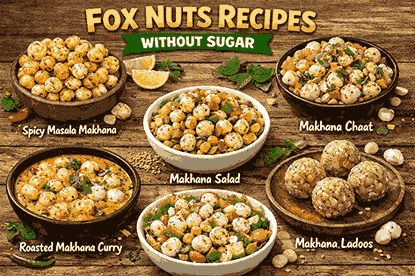
Fox Nuts Recipes Without Sugar That Actually Taste Indulgent

Introduction If you’ve ever opened a bag of Fox Nuts, popped a few into your mouth, and thought, “Okay… now what?” — you’re not alone. On their own, Fox Nuts can taste like a blank page: light, airy, and almost too neutral. But here’s the good news: that neutrality is exactly why they’re such a powerful sugar-free flavor canvas. With the right technique (and a few pantry spices), you can turn them into the kind of snack that makes you forget you ever wanted something sweet. And I’m not talking about the usual “healthy but sad” situation. I mean real crunch, real flavor, and recipes that feel indulgent—without needing honey, jaggery, maple syrup, dates-as-a-hack, or any sweetener at all. Before we get to the recipes, let’s quickly level-set what Fox Nuts actually are and what “without sugar” should mean in real life. What Fox Nuts Are and What “Without Sugar” Really Means Fox Nuts (often sold as makhana) come from an aquatic water-lily plant, and the seeds are typically roasted so they “pop” in a popcorn-like way.  That popcorn comparison isn’t just poetic: the popping process is commonly described as heating the water inside the seed so steam expands it—very similar to what happens with popcorn.  Now, about “without sugar.” Two definitions matter here: Free sugars (public-health definition). The World Health Organization defines free sugars as sugars added by a manufacturer/cook/consumer plus sugars naturally present in honey, syrups, fruit juices, and fruit juice concentrates.  Added sugars (label reality). The American Heart Association recommends limiting added sugars to no more than 36 g/day for men and 25 g/day for women, and it explicitly lists common “health halo” sweeteners (honey, maple syrup, coconut sugar, etc.) as still being added sugar.  So in this post, “without sugar” means: That’s the core skill: building satisfaction without sweetness. Comparison Here’s a quick truth that changed how I shop: when you see “flavored” Fox Nuts, the flavor can come from spices… or it can come from sugar. To show what I mean, below are real branded examples whose nutrition data is pulled from U.S. Department of Agriculture FoodData Central (via MyFoodData’s interface).  Product style Example product What flavors it Sugars per labeled serving Why it matters for “no sugar” Savory spice Ashapops chili-lime popped water lily seeds Spices + lime + salt + oil 0 g (28 g serving)  This is what you want: flavor from spice + acid, not sweetness. Salted Bohana Himalayan pink salt popped water lily seeds Salt + oil 1 g (28 g serving)  Still mostly “not sweet,” but labels can show small sugars even in savory snacks. Sweet-coated Lisa Produce caramel jaggery popped water lily seeds Sugar coating + fat 9 g (14 g serving)  This is the quiet sugar bomb: half an ounce contains 9 g sugar—double it for a 1 oz handful. The takeaway: “Popped water lily seeds” isn’t the issue—what they’re coated with is. If your goal is Fox Nuts recipes without sugar, homemade is where you get full control. Key Insights You don’t miss sugar when you build flavor like a snack brand does: aroma + crunch + salt + fat + a finishing “spark.” Here’s the framework I use (and it’s the reason these recipes don’t feel like diet food): The popcorn principle Fox Nuts behave a lot like popcorn: mild base, huge payoff when seasoned. That’s why roasting and seasoning dramatically improves how people rate them in taste tests, and why seasoned roasted versions tend to score better in acceptability than plain/unseasoned versions.  The crunch-first rule If Fox Nuts are even slightly soft, no seasoning will save them. Multiple recipe developers emphasize low heat roasting for even crispness (high heat can burn them), and one simple doneness test: crush one—if it powders easily and crunches, it’s ready.  The flavor-layering trick that makes “no sugar” easy This is my personal game-changer: You’ll see that rhythm repeated in lots of classic masala makhana methods: roast until crunchy, then add spices after turning off the flame so they coat without scorching.  A note on blood sugar and why sugar-free seasoning helps Roasted Fox Nuts have been measured as a low glycemic index food (GI ~37%) in human subjects in an open-access peer-reviewed study—one reason they’re often positioned as a steadier snack than many sugary options.  That doesn’t mean “eat unlimited,” but it’s a strong argument for keeping them savory and unsweetened. Fox Nuts Recipes Without Sugar Below is a mix of snacky flavors and “use-them-like-an-ingredient” ideas. All are no-added-sugar (and no sweeteners). Choose one base method, then remix forever. Quick recipe map Classic Masala Fox Nuts 10–12 min Everyday snacking Chaat masala + roasted cumin vibe Curry Leaf Tadka Fox Nuts 12–15 min “Chai-time” munching Mustard seeds + curry leaves Chili-Lime Fox Nuts 10 min Tangy craving Lime zest/spritz after roasting Garlic-Paprika Fox Nuts 10 min Movie snack Smoky paprika + garlic powder “Cheesy” Fox Nuts (no sugar) 10 min Kids + adults Nutritional yeast + black pepper Everything-Style Fox Nuts 10 min Habit snack Sesame + onion + garlic Fox Nuts Chaat (no sweet chutney) 15 min Light meal/snack plate Yogurt + lemon + chaat masala Fox Nuts Crouton Crunch 10 min Soups + salads Herb seasoning + extra crisp Base method Ingredients (basic):Fox Nuts (2 cups), 1–2 tsp ghee or neutral oil, salt Steps:Warm a wide pan on low heat. Roast Fox Nuts, stirring, until crisp and they crush into powder. Then add a little melted ghee/oil and toss, turn off heat, and mix in seasonings. (This mirrors common low-and-slow roasting guidance.)  Classic Masala Fox Nuts Seasoning Mix: chaat masala, roasted cumin powder, Kashmiri chili powder (or mild paprika), black pepper, salt. How I do it:Roast until crunchy, add a teaspoon of ghee, turn off heat, toss in spices until evenly coated. This “spice after heat” method is a very common approach for masala makhana so the spices don’t burn.  Fresh twist: Finish with a pinch of amchur for a tangy edge (no sweetness needed). Curry Leaf Tadka Fox Nuts Seasoning Mix: mustard seeds, curry leaves, turmeric, salt, a pinch of hing (optional), chili. Method:Do a quick tadka in ghee (mustard seeds + curry leaves), then add already-roasted Fox Nuts and toss to coat—similar

Fox-Nuts-(Makhana)-Diet-Snack-Ideas
Food / Recipe Topics

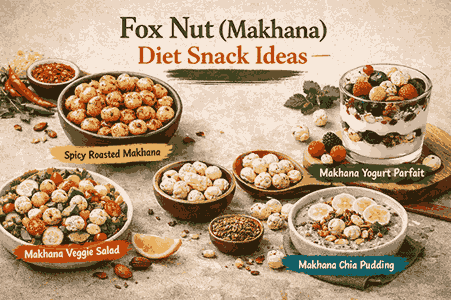
Fox Nut (Makhana) Diet Snack Ideas: Healthy Low-Calorie Recipes

Looking for a healthy snack that still satisfies your crunch cravings? Enter fox nuts (also known as makhana or lotus seeds). These popped water-lily seeds are light and crunchy, yet nutrient-dense – naturally low in calories and fat, but surprisingly high in protein, fiber and essential minerals. This unique combo makes fox nuts an excellent diet-friendly chip alternative. In fact, one cup of roasted makhana (~32g) has only ~106 calories, yet adds significant protein and fiber to your diet. Whether spiced up, sweetened, or tossed into salads and soups, fox nuts can turn boring snacking into a healthy delight. Let’s explore how they stack up against other snacks and creative ways to enjoy them. Fox Nuts vs. Other Snacks: A Quick Comparison To see why fox nuts are diet-friendly, let’s compare their nutrition to common snacks like popcorn and potato chips (per 100g): Snack (100g) Calories Protein Fat Fiber Fox Nuts (Makhana) 347–356 kcal 9.7–15 g 0.1–0.5 g 14.5 g Air-Popped Popcorn 387 kcal 12 g 4.5 g 15 g Potato Chips 536 kcal 7 g 35 g 4.8 g As the table shows, fox nuts deliver comparable calories to popcorn but drastically lower fat than chips. They also beat chips in fiber by over threefold (14.5g vs 4.8g). In other words, makhana provide a satisfying crunch with far fewer empty calories. A 100g serving of makhana has roughly 347–356 kcal, whereas potato chips top 536 kcal. And while popcorn is low-fat, it’s often flavored with oil or butter – plain air-popped popcorn has ~387 kcal and 4.5g fat, still more fat than nearly fat-free makhana. Overall, fox nuts’ nutrient profile (low fat, low GI, and decent protein/fiber) makes them a more weight-loss–friendly snack. Why Fox Nuts Are Great for Your Diet High Fiber & Protein: Fox nuts are rich in soluble fiber, helping slow down digestion and keeping you satisfied for longer. In fact, a serving provides about 14–15g fiber per 100g. This fiber (plus their 9–15g protein) can curb hunger and prevent overeating on high-cal snacks. One nutrition review notes that adding makhana to your diet boosts protein and fiber intake – key nutrients that support weight loss by increasing satiety. Low Glycemic, Gut-Friendly: Makhana has a low glycemic index, so it’s less likely to cause blood-sugar spikes. Traditional Ayurvedic teachings even use makhana in detox soups to soothe the digestive tract. Modern nutritionists agree: fox nut soup is touted as “gut-friendly” and easy to digest, making it good for sensitive stomachs. Because they release energy slowly, makhana keep you energized without midday sugar crashes. Antioxidants & Minerals: Despite being a snack, fox nuts pack antioxidants like gallic acid and ellagic acid. These compounds have anti-inflammatory properties (ancient medicine values kaempferol in makhana for this). Makhana are also rich in potassium, calcium, phosphorus and magnesium – nutrients that support bone health and blood pressure control. In short, fox nuts are a smart “nut-free nut” snack that helps your body as it satisfies your taste buds. Diet & Weight Loss Friendly: Many nutritionists note that makhana’s combination of low calories and high fiber makes it ideal for weight-control diets. Unlike dense peanuts or nuts (550–600 kcal per 100g), fox nuts give you volume (lots of puffs) for fewer calories. One review highlights that makhana “excels in low-calorie satiety,” making it a favorite for calorie-restricted plans. They’re naturally gluten-free and vegan, so they work in virtually any diet plan. Just be mindful that despite the buzz, makhana are not super-low-carb (≈75g carbs/100g) so they aren’t strictly keto. However, their high fiber does help blunt the net carbs, and most keto dieters consider small portions acceptable. Creative Fox Nut Snack Ideas Fox nuts are incredibly versatile. Here are some creative ways to enjoy them as diet-friendly snacks: Each of these ideas can be adjusted to your taste. For example, one popular recipe suggests a “Makhana-Peanut Bhel” by simply mixing roasted makhana and peanuts with cucumbers, tomatoes, pomegranate and lemon juice. A little creativity with herbs and spices keeps the snacks exciting without adding processed calories. Image: Spiced fox nut chivda – a savory trail mix made with roasted makhana, nuts, curry leaves and chilies (from Swasthi’s recipes) for a crunchy, satisfying snack. Fox Nuts in Your Diet Plan Whether you’re trimming calories or just eating cleaner, makhana can fit many diet strategies. Nutritionists note that due to their low calorie density and high fiber, fox nuts are ideal for weight-loss meal plans. They help fill you up on fewer calories, so you can satisfy hunger without overeating. For those managing blood sugar, the low-GI nature and fiber content help stabilize glucose levels. However, keep portion control in mind: despite being “diet-friendly,” 100g of makhana still contains ~350 kcal. A small handful or cup is usually enough per snack. And though not keto, many find makhana fits into a moderate-carb or Atkins-style diet if used sparingly. (Tip: enjoy them with protein—like peas or nuts—to further slow carb absorption.) One advantage of makhana is that they’re allergen-friendly: completely gluten-free and nut-free, they’re great for kids, seniors, or anyone with food sensitivities. They also have virtually no sodium unless you add it, so they can replace salty chips on heart-healthy diets. Tips for Enjoyment Conclusion and Call to Action Fox nuts truly are a crunchy, healthy twist on snacking. From simple spiced makhana to inventive salads and soups, they can “fox” your diet in the best way – adding flavor and texture without guilt. Next time you crave a chip or popcorn, consider reaching for makhana: you’ll get that satisfying crunch, plus fiber, protein and nutrients to boot. Have you tried fox nut snacks yet? Share your favorite makhana recipe or twist below! For more wholesome snack ideas and recipes, subscribe to our newsletter and stay tuned. Enjoy snacking smartly – your body (and taste buds) will thank you!

Spicy-Roasted-Fox-Nuts-Makhana-Recipe
Food / Recipe Topics

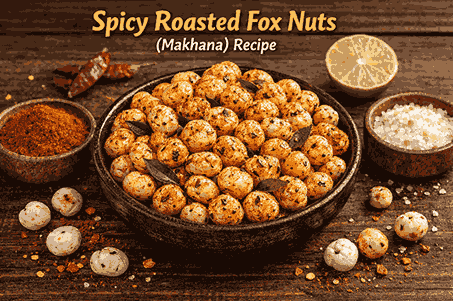
Spicy Roasted Fox Nuts (Makhana) Recipe

Ever craved a crunchy, guilt-free snack instead of oily potato chips? Enter fox nuts (aka makhana or lotus seeds) – tiny puffed seeds that fry up deliciously when spiced. Originating from a water lily plant, these popped “nuts” have a mild, nutty flavor and a satisfying crunch. In this post, we’ll dive into a quick 10-minute recipe for spicy roasted fox nuts, explore why they’re a healthy popcorn alternative, and share tips and variations to make them your new go-to snack. Fox nuts have risen in popularity among health enthusiasts. Dietitians praise them as “very nutritious” and a fasting-friendly snack. They’re low in calories but rich in fiber and protein, and packed with minerals like potassium and magnesium. NDTV notes fox nuts are “rich in protein, fibre, magnesium, potassium… and antioxidants”. In short, these popped seeds deliver big nutrition, making our spicy makhana not just tasty but also wholesome. What Are Fox Nuts (Makhana)? Fox nuts (scientific name Euryale ferox) are the edible seeds of the water lily. Commonly known as makhana, lotus seeds, or phool makhana, they have a crunchy, popcorn-like texture when roasted. In India, they’re often eaten during fasting and even recommended for new mothers after delivery because they are light and easy to digest. These puffed seeds are highly nutritious: a 100g serving contains about 356 calories, 9.7g protein, and 14.5g fiber. (By comparison, the same amount of air-popped popcorn has ~387 kcal, 12.9g protein, and 14.5g fiber, while potato chips pack 547 kcal and 37.5g fat.) This makes roasted fox nuts a light, filling snack. A blogger even notes they are “light like popcorn but much more wholesome”. Fox nuts are also virtually fat-free in raw form (only ~0.6g fat per 100g). Because of this neutral profile, they readily absorb any spices or oils you add. As PipingPotCurry explains, the neutral taste means makhana “soaks up all the spices you add”, so you can easily flavor them however you like. Health Benefits of Fox Nuts Before we get to the recipe, let’s highlight why fox nuts shine as a snack: Food Calories (per 100g) Protein Fat Fiber Fox Nuts (Makhana) 356 9.7g 0.6g 14.5g Air-Popped Popcorn 387 12.9g 4.5g 14.5g Potato Chips 547 6.6g 37.5g 4.4g Table: Nutritional comparison of fox nuts vs. other snacks per 100g. In practice, a single serving of our spiced makhana (about ¼ cup or ~30g) will be just ~80–100 calories – a fraction of a bag of chips. And unlike chips, you get protein, fiber and micronutrients. Spicy Roasted Fox Nuts Recipe Now, let’s roast some makhana! This Spicy Masala Fox Nut recipe takes under 10 minutes and uses simple ingredients: Spicy roasted fox nuts (masala makhana) make a crunchy, flavorful snack that’s perfect with tea or as an on-the-go nibble. Ingredients (makes ~4 servings): Instructions: Recipe Notes and Variations: By following these steps, you’ll end up with a bowl of crispy, golden brown spicy fox nuts. Cooking Tips and Expert Insights From the Test Kitchen: We tried adding a pinch of chat masala at the end (after cooling) and loved the tangy finish. Another fun twist is to dust on a bit of garlic powder or smoked paprika for different flavors. Fox Nuts vs Other Snacks As our table shows, fox nuts shine in the healthy-snack category. They’re far lower in fat than chips and comparable in fiber to popcorn, but with more protein. Plus, since you make them at home, you control the oil and salt, unlike most packaged snacks. They make a satisfying munch without artificial additives or preservatives. For comparison: Serving and Storage Tips These spicy roasted makhana can be enjoyed in many ways. Serve them warm with evening tea or coffee as a crunchy nibble. They also make excellent party appetizers – fill a bowl next to a veggie platter. Parents pack them in kids’ lunchboxes for a change from cookies. When not eating, store them at room temperature in an airtight jar. Bhavana notes they stay fresh and crisp for about a week when kept dry. Avoid refrigerating or humid environments, as moisture will ruin the crunch. Conclusion Spicy roasted fox nuts are a fun, healthy twist on snack time. They combine the crunch of popcorn with the nutrition of nuts, plus the zing of Indian spices. Each bite delivers protein, fiber, and flavor – perfect for when hunger strikes between meals. As one blogger put it, roasted makhana are a “winner every time” for an easy, under-10-minutes snack. Give this recipe a try and experiment with your favorite spices. You might find yourself reaching for makhana instead of chips or popcorn on movie night. Ready to snack smart? Roast up a batch of these spicy fox nuts today, and share your favorite flavor twist in the comments below! If you loved this recipe, pin it on Pinterest or subscribe for more healthy snack ideas. Happy munching!

10-healthy-fox-nut-snack-recipes
Food / Recipe Topics

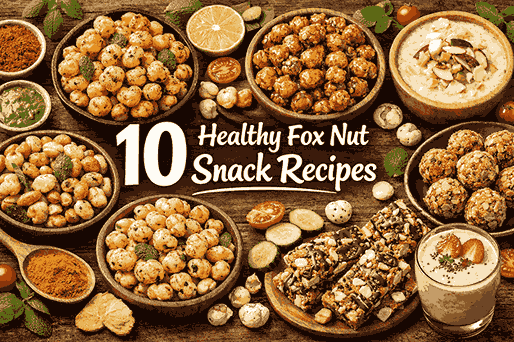
10 Healthy Fox Nut (Makhana) Snack Recipes

Fox nuts (makhana) – the popped lotus seeds often called makhana – have surged in popularity as a superfood snack. They’re naturally low in calories and fat, yet rich in protein, fiber and minerals. In fact, 100g of roasted fox nuts has only about 356 kcal, with ~9.7g protein and 14.5g fiber, making them an excellent choice for healthy eating. Packed with antioxidants and a low glycemic index, fox nuts can support heart health, steady blood sugar, and weight management. We’ve collected 10 creative fox-nut snack ideas – sweet and savory – from expert sources and kitchens. Each recipe is quick, easy, and leverages makhana’s nutrition. Try them to spice up your snack game! 1. Spicy Roasted Fox Nuts (Masala Makhana) Start with plain roasted makhana for a crunchy savory snack. In a dry skillet or air-fryer, roast fox nuts (phool makhana) with a teaspoon of ghee or olive oil until puffed and golden. Then toss them with spices like chili powder, cumin, turmeric, and a pinch of salt or chaat masala. The result is a crunchy, guilt-free popcorn-like treat. As Sharmilee notes, roasted makhana become “crispy and crunchy,” a perfect tea-time nibble and “a good source of protein and fiber”. You can adjust the spice level to taste – for example, add a sprinkle of garlic powder or dry curry leaves for extra flavor. Pro Tip: Roast on low heat and stir often to avoid burning. Make sure it has cooled down entirely before transferring to an airtight container. This snack is ready in under 10 minutes and stays crunchy for days. 2. Sweet Caramel Fox Nuts (Jaggery Makhana) Swap savory for sweet by making a jaggery-coated makhana. Dry-roast the fox nuts until crisp. Separately, melt jaggery (unrefined cane sugar) with a splash of water and a pinch of cardamom or vanilla. When the syrup is bubbly, toss in the roasted makhana and stir quickly to coat evenly. Spread them on a tray to cool – the jaggery hardens into a caramel-like shell. The result is a lightly sweet, crunchy snack reminiscent of caramel popcorn. Because it uses natural jaggery (or honey/maple syrup), it’s healthier than deep-fried sweets. You can even mix in roasted peanuts, sesame or coconut flakes for texture. 3. Fox Nut Chivda (Spicy Trail Mix) Turn fox nuts into a savory trail mix by combining them with nuts, seeds and spices – essentially a makhana chivda or namkeen. Roast makhana as before, then in a hot pan prepare a tempering: fry mustard seeds, curry leaves, peanuts, cashews (or roasted chickpeas), and a broken dried chili in a little oil. Add the roasted makhana back into the pan, sprinkle with turmeric, salt, and chili powder, and stir everything together. The result is a flavorful mix of puffed lotus seeds, crunchy nuts and crispy curry leaves. This mix is protein- and fiber-packed (thanks to the nuts and makhana) and very satisfying. It also reheats well – just toss in a pinch of chaat masala before serving. Quick tip: Roughly crush some of the roasted makhana so smaller pieces can mix evenly with the nuts. 4. Fox Nut Chaat Salad (Makhana Bhel) For a refreshing snack, make Makhana Bhel – a chaat-style salad. Roasted and crushed fox nuts are blended with fresh vegetables and chutneys for a tasty mix. For example, combine cooled roasted makhana (lightly crushed) with chopped tomato, cucumber, onion, boiled potato cubes and pomegranate arils. Add roasted peanuts, pumpkin seeds or roasted chickpeas for extra crunch.Garnish with green mint-coriander chutney and sweet tamarind-date chutney, then enhance the flavor with salt, chili powder, and chaat masala. Mix well just before serving. According to EnhanceYourPalate.com, this fox-nut salad is “an Indian snack that will tantalize your taste buds!” – it’s low-calorie yet filling. It contains a rich mix of protein, potassium, fiber, and antioxidants. Nutritionally, it rivals a bhel puri but uses fox nuts instead of rice, making it gluten-free. In short, Fox Nut Bhel is a light, zesty, high-protein snack or lunch option. 5. Protein-Packed Fox Nut Ladoo (Energy Balls) Whip up quick energy bites by pulsing makhana into laddus. A favorite is to blend roasted makhana with dried fruits, nuts and a binding sweetener. For instance, a Hebbars Kitchen recipe crushes fox nuts with cashews, almonds, raisins and jaggery (or dates) to form no-sugar ladoos. These bite-sized balls are rich in protein (from seeds and nuts) and iron, yet contain no refined sugar. They’re like healthy energy balls: sweet, nutty, and filling. You can roll them into balls or press into a bar and cut squares. 6. Chocolate Fox Nut Energy Bars For a dessert-like snack, try no-bake makhana bars. In CookWithRenu’s recipe, roasted makhana is ground coarsely and mixed with dried fruits, nuts and melted dark chocolate. You simply combine 1 cup roasted makhana, chopped mixed nuts (almonds, cashews, walnuts, etc.), 4–5 chopped dates/figs, and a cup of dark chocolate. Spread the mixture into a lined pan and refrigerate until it sets firmly. Once set, cut into bars or bite-size pieces. Each bar (about 9 pieces from the recipe) provides roughly 214 kcal and delivers fiber, protein and antioxidants from the ingredients. Kids love them, and they’re a clever way to get hidden nutrients. Think of it as a healthier homemade “granola bar” – skip the sugar and preservatives of store-bought versions! 7. Creamy Fox Nut Kheer (Pudding) Indulge your sweet tooth with a warming fox nut kheer. In this Indian pudding, you roast fox nuts (and a few cashews) in ghee, then simmer them in milk until tender. Stir in sugar (or jaggery) to taste, plus crushed cardamom and a pinch of saffron for aroma. Once thickened, fold in roasted nuts and raisins. The result is a mildly sweet, creamy dessert. As recipe blogger Dassana Amit describes, “Makhane ki Kheer is prepared by roasting makhana in ghee and cooking them in milk… This vrat-friendly dessert has a creamy texture and mild sweetness.”. You can serve it warm or chilled. It’s perfect for festivals or simply as a healthful after-dinner treat – you get protein and calcium from milk, plus the unique nuttiness of fox nuts. 8. Fox

fox-nut-kheer-recipe
Food / Recipe Topics

Fox Nut Kheer Recipe That Tastes Like a Festival, Not “Health Food”

Introduction The first time I tried making Fox Nut kheer, I expected “light and healthy.” What I got was… oddly spongy milk with floating puffs—not exactly the dreamy dessert I’d pictured. Then I learned the real secret: Fox nuts (often sold as makhana or phool makhana) aren’t meant to be treated like rice or vermicelli. They’re (1) a popped aquatic seed, and (2) a starch-forward ingredient that needs roasting + a texture strategy to become truly luxurious.  Also, quick clarity that makes shopping easier: Fox nuts are the edible seeds of Euryale ferox, a prickly water-lily plant. They’re sometimes labeled “lotus seeds,” but that’s more of a marketplace habit than botanical precision.  And there’s a story behind that humble packet, too. In Bihar, makhana cultivation supports livelihoods for thousands of farmers and is marketed widely as popped makhana (makhana lawa).  Comparison Kheer is basically “milk slow-cooked into comfort,” but the starring ingredient changes the experience. What I love about Fox Nut kheer is that it can feel as celebratory as traditional kheer while being faster and more forgiving—if you handle texture correctly. Many Indian home-cooking references also position it as a go-to sweet for fasting days (like Navratri), because it’s simple, gluten-free by nature, and doesn’t rely on grains in the same way rice kheer does.  Here’s a practical comparison you can use to decide which kheer fits your mood (and schedule): Kheer type “Hero” ingredient Typical effort Texture When it shines Fox Nut kheer Roasted makhana + milk Quick (about 30–35 min) Creamy with a nutty bite (if roasted well) When you want “festival vibes” on a weeknight  Rice kheer Rice + milk Longer simmer Classic thick pudding When you want traditional comfort Seviyan kheer Vermicelli + milk Medium Silky, noodle-soft When you want a lighter mouthfeel Sabudana kheer Tapioca pearls + milk Medium Glossy, chewy pearls When you want something playful and very “vrat-friendly” If you’re building a content cluster on your site, Fox Nut kheer pairs beautifully with internal links like a snack post (Roasted Fox Nut snack) and a festive roundup (Navratri desserts). Key insights The ingredient isn’t “just a puff,” it’s a starch + protein seed Official horticulture documentation describes makhana as low-fat but rich in carbohydrates and containing notable protein/mineral content; it’s also commonly used in milk-based foods like kheer.  That matters in the kitchen because it explains two things: A food-science study on roasted fox nuts notes that roasting/seasoning were explored specifically to improve acceptability, and it reports a low glycemic index figure for roasted fox nuts in human subjects (important context: that’s for roasted nuts, not a sugar-sweetened milk dessert).  Buy Fox Nut like you’d buy nuts: freshness beats brand Recipe developers repeatedly emphasize a simple rule: use makhana that’s fresh and not rancid—because stale packets make the kheer taste “flat,” no matter how much cardamom you add.  My quick freshness test (learned after wasting one too many batches): crush one Fox nut between your fingers. Roasting is non-negotiable if you want “kheer-level” flavor In traditional methods, fox nut seeds go through heat processing and popping; state documentation even describes high-temperature stages in the popping process (including roasting at very high heat).  In home cooking, we’re not popping raw seeds—we’re working with already-puffed makhana—so roasting becomes your flavor lever: The “two-texture” trick that makes Fox Nut kheer feel expensive This is my favorite fresh perspective—and the one that changed my results overnight: Keep some makhana whole, and grind some into powder. Why it works: A well-known approach is to reserve a portion of roasted makhana, grind the rest (often with cardamom/saffron), and add it back for body.  Sweetener strategy: sugar warms, jaggery flatters, dates deepen Sugar is the most predictable in milk desserts. But if you want a more “caramel-spiced” profile, jaggery or date paste can be stunning—with one important technique note: many cooks advise adding jaggery off the heat to reduce the risk of curdling.  A practical guideline from payasam/kheer troubleshooting is: (If you’ve ever had grainy kheer after using jaggery, this is usually why.) A nutrition perspective that stays honest You’ll often hear Fox nuts described as “nutritious,” and credible nutrition summaries back that up with minerals like magnesium, phosphorus, and potassium per serving.  At the same time, kheer is still a dessert. Whether you sweeten with sugar, jaggery, or dates, you’re making a celebratory bowl of milk + sweetness. My personal approach is to make it truly satisfying—so you don’t need a huge portion. Fox Nut Kheer Recipe This recipe aims for what most people actually want: thick, creamy kheer with a toasted-nut aroma—without feeling heavy or overly sweet. Serves: 4Time: ~30 minutes (active + simmer)  Ingredients Method Roast the Fox nuts properly Warm ghee in a heavy pan over medium-low heat. Add Fox nuts and roast, stirring, until they feel lighter and crisp when pressed (about 5–7 minutes). The goal is toasted, not browned.  Personal cue I swear by: if your kitchen starts smelling faintly like roasted nuts (not popcorn), you’re there. Build the “two-texture” base Scoop out about ⅓ cup roasted makhana and set aside. Grind the remaining makhana into a coarse powder. If you like, grind cardamom and a pinch of saffron along with it for stronger aroma distribution.  Simmer milk and thicken naturally In a thick-bottomed pot, bring milk to a gentle boil, then lower to a simmer. Stir frequently so it doesn’t scorch.  Add the ground makhana powder and whisk gently. Simmer 10–12 minutes until the milk thickens. Add whole Fox nuts for bite Add the reserved whole roasted makhana. Simmer another 5–7 minutes until the pieces soften slightly but don’t disappear. Sweeten and finish Add sugar and stir until dissolved. If using saffron, you can rub strands between fingers and add now for better bloom. If using rose water/kewra, add it only at the end, off heat, for a clean aroma.  Serve warm or chilled. Note: it thickens further as it cools—many recipes warn you to expect that.  Sweetener notes: jaggery or dates without curdling drama If using jaggery: If using date paste: Use the same “cool slightly, then sweeten” principle—several cooks recommend this

how-to-roast-fox-nuts-at-home
Food / Recipe Topics

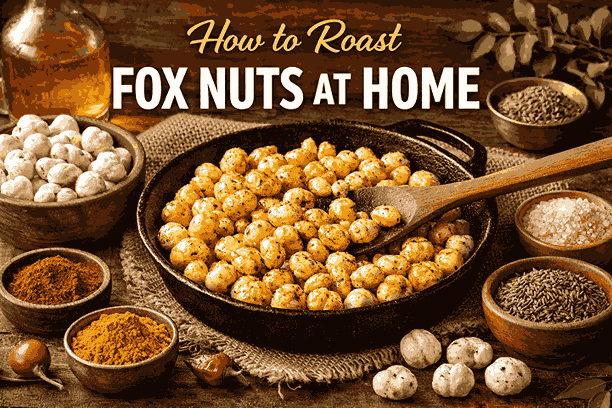
How to Roast Fox Nut at Home: Crispy Makhana, Zero Guesswork

Introduction If you’ve ever opened a bag of Fox Nut ( makhana) and thought, “Why is this sometimes perfectly crunchy… and other times weirdly chewy?”—you’re not imagining it. The magic isn’t in buying the “right” bag. It’s in roasting Fox Nut correctly at home, so every bite lands crisp, light, and toasty instead of stale or squeaky. Here’s the twist most people miss: what we buy as makhana is already a popped/expanded kernel from the gorgon nut plant (botanically Euryale ferox). That means home roasting isn’t about “cooking it from raw”—it’s about driving off residual moisture and boosting flavor, like refreshing day-old chips in an oven.  And yes, you’ll see the naming confusion everywhere—“fox nuts,” “lotus seeds,” “water lily seeds.” Even official industry discussion notes that “gorgon nut” is the more accurate term and that the common labels can be misleading because they’re not the same botanical source. That confusion matters because it affects expectations: makhana roasts fast, goes from pale to toasted quickly, and needs gentle heat + movement.  Comparison Home roasting Fox Nut is simple—but the “best” method depends on what you value: hands-off convenience, maximum crunch, or quick small batches. Here’s a practical comparison, based on established Indian snack methods (stovetop roasting) and common modern alternatives (air fryer/oven).  If you want the most reliable “blog-worthy” result, stovetop wins—because you can feel, hear, and smell the moment Fox Nut hits peak crunch (and you can season it without guessing timing). That’s why classic snack recipes emphasize pan-roasting first, then adding ghee/spices briefly.  Key Insights What roasting Fox Nut is really doing Think of Fox Nut as a tiny, airy starch-and-protein foam that’s already been puffed—so the goal isn’t browning like a cookie. The goal is moisture management + a little toasty chemistry. Two research-backed ideas make this make sense: That’s also why adding a little ghee or oil at the right moment works so well: fat helps carry spice flavor, improves mouthfeel, and lightly “lubricates” the surface so salt and masala actually stick. Traditional recipe methods repeatedly use this sequence—dry roast first, then add fat + spices briefly.  The foolproof stovetop roast method for Fox Nut This is the method I recommend if you want that “store-bought flavored makhana” crunch—without the mystery additives or the uneven roasting. What you need (1 medium bowl / 3–4 cups Fox Nut): Step-by-step (with the cues that actually matter): Warm the pan, then go low and slow.Use a heavy pan/kadai and preheat it briefly. Add Fox Nut dry (no oil yet) and roast on low heat, stirring constantly, until it starts to feel lighter and sound slightly “hollower” as it tumbles. Many established recipes put this dry-roast window around 6–10 minutes depending on pan and batch size.  Do the crush test—don’t trust color.Fox Nut can look almost the same before and after roasting. The more reliable test used in multiple home methods is: take one piece, cool it for a second, and press it between fingers. Now add ghee/oil (quickly), then spices.Once the Fox Nut is crisp, reduce heat to low (or briefly switch off), add ghee, and immediately add spices so they bloom for only a short moment. Then toss the roasted Fox Nut back in and stir to coat. Several standard methods follow this exact pattern to avoid burning spices while still getting even coating.  Finish with a short “set” roast.After coating, roast another 2–5 minutes on low, stirring, just to set the seasoning and re-crisp the surface. Then cool completely before storing. This “second roast” is specifically called out in some classic snack approaches to ensure crispness after seasoning.  A small but game-changing insight:If your Fox Nut tastes seasoned but still gets soft in 20 minutes, it usually means one of two things: Dry roast first. Fat second. Always. Seasoning and storage that keep Fox Nut crunchy Seasoning logic (why some mixes flop):Fox Nut is mild—so it loves bold flavors—but some seasonings burn or turn bitter if cooked too long. The safest approach is: Here are three seasoning profiles that feel fresh (and actually stick): Savory “Chaat-style” (classic but unbeatable) Pepper-turmeric “clean snack” Sweet-leaning “cinnamon crunch” Storage (the part that decides if your work was worth it): If your kitchen is humid, a surprisingly effective trick is to store roasted Fox Nut with a food-safe desiccant pack (the kind that comes in many snack packages) outside direct contact with food, or simply roast smaller batches more often. Conclusion Roasting Fox Nut at home is one of those “small skills” that pays off fast: a 10-minute routine that turns an okay snack into a genuinely craveable one. The key is understanding what you’re doing—refreshing a popped kernel by driving off moisture, then adding fat + spices at the end for flavor and adhesion.  If you want a simple rule to remember, make it this: Crunch is made in the dry roast. Flavor is locked in at the finish. CTA:Have you tried roasting Fox Nut at home—team plain + salted, or team masala everything? Drop your favorite seasoning combo in the comments, and if you want more snack-science posts like this, subscribe so you don’t miss the next crunchy obsession.

fox-nut-good-for-heart-health
Health

Fox Nut and Your Heart: Can Makhana Keep Your Ticker Happy?

Introduction — a quick hookImagine a crunchy snack that feels indulgent, yet is low in saturated fat, packed with minerals, and part of traditional medicine for centuries. This is what makes fox nuts (makhana) such a unique and popular healthy snack. In this post I’ll walk you through what science says about fox nuts and heart health, practical ways to eat them, and how they compare to other snacks — with clear sources so you can judge for yourself. Quick primer: what is a Fox Nut? Fox nuts are the popped seeds of Euryale ferox, an aquatic plant. In India they’re commonly called makhana and are a popular roasted snack. They’re starchy, light, and—when prepared simply—low in fat and sodium, which is why many people reach for them as a healthier alternative to chips. How Fox Nuts could help the heart — the evidence, explained 1. Minerals that matter: potassium & magnesium Potassium and magnesium play well-known roles in blood pressure regulation and heart rhythm. Fox nuts contain useful amounts of both minerals, which supports the idea they can be part of a heart-friendly diet. However, this is a supportive role—not a cure. 2. Low saturated fat, low cholesterol Unlike many processed snacks, plain roasted fox nuts have almost no saturated fat and no cholesterol. Swapping high-saturated-fat snacks for makhana can reduce dietary contributors to high LDL cholesterol over time. 3. Antioxidants & anti-inflammatory compounds Phytochemical reviews show that Euryale ferox contains polyphenols and flavonoids with antioxidant potential. Antioxidants help lower oxidative stress, which is linked to atherosclerosis. Most studies so far are lab-based or compositional—human trials specifically measuring heart outcomes are still limited. So: promising mechanisms, but more clinical data needed. Fox Nuts and Health: What Research Supports Practical comparison: Fox Nut vs common snacks Attribute Fox Nut (makhana) Roasted Almonds Potato chips (fried) Popcorn (air-popped) Typical sat. fat Very low. Low-moderate (healthy fats) High Very low Protein Moderate (≈8–10g/100g). High (≈21g/100g) Low Low Fiber Moderate–high Moderate Very low Moderate Potassium & Mg Good source. Good source Low Low Antioxidants Present (polyphenols). High Low Variable Best if you want low-fat crunchy snack? ✅ ✅ (but calorie dense) ❌ ✅ Notes: numbers vary by source and processing method (roasted, salted, masala, etc.). Use the table below as a quick reference for understanding fox nuts nutrition. How to include Fox Nuts in a heart-friendly diet (my personal take + recipes) I started swapping a late-afternoon packet of chips for a small bowl of roasted makhana a few months back. Here’s what worked: Roasting improves texture and (in some analyses) mineral availability — so homemade roasted makhana is a great option. Bottom line — should you eat Fox Nuts for your heart? Yes, when included in a healthy and balanced diet. Fox Nut (makhana) is a low-saturated-fat, nutrient-rich snack that contains potassium, magnesium, fiber, and antioxidants — all of which support heart health in principle. Fox nuts can support a healthy lifestyle, but they should not be relied on as a miracle solution. The strongest evidence today is compositional and mechanistic; large human trials with heart outcomes are still lacking. Make makhana a smart swap (instead of fried snacks), combine it with other whole foods, and focus on overall diet and lifestyle for real cardiovascular benefit. References & further reading (selected) Call to action (CTA) Tried makhana before—plain or masala? Tell us in the comments how you like to enjoy fox nuts (makhana). Want a printable infographic or a 7-day heart-friendly snack plan with makhana included? Comment “Snack Plan” and I’ll create a snack guide for you.

fox-nuts-nutritional-value
Health

Why Fox Nut deserves a place in your snack jar

Introduction If you’re searching for a crunchy snack that’s lightweight on calories but heavy on benefits, Fox Nut (also called makhana or phool makhana) is quietly becoming the hero of healthy munching. Roasted, spiced, or tossed into a salad, these popped water seeds deliver surprising protein, fiber and minerals while keeping fat and sodium low — a combo that’s rare in ready-to-eat snacks. After reviewing nutrition databases and recent analyses, this post breaks down exactly what’s in fox nuts, how they compare to other snacks, and how to use them practically in daily eating. Quick snapshot: Nutrition per 100 g (puffed/ready to eat) Below is a practical table you can paste into your article or product page. Values are aggregated from nutrition listings and industry sources (puffed makhana serves slightly fewer calories than raw seeds). Nutrient (per 100 g) Amount Calories ~340–350 kcal Protein ~9.7 g Carbohydrates ~76–77 g Dietary fiber ~14–15 g Total fat ~0.1–0.5 g Calcium ~60 mg Phosphorus ~200–350 mg Potassium ~500 mg Iron ~1.4 mg Magnesium ~60–110 mg How to read the numbers — what they mean for your health Fox Nut vs common snacks: Where it wins (and where it doesn’t) Short comparison to guide readers choosing snacks: Evidence-backed benefits — what research and analyses say Researchers and nutrition compendia highlight a few promising areas for fox nuts: Caveat: most strong health claims need human clinical trials; current evidence is supportive but not definitive. Use fox nuts as part of an overall healthy diet rather than a miracle food. Practical serving sizes & snack ideas A helpful, realistic approach for readers: Quick recipe: Spicy Roasted Fox Nut (30 g serving) Final takeaways — TL;DR Unique Health Benefits You Might Not Know (fox nut) We know they are healthy, but let’s get specific about how regular consumption of Fox Nuts can alter your physiology. 1. The Anti-Aging Agent Fox Nuts contain a high concentration of antioxidants, particularly kaempferol—a flavonoid also found in tea and broccoli. According to a study published by the National Institutes of Health (NIH), kaempferol has neuroprotective and anti-inflammatory properties. Eating these seeds can help combat oxidative stress, which is the primary driver of aging at a cellular level. 2. A Diabetic’s Best Friend The glycemic index (GI) of Makhana is relatively low (around 25-30). This means the carbohydrates are broken down slowly, releasing glucose into the bloodstream gradually rather than in a rush. For those managing type 2 diabetes, a handful of lightly roasted Fox Nuts can be a safe way to quell hunger without requiring a spike in insulin. 3. Heart Health and Ama In Ayurveda, “Ama” refers to toxic waste that clogs the channels of the body—a concept similar to arterial plaque in Western medicine. The magnesium and potassium content in Fox Nuts help regulate blood pressure and reduce LDL cholesterol, effectively cleansing the circulatory system. How to Incorporate Fox Nuts into Your Daily Life One of the best things about this ingredient is how versatile it is. While they are delicious straight out of the bag, treating them as a blank canvas can elevate your culinary game. A Word on Quality and Preparation (fox nut) Not all Fox Nuts are created equal. If you wander through the snack aisle, you’ll find them coated in “Masala” or “Creamy Onion” flavorings. While tasty, these often negate the health benefits by adding MSG, excessive sodium, and vegetable oils. For optimal health benefits: Conclusion: The Timeless Crunch (fox nut) In a world obsessed with novelty, the Fox Nut stands as a testament to the wisdom of our ancestors. It bridges the gap between the spiritual practice of fasting and the modern need for convenient, macro-friendly nutrition. Whether you are an athlete looking for a post-workout recovery snack, a busy professional needing a desk-drawer staple, or simply someone seeking a lighter alternative to dinner-time nibbles, Makhana (fox nut)offers a solution that is both delicious and deeply nourishing. So, the next time you reach for a bag of something crunchy, remember that little white puff. It’s not just a snack; it also carries a long history, valuable minerals, and a satisfying crunch that supports your health. Have you tried roasting Fox Nuts with a unique spice blend?Tell us which flavor combinations you enjoy the most. Drop a comment below and share your Makhana magic with the community!

Golmoti – Premium Quality Makhana

Our Promise

At Golmoti, premium quality makhana comes first.
We ensure every pack delivers freshness, purity, and authentic taste.

Contact Us

India,Bihar, Dist-Darbhanga,Benipur,Pauri.847201

support@golmoti.com

Copyright ©  2026 All right reserved

Scroll to Top