best-way-to-eat-makhana-for-weight-loss

Best Way to Eat Makhana (Fox Nuts) for Weight Loss

Makhana (fox nuts) are a low-calorie, nutrient-dense snack from Asian lotus seeds. They’ve recently gained popularity as a “guilt-free” crunchy treat, especially for weight-conscious eaters. Makhana are very low in fat and high in protein and fiber, which means a small bowl can keep you full for hours without spiking blood sugar. In fact, experts note that makhana’s high protein and fiber content helps suppress hunger and curb cravings. As one Times of India report explains, these “fox nuts” are low in calories and loaded with nutrients (calcium, magnesium, iron, phosphorus), making them a wholesome, satisfying snack that keeps you full longer

best-way-to-eat-makhana-for-weight-loss

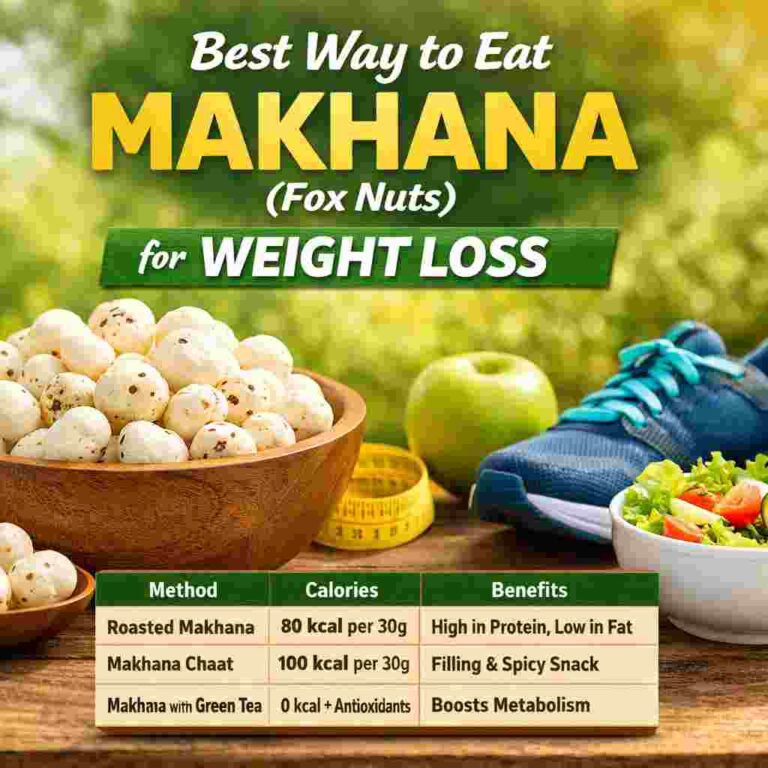
Image: Roasted makhana (fox nuts) ready to eat.

Makhana can be enjoyed plain or seasoned. Nutritionally, they pack a punch: about 104 calories per 30g serving, with roughly 2.6g protein, 4.4g fiber, and only 0.03g fat. They’re also rich in minerals – for example, one cup (32g) provides calcium, magnesium, phosphorus and potassium. This makes them particularly weight-loss friendly: the fiber and protein both slow digestion and promote satiety, so you feel full on fewer calories. In fact, makhana rank among the “lowest-fat, highest-fiber” snack options available. Their low glycemic index also means they won’t cause sudden blood sugar spikes – a plus for avoiding energy crashes and overeating later.

Fox Nuts vs. Other Snacks: A Comparison

To see why makhana are weight-loss friendly, compare them with common snacks. The table below shows nutrient values per 30g:

SnackCaloriesProtein (g)Fat (g)Fiber (g)
Popped makhana1042.60.034.4
Air-popped popcorn933.11.13.6
Potato chips1602.010.31.5
Roasted almonds1736.315.03.7

This shows that 30g of popped makhana (like a small bowl) has nearly the same calories as 30g popcorn, but far less fat (virtually none) and more fiber. In contrast, 30g potato chips have 160 calories and 10g fat, with just 1.5g fiber. These numbers highlight why nutrition experts praise makhana for weight management: you get bulk from fiber and protein, with minimal calories from fat.

Why Makhana Support Weight Loss

best-way-to-eat-makhana-for-weight-loss
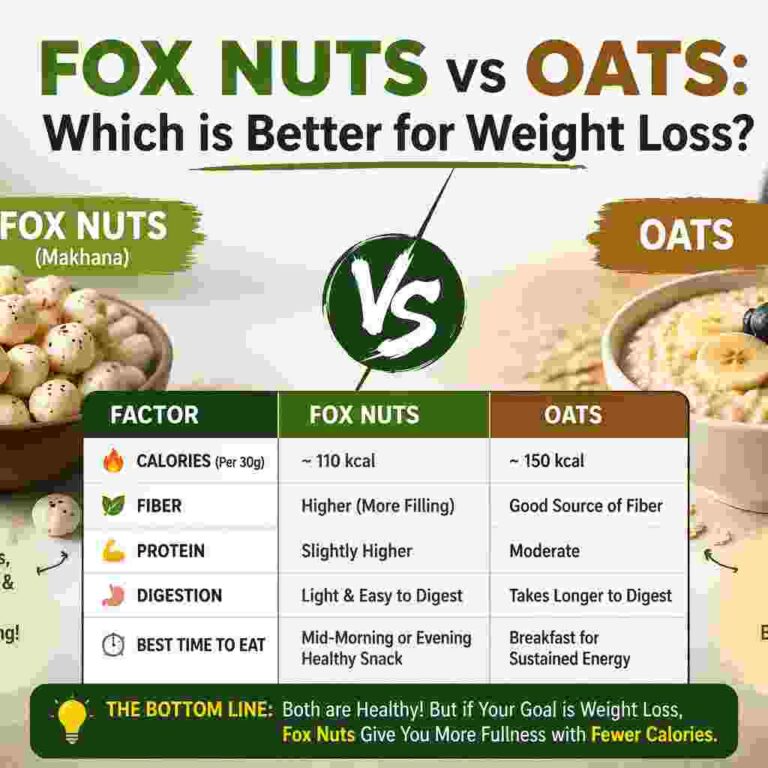
  • High Satiety, Low Calories: The fiber and protein in makhana take longer to digest, so they keep you full on ~100 calories per serving. As NDTV Health notes, their “nutrient-dense properties make them a snack that can make you feel full” without causing an insulin spike.
  • Blood Sugar Friendly: Makhana have a low glycemic index, meaning they release energy slowly. This steadiness helps avoid blood-sugar crashes (and the cravings they trigger). They’re often recommended as a diabetes-friendly snack for this reason.
  • Rich in Nutrients: Beyond fiber and protein, makhana deliver bone-supporting minerals and antioxidants. While not a magic bullet, their overall profile (low calorie, high fiber/protein) fits well into a balanced weight-loss diet.
  • Ancient Superfood: Used in Ayurvedic tradition for millennia, makhana were prized as a “tridoshic” food that balances all constitutions. The overlap with modern science (low GI, high fiber, anti-inflammatory flavonoids) is compelling and suggests they’re more than just empty crunch.

Smart Ways to Eat Makhana for Weight Loss

Eating makhana the right way makes all the difference. Here are practical tips to maximize their weight-loss benefits:

  • Dry-Roast or Lightly Toast: The healthiest way is to dry roast raw makhana in a hot non-stick pan until crisp (like popcorn). You can add a splash of healthy oil (olive oil or ghee) for flavor, but keep it minimal. This preserves the low fat content.
  • Season Simply: Once roasted, season with spices instead of heavy sauces or sugars. Popular seasonings include salt, turmeric, black pepper, chili powder or chaat masala. For example, one popular “masala makhana” tea-time snack is made by tossing dry-roasted makhana with chili powder, black salt and herbs. This adds flavor without many extra calories.
  • Use as Meal Add-In: Makhana can bulk up meals in a healthy way. Try adding a handful to curries, salads, or soups. For instance, Indian recipes use makhana in kheer (a milk pudding) or makhana curry for richness. (Keep dairy and sweeteners light – e.g. low-fat milk and just a teaspoon of jaggery – to keep calories in check.) You can also sprinkle a few on yogurt with fruit or on a vegetable stir-fry.
  • Portion Control: Even healthy snacks can overdo it. Stick to about 30–50g of makhana per sitting (roughly 1 cup popped). NDTV’s guide reminds us that “every natural food has side effects if eaten in excess”, so keep servings moderate. A small bowl of makhana can replace a bag of chips without blowing your calorie budget.
  • Snack Smart: Use makhana to replace ultraprocessed snacks. For example, munch on a bowl of seasoned roasted makhana in the evening instead of reaching for fried namkeen or potato chips. Because they’re crunchy and savory, they satisfy snack cravings with a fraction of the calories. You can also mix popped makhana into a homemade trail mix (with nuts, seeds, and dried fruit) for a wholesome snack that’s free of common allergens.
  • Avoid Pitfalls: Skip the store-bought flavored makhana packets that are fried or coated in sugary syrups. These can ruin the health halo by adding hidden oil or sweeteners. Instead, opt for plain raw makhana and toast them yourself.

Bottom Line

In sum, fox nuts (makhana) are a great weight-loss snack when prepared wisely. They fill you up on fiber and protein, stabilize blood sugar, and add nutrients – all at very low calorie cost. To reap the benefits, roast them at home and season naturally (as shown above) rather than buying the high-calorie flavored varieties. Try substituting makhana for your usual chips or crackers and notice how long the hunger stays away!

What’s your favorite way to enjoy makhana? Share your recipes or tips in the comments. And if you found this helpful, check out our other posts on healthy snacks and weight-loss tips.

calories-in-fox-nuts-makhana-a-complete-guide

Calories in Fox Nuts (Makhana): A Complete Guide for Weight Loss & Healthy Snacking

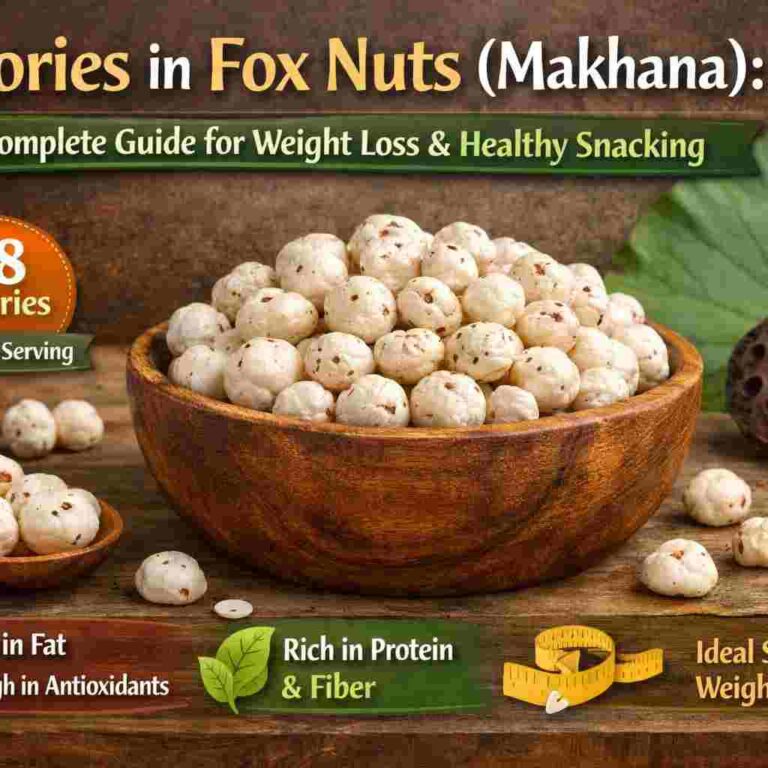
Imagine snacking on something crunchy, satisfying, and guilt-free – that’s fox nuts (makhana) for you. Once considered a “food reserved only for the gods” in India, makhana (fox nuts) have quietly become a favorite among dieters and health buffs. In this complete guide, we’ll crunch the numbers on calories, macros, and nutrition in fox nuts, and show how these humble lotus seeds can fit into a weight-loss or healthy snacking plan. You’ll learn why fox nuts pack lots of volume with relatively few calories, how they compare to popular snacks, and practical ways to enjoy them.

calories-in-fox-nuts-makhana-a-complete-guide

Fox nuts (makhana) are the popped seeds of the aquatic lotus plant Euryale ferox, also called lotus seeds or water-lily seeds. They start as hard, starchy seeds, which are heated until they puff up like popcorn. Traditionally used in Indian festivals and Ayurvedic recipes, makhana have long been prized as a light, “sattvic” (pure) food – often offered to deities or eaten during Hindu fasting days like Navratri and Ekadashi. Today, they’re simply enjoyed as a nutrient-rich snack.When roasted, fox nuts (makhana) turn light, fluffy, and perfectly crispy, making them a delicious snack that is naturally lower in fat and calories compared to most processed munchies.

Fox nuts are gaining fame because they deliver big crunch with relatively few calories. They’re mostly carbohydrate (mostly starch), with a decent amount of plant protein, fiber and almost no fat. For example, just 1 cup of dried makhana (about 32 g) has only about 106 calories. That same 32 g serving also provides around 5 g of protein and significant calcium, magnesium and other minerals. In contrast, 100 g of raw (unpopped) makhana contains roughly 350–360 kcal, whereas the popped/roasted product is around 328 kcal per 100 g. (The small calorie difference reflects moisture loss and any added oil when roasting.) By comparison, energy-dense nuts like almonds pack about 578 kcal per 100 g, so by weight fox nuts are much lighter.

Almonds (shown) are very energy-dense – about 578 kcal per 100 g – whereas 100 g of raw fox nuts has only ~362 kcal with negligible fat. This makes makhana a crispy, lower-calorie snack alternative to most nuts and chips.

In practical terms, these numbers mean you can eat a generous handful of makhana and stay within a moderate calorie budget. As The Times of India explains, makhana’s “low energy value per gram” lets you eat a decent volume without a big calorie hit. In other words, a large bowl of makhana will weigh more and look more filling than the same calories in potato chips or nuts, helping curb hunger. This is great for weight loss: volume eating with very crunchy, satisfying texture.

Nutrition Snapshot: Calories and Macronutrients

Let’s break down the key nutrition facts. According to USDA-based data, 1 cup (32 g) of dried fox nuts has:

calories-in-fox-nuts-makhana-a-complete-guide
  • Calories: ~106 kcal
  • Protein: ~4.9 g
  • Carbohydrates: ~20 g (mostly complex starch)
  • Dietary Fiber: ~7–8 g (about 25% of total weight).

So you get about 3–4 g of protein and 7–8 g of filling fiber per 106 calories. Low fat (virtually 0.1 g) and low sugar make them a clean snack. Makhana are also surprisingly rich in minerals – each serving brings calcium, magnesium, potassium, phosphorus and iron – plus antioxidants like gallic and ellagic acid (which may have health benefits).

For larger servings, the totals climb predictably. Here’s a quick reference:

TypeServing SizeCalories
Raw Fox Nuts (makhana)100 g~362 kcal
Roasted/Popped Fox Nuts100 g~328 kcal
1 cup dried makhana (≈32 g)32 g~106 kcal

Even roasted makhana (if cooked without much oil) stay low in fat. Of course, frying them in butter or ghee will bump up the calories a bit – “there is a modest increase in calories when oil or ghee is used” during roasting. But plain dry-roasted or air-popped makhana remain nearly fat-free and light.

Raw vs. Roasted Fox Nuts

You’ll find raw (dried) makhana sold in Indian stores; these are popped but unseasoned. Roasting (dry on a skillet or in a bit of oil) to make them crispy is up to you. Raw makhana in powder form can even be made into gluten-free flour. Here’s how they differ nutritionally:

  • Raw (unpopped) seeds: When dried but not fried, fox nuts are almost fat-free and rich in fiber and protein. This makes them ideal if you’re carefully watching calories or fat. You can then roast them at home with controlled oil and spices.
  • Roasted/popped: Even when dry-roasted in a nonstick pan, makhana become airy and crunchy. They remain low-calorie, but if you add oil or seasonings you add some calories and sodium. For example, Granos notes that roasting with oil will slightly increase calories. Also, gentle roasting helps retain nutrients, whereas high-heat or oily cooking may reduce heat-sensitive vitamins and antioxidants.

In short, raw makhana (sun-dried, unseasoned) is basically pure lotus seed starch – still healthful, but bland on its own. Roasted makhana is more palatable (and safer to eat), with all their inherent protein and fiber, provided you don’t go overboard on frying. Choosing raw lets you control the fat and salt; choosing roasted is more convenient. Both forms share the same basic 330–360 kcal/100g range.

Makhana and Weight Loss: How They Help

calories-in-fox-nuts-makhana-a-complete-guide

Why do fox nuts have a reputation as a diet-friendly snack? It’s all about protein, fiber, and portion volume. Health experts point out that makhana’s combination of protein and fiber helps with satiety and appetite control. As Healthline explains, adding makhana (fox nuts) to your diet “can help increase your intake of protein and fiber, two key nutrients that may benefit weight loss”. High-protein diets can reduce hunger and cravings, and fiber takes longer to digest, making you feel full longer. One industry source even highlights that “high protein and fiber make you feel fuller for longer, which cuts down on overindulgent snacking”.

Moreover, fox nuts have a low glycemic load. Their carbs are mostly complex starch, so they digest slowly, keeping blood sugar steady rather than causing spikes that lead to hunger later. Times of India notes that this slow energy release “stabilizes the blood sugar level and reduces sudden hunger”. In practice, this means munching on makhana (instead of, say, potato chips) is less likely to trigger the cravings that derail diets.

Importantly, though, remember that portion control still matters. Even low-calorie foods add up if you eat tons of them. One should be mindful that 100 g of makhana (which might be 3–4 cups popped) still contains ~340–360 calories, comparable to many snack foods. As Healthline warns (citing expert advice), eating large amounts (100 g or more) can contribute significant calories. In my own experience, snacking on a handful (about 30–40 g) is plenty to feel satisfied. For reference, ~30 g of plain roasted makhana is ~100–120 kcal, roughly the same as a small handful of nuts.

A bowl of nuts (almonds) – by contrast, 100 g of almonds packs ~578 calories. Fox nuts give you crunch and protein/fiber but at far lower calorie and fat density.

Fox Nuts vs. Popcorn and Other Snacks

calories-in-fox-nuts-makhana-a-complete-guide

How do fox nuts stack up against popular snacks? Let’s compare per 100 g (about 3–4 cups popped):

  • Fox Nuts (makhana): ~328–362 kcal, ~10 g protein, ~80 g carbs, ~15 g fiber, ~0.5 g fat.
  • Air-Popped Popcorn: ~387 kcal, ~12 g protein, ~77 g carbs, ~15 g fiber, ~4.5 g fat (when plain).
  • Almonds: ~578 kcal, 21 g protein, 19 g carbs, 12 g fiber, 50 g fat.
  • Potato Chips (plain): ~535 kcal, 7 g protein, 51 g carbs, 5 g fiber, 35 g fat (per 100 g) — for perspective.

Fox nuts contain fewer calories and fat than most nuts or chips, and slightly fewer calories than plain popcorn. In other words, you get more crunchy volume with makhana for your calories. Unlike popcorn, fox nuts are naturally gluten-free and almost oil-free. The fiber in both is similar (roughly 14–15 g per 100 g), but popcorn has more fat from even a little oil in popping. Overall, makhana emerges as a lighter snack: it’s “nearly fat-free” yet still provides a crunch that satisfies like popcorn.

The Times of India sums it up: makhana’s low calorie density lets you munch more without spiking intake, and their slow-digesting carbs make them a “diabetic-friendly, low-GI snack.” In practice, substituting makhana for chips, crackers or sweets can cut your snack calories substantially. (A small confession: I used to eat a bowl of salted chips after dinner, but switching to dry-roasted makhana has allowed me to eat the same volume for way fewer calories.)

Serving Sizes & Calorie Chart

To help plan snacks, here’s a quick serving-size chart for fox nuts:

ServingWeight (approx)Calories
1 level cup of dried fox nuts32 g~106 kcal
1 handful (about 30 g)30 g~100 kcal (estimate)
Raw fox nuts (uncooked)100 g~350–362 kcal
Roasted/popped fox nuts100 g~328–348 kcal
Flavoured (e.g. salty/masala) fox nuts100 g~350–360 kcal (often similar)

Source: USDA & nutrition research (see sources).

As you see, one cup (≈32 g) is about 106 calories. Most packaged makhana snacks list calories per serving (e.g. 28 g or 30 g). One ounce (~28 g) of plain makhana is roughly 93 calories, so even a small snack bowl keeps you well under 150 kcal. If you season at home with just spices and a teaspoon of oil, fat stays minimal. However, heavily oil-fried versions or sugary-coated makhana (kheer/dessert) will raise the total.

Tips: Making the Most of Fox Nuts in Your Diet

To turn these numbers into results, use makhana smartly:

calories-in-fox-nuts-makhana-a-complete-guide
  • Snack Alone: Dry-roast plain fox nuts in a nonstick pan (with no or minimal oil) and season with salt, pepper, chili powder, or turmeric. A cup makes a crunchy, low-cal treat for under 120 calories.
  • Trail Mix Alternative: Add raw or roasted makhana to homemade trail mix with nuts, seeds and dried fruit. You’ll boost fiber and crunch without as many calories as all-nut mixes.
  • Meal Addition: Toss popped makhana into soups, stews or salads for texture and extra nutrients. In South Asia, they’re often added to curries (called Makhana Kheer in sweet desserts or curries in places).
  • Baking Flour: Grind dried makhana to make gluten-free flour. Use it to bake low-carb rotis or laddu (Indian sweets) in moderation. It thickens porridge or raita with protein and fiber.

Precautions and Pairing

Fox nuts are very safe, but a few notes: If you have kidney issues, be cautious – makhana has potassium and phosphorus, so it can accumulate. The Times of India warns kidney patients about the mineral load in makhana. Also, like any food, eat it in moderation: even low-calorie snacks add up. Stick to recommended serving sizes; avoid adding too much oil, salt or sugar during prep. If diabetic, makhana’s complex carbs and low GI are often helpful, but still count the carbs in your meal plan.

Pair makhana with other filling foods: a small bowl of makhana plus a side of yogurt or a piece of fruit makes a balanced snack. Its crunch will make you feel full, and the fiber/protein help stabilize blood sugar.

Conclusion

Fox nuts (makhana) prove that healthy snacking can be delicious and waistline-friendly. They’re naturally low in calories and fat, yet high in fiber, protein and minerals. This unique combo – plus their big crunchy volume – means you can indulge your snack cravings while still losing or maintaining weight. As you’ve seen, 100 g of makhana offers only ~340 kcal, compared to ~580 kcal in the same weight of almonds or ~530 kcal in potato chips. Swap a handful of chips or fried nuts for a bowl of roasted makhana, and you’ll save hundreds of calories effortlessly.

Fox nuts are more than just a snack; they’re a tradition turned superfood. Try them at home or on the go, and enjoy the guilt-free crunch. Have you used makhana in a recipe or diet? Share your experience or favorite makhana snack tip below! (And if you loved this guide, subscribe for more nutrition insights and healthy-recipe ideas.)

Sources: Authoritative nutrition databases and health publications , including Healthline, Times of India, and peer-reviewed reviews.

makhana-vs-protein-snacks

Makhana vs Protein Snacks: Best Choice for Fitness Enthusiasts?

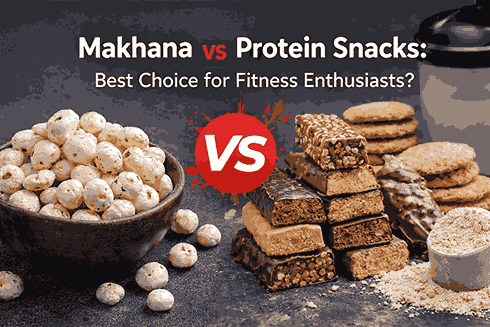
Fitness fanatics often debate snack options: should you reach for crunchy makhana (fox nuts) or grab a high-protein bar? Makhana – the popped lotus seeds popular in South Asian diets – have surged in popularity as a “natural” healthy snack. But how do they truly compare to protein-rich alternatives? This deep dive examines the nutrition profiles, pros and cons, and expert insights on fox nuts vs common protein snacks, helping you choose the best fit for your workout goals. We’ll look at calories, macros, fibre, and micronutrients, and even share practical tips and snack ideas. Let’s crunch the numbers and debunk the myths, so you can snack smart.

makhana-vs-protein-snacks

What Is Makhana (Fox Nut)?

Makhana – also known as fox nuts or lotus seeds – are harvested from the aquatic lotus plant. They’re puffed by dry-roasting, producing a light, crisp texture (think popcorn-like crunch). Key facts: They’re naturally gluten-free, low in fat, and have a mild, nutty flavor. In Ayurvedic tradition and modern health circles, fox uts has earned a “superfood” reputation for its nutrient content and filling nature.

According to Medanta Hospital’s nutrition team, 100g of plain, roasted makhana contains roughly 347 calories, 9.7g protein, 76.9g carbs and 14.5g fibre, with almost negligible fat (0.1g). In practical terms, one cup (about 32g) of these popped seeds has only ~106 calories and ~4.9g protein. This means you can enjoy a generous portion for relatively few calories, especially compared to oily chips or even some nuts. The high fibre and protein give fox nuts real substance – studies note that “adding makhana seeds to your diet can help increase your intake of protein and fibre… that may benefit weight loss”.

Aside from macros, makhana packs micronutrients: calcium (≈60mg/100g)magnesium (≈67mg)phosphorus (≈188mg) and potassium (~500mg). These minerals support bone health and muscle function. Makhana also boasts antioxidants (like kaempferol and gallic acid), which may reduce exercise-induced oxidative stress. In short, while not a protein powerhouse, makhana is a nutrient-dense, low-fat snack that delivers steady carbs and fibre – a combo praised by dietitians for appetite control.

Typical High-Protein Snacks

Fitness enthusiasts have many snack options to boost protein intake. Popular choices include nuts and seeds, legumes, dairy, and dedicated protein products. For comparison:

makhana-vs-protein-snacks
  • Roasted Chickpeas (Chana): About 355 kcal per 100g with ~18–19g protein. They also supply 16–17g fibre and moderate fat (6–7g). High in vitamin C and minerals, chana is very filling.
  • Dry-Roasted Peanuts: Around 585 kcal per 100g with ~23.7g protein. However, peanuts are calorie-dense fat bombs (50g fat!) which can limit portion size. They offer ~8g fibre and about 21g carbs.
  • Greek Yogurt (Nonfat): Only 92 kcal per 100g but high-protein (~9.5g). It’s creamy and contains no fibre but provides probiotics and calcium.
  • Protein Bars (Average): Typically 350 kcal per 100g with roughly 20–30g protein (FitCommit reports ~33g/100g). Carbs ~37g, fat ~12g, and ~5g fibre. They’re designed to be high-protein, but may include added sugars and additives.
  • Nuts (Almonds, etc.): Almonds have ~578 kcal and 21g protein per 100g (mostly healthy fat, ~50g).

In practice, you might snack on a handful of nuts, a boiled egg (6g protein each), a scoop of protein powder, or turkey jerky. The common thread is protein density, which is often higher than makhana’s ~10–15% protein content.

Nutrition Comparison

The table below summarizes typical macronutrients for 100g servings of makhana and other popular protein snacks. (All values are approximations from credible sources.)

Snack (100g)CaloriesProtein (g)Carbs (g)Fat (g)Fibre (g)
Makhana (Fox Nuts)3479.776.90.114.5
Roasted Chana (Chickpeas)35518.658.66.316.8
Dry Roasted Peanuts58523.721.549.78.0
Greek Yogurt (Nonfat)929.55.73.60
Protein Bar (avg)3503337125

Data sources: Medanta (makhana), FatSecret & USDA entries for chickpeas, peanuts, yogurt, and FitCommit (protein bar).

This comparison highlights key differences:

  • Protein: Protein bars and peanuts have 2–3× more protein per 100g than makhana. Greek yogurt and makhana are lower-protein but also much lower-calorie.
  • Calories & Fat: Nuts (peanuts, almonds) are very calorie-dense due to fat. Protein bars and chickpeas have more fat/calories than makhana, though bar macros vary widely. Makhana is by far lowest in fat and one of the lowest in calories (besides yogurt).
  • Carbs & Fibre: Makhana and chickpeas are carb-heavy but also high-fibre, aiding satiety. Peanuts are lower-carb. Greek yogurt has minimal carbs (only lactose sugar), but no fibre.

In short, makhana is a lightweight, high-volume snack: you can eat a large bowl for fewer calories. But it doesn’t compete with pure protein sources in protein content. Protein bars and animal/dairy-based snacks will best meet strict protein goals, whereas makhana shines as a low-fat, high-fibre filler.

Fitness Pros and Cons

Why fitness fans love makhana: They provide clean energy and satiety with minimal calories. Multiple experts note that makhana’s high complex carb and fibre content helps control appetite and stabilize blood sugar during workouts. For example, Healthline points out that adding makhana “can help increase your intake of protein and fiber… that may benefit weight loss”. A dietitian in an Apollo clinic similarly praises makhana’s low energy density: you get satisfying crunch and volume without excess fat or additives. In practice, this means swapping potato chips for roasted makhana lets you snack with fewer calories, aiding weight or fat loss goals.

Makhana’s micronutrients are a bonus. It’s a good source of calcium and magnesium – key for bone strength and muscle function. Sundried Nutrition notes that makhana’s protein (albeit moderate) combined with its minerals “contribute to muscle repair and rebuilding after exercise”. Its flavonoids (kaempferol, gallic acid) have anti-inflammatory and antioxidant effects, which could help reduce post-workout soreness.

Furthermore, makhana’s low glycemic index means its carbs release slowly. For endurance training, this is ideal: it provides sustained fuel without spiking insulin. Sundried suggests that consuming makhana as a pre-workout snack can “sustain energy throughout demanding training sessions”. Practically, munching on makhana 30–60 minutes before exercise can keep energy steady.

Even indulgence is somewhat “cleaner” with makhana: plain roasted makhana contain no added sugar and very low sodium (unless heavily salted). This contrasts with many bars or chips that hide sugars, oils or preservatives. In the words of NDTV’s experts: “Fox nuts are low in calories, high in protein, and rich in antioxidants,” making them a preferred snack that “doesn’t make you gain weight” (as long as it’s minimally seasoned).

Drawbacks of makhana: The trade-off is protein. At roughly 10g per 100g, you’d need to eat 3–4 servings of makhana to match one protein bar’s protein. For hard-training athletes or bodybuilders who target 1.2–1.6g/kg protein daily, makhana alone isn’t sufficient. (For perspective, a 70kg person might need ~84–112g protein/day.) Additionally, makhana has virtually no fat – which is good for calories but means you miss out on the healthy fats found in nuts and seeds that also support hormone and joint health.

On the other side, traditional protein snacks have their own trade-offs:

  • Protein bars: Pro: Very high protein (often 20g+ per bar) and convenient. Con: Can be expensive and may contain sugars, artificial ingredients or allergens. Some bars also spike blood sugar, defeating the “clean energy” goal.
  • Nuts/peanuts: Pro: Excellent protein and healthy fats, plus micronutrients. Con: Extremely calorie-dense, so portion control is critical. It’s easy to overeat nuts and overshoot calories.
  • Legumes (chickpeas, sprouts): Pro: High protein, high fibre, plant-based. Con: More carbs/calories than pure protein; some find them less convenient (cooking or chewing texture).
  • Dairy (Greek yogurt, cottage cheese): Pro: High-quality protein with calcium. Con: Not always portable or shelf-stable; some people dislike dairy or have intolerance.

A dietitian quoted in the Hindustan Times highlights this balance: “Roasted makhana are light yet protein-rich, perfect for winter snacking. They are easy to digest and can be flavoured with mild spices”. The keyword here is “yet protein-rich” – lighter than most bars or nuts, but still contributing to protein needs. Other snacks like a boiled egg or yogurt might deliver similar protein without fat, but makhana offers that crispy snack experience.

Incorporating Makhana into Your Fitness Diet

How should a fitness enthusiast actually eat makhana? Here are some practical tips:

makhana-vs-protein-snacks
  • As a standalone snack: Dry-roast plain makhana in an air-fryer or pan (no oil). Lightly salt or toss with spices (turmeric, black pepper, cumin, garam masala, or a cinnamon-cocoa blend) for flavour. A large bowl of air-popped makhana can be satisfyingly filling despite being under 150 calories. Use measured servings (e.g. ½–1 cup) to track intake.
  • Boost its protein: Pair makhana with other protein sources. For example, mix roasted makhana with a handful of roasted almonds and pumpkin seeds, or add a scoop of unflavored whey/plant protein powder and shake to coat – this can bump the protein content significantly (one brand suggests such a mix can match a protein bar’s content). You could also enjoy makhana with a side of Greek yogurt dip or cottage cheese to create a more balanced snack.
  • Timing: Makhana’s slow-digesting carbs make it great pre-workout. Have some ~30 minutes before cardio or an endurance session to sustain energy. After intense strength workouts, consider following makhana with a protein-rich drink or meal (since makhana alone has modest protein). For weight-loss goals, makhana is excellent as an evening or movie-night snack – satisfying crunch with minimal calories.
  • Recipes: Incorporate makhana into meals. Try a savory makhana chaat (fox nuts with yogurt, veggies, and spices), or makhana curry/khichdi (lataemakhanay Curry) for protein plus volume. Even sweet makhana kheer (pudding) can be made with low-fat milk and limited sugar. These are higher-prep options but make your fitness diet more interesting.

Calories and nutrition aside, personal preference matters. If you crave a crunchy, savoury snack, makhana wins hands down over a sweet protein bar. One nutritionist quipped that “masala roasted makhana are perfect for snacking – light yet protein-rich”, emphasizing that even flavourful versions needn’t derail fitness goals.

Making the Choice: Makhana or Protein Snack?

In the end, the “best” snack depends on your goals and needs:

  • For lean weight loss or calorie control: Makhana is a smart swap. You get fiber, crunch, and a modest protein bump without the caloric cost of nuts or bars. Its high volume helps curb hunger.
  • For muscle gain and recovery: You’ll likely need additional protein beyond what makhana alone provides. In that case, consider having a protein bar or shake post-workout, and use makhana as a complementary snack for variety and fiber.
  • For general health/snacking balance: There’s no harm in both! Many experts advise variety. For example, NDTV concludes that both fox nuts and roasted chana are “healthy in their own way”. Makhana is “lighter but less filling”, whereas chana (or a bar) “keeps you full longer”. Including a mix of protein-rich foods (legumes, dairy, lean meat) and fiber-rich snacks like makhana can cover all bases.

Key Takeaways

  • Makhana = Low-fat, high-carb snack: About 347 kcal, 9.7g protein, 76.9g carbs, 14.5g fiber per 100g. Very low in fat, gluten-free.
  • Protein snacks (chickpeas, nuts, bars) = Higher protein: Chickpeas ~19g protein/100g, peanuts ~24g, and bars ~33g. But they often come with more fat or additives.
  • Satiety and health: Both makhana and other protein snacks can support fitness. Makhana’s fiber and slow carbs aid fullness and stable energy. Protein bars and nuts boost muscle-building but may be calorie-dense.
  • Expert tip: Nutritionists suggest combining snacks. As one review notes, “higher protein at meals and snacks helps reduce hunger and support weight management”. You could snack on makhana plus a boiled egg or a dollop of Greek yogurt to get both fiber and protein in one sitting.
  • Healthy snacking habits: Opt for unsalted/plain roasted makhana to keep sodium low. Avoid sweetened or fried versions. Measure portions to prevent overeating (handfuls of anything can add up).

Which will you choose? If you need a crunchy, low-calorie munchie, makhana is a winning choice. If you need a quick protein hit, a bar or nut-based snack is better. Many fitness enthusiasts enjoy both – for example, having makhana as an afternoon nibble and a protein bar post-gym. The key is balance and whole foods: try to pick snacks with minimal processing.

◆ If you found this comparison useful, share your favorite healthy snacks below or let us know if you’ve tried swapping makhana into your diet. Subscribe for more nutrition tips, and explore our related guides on high-protein meals and smart snacking habits. Happy snacking and stay fit!

Sources: Nutrition databases and expert publications are cited throughout (e.g. ) to support the information above. Each reference links to the original data and recommendations.