Premium Makhana from Bihar - festival offer - up to 25% OFF!

Makhana vs Protein Snacks: Best Choice for Fitness Enthusiasts?

Fitness fanatics often debate snack options: should you reach for crunchy makhana (fox nuts) or grab a high-protein bar? Makhana – the popped lotus seeds popular in South Asian diets – have surged in popularity as a “natural” healthy snack. But how do they truly compare to protein-rich alternatives? This deep dive examines the nutrition profiles, pros and cons, and expert insights on fox nuts vs common protein snacks, helping you choose the best fit for your workout goals. We’ll look at calories, macros, fibre, and micronutrients, and even share practical tips and snack ideas. Let’s crunch the numbers and debunk the myths, so you can snack smart.
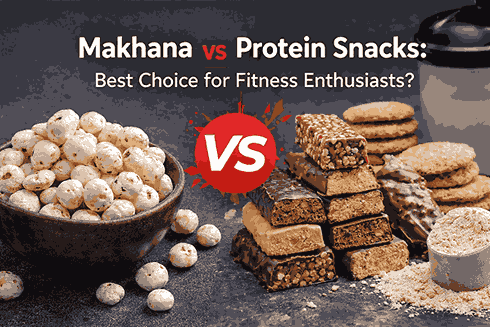
What Is Makhana (Fox Nut)?
Makhana – also known as fox nuts or lotus seeds – are harvested from the aquatic lotus plant. They’re puffed by dry-roasting, producing a light, crisp texture (think popcorn-like crunch). Key facts: They’re naturally gluten-free, low in fat, and have a mild, nutty flavor. In Ayurvedic tradition and modern health circles, fox uts has earned a “superfood” reputation for its nutrient content and filling nature.
According to Medanta Hospital’s nutrition team, 100g of plain, roasted makhana contains roughly 347 calories, 9.7g protein, 76.9g carbs and 14.5g fibre, with almost negligible fat (0.1g). In practical terms, one cup (about 32g) of these popped seeds has only ~106 calories and ~4.9g protein. This means you can enjoy a generous portion for relatively few calories, especially compared to oily chips or even some nuts. The high fibre and protein give fox nuts real substance – studies note that “adding makhana seeds to your diet can help increase your intake of protein and fibre… that may benefit weight loss”.
Aside from macros, makhana packs micronutrients: calcium (≈60mg/100g), magnesium (≈67mg), phosphorus (≈188mg) and potassium (~500mg). These minerals support bone health and muscle function. Makhana also boasts antioxidants (like kaempferol and gallic acid), which may reduce exercise-induced oxidative stress. In short, while not a protein powerhouse, makhana is a nutrient-dense, low-fat snack that delivers steady carbs and fibre – a combo praised by dietitians for appetite control.
Typical High-Protein Snacks
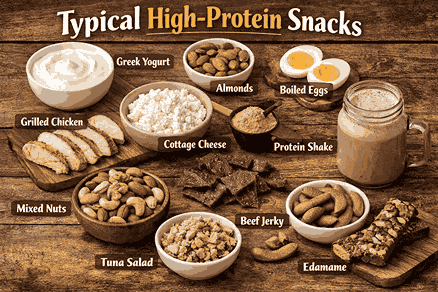
Fitness enthusiasts have many snack options to boost protein intake. Popular choices include nuts and seeds, legumes, dairy, and dedicated protein products. For comparison:
- Roasted Chickpeas (Chana): About 355 kcal per 100g with ~18–19g protein. They also supply 16–17g fibre and moderate fat (6–7g). High in vitamin C and minerals, chana is very filling.
- Dry-Roasted Peanuts: Around 585 kcal per 100g with ~23.7g protein. However, peanuts are calorie-dense fat bombs (50g fat!) which can limit portion size. They offer ~8g fibre and about 21g carbs.
- Greek Yogurt (Nonfat): Only 92 kcal per 100g but high-protein (~9.5g). It’s creamy and contains no fibre but provides probiotics and calcium.
- Protein Bars (Average): Typically 350 kcal per 100g with roughly 20–30g protein (FitCommit reports ~33g/100g). Carbs ~37g, fat ~12g, and ~5g fibre. They’re designed to be high-protein, but may include added sugars and additives.
- Nuts (Almonds, etc.): Almonds have ~578 kcal and 21g protein per 100g (mostly healthy fat, ~50g).
In practice, you might snack on a handful of nuts, a boiled egg (6g protein each), a scoop of protein powder, or turkey jerky. The common thread is protein density, which is often higher than makhana’s ~10–15% protein content.
Nutrition Comparison
The table below summarizes typical macronutrients for 100g servings of makhana and other popular protein snacks. (All values are approximations from credible sources.)
| Snack (100g) | Calories | Protein (g) | Carbs (g) | Fat (g) | Fibre (g) |
|---|---|---|---|---|---|
| Makhana (Fox Nuts) | 347 | 9.7 | 76.9 | 0.1 | 14.5 |
| Roasted Chana (Chickpeas) | 355 | 18.6 | 58.6 | 6.3 | 16.8 |
| Dry Roasted Peanuts | 585 | 23.7 | 21.5 | 49.7 | 8.0 |
| Greek Yogurt (Nonfat) | 92 | 9.5 | 5.7 | 3.6 | 0 |
| Protein Bar (avg) | 350 | 33 | 37 | 12 | 5 |
Data sources: Medanta (makhana), FatSecret & USDA entries for chickpeas, peanuts, yogurt, and FitCommit (protein bar).
This comparison highlights key differences:
- Protein: Protein bars and peanuts have 2–3× more protein per 100g than makhana. Greek yogurt and makhana are lower-protein but also much lower-calorie.
- Calories & Fat: Nuts (peanuts, almonds) are very calorie-dense due to fat. Protein bars and chickpeas have more fat/calories than makhana, though bar macros vary widely. Makhana is by far lowest in fat and one of the lowest in calories (besides yogurt).
- Carbs & Fibre: Makhana and chickpeas are carb-heavy but also high-fibre, aiding satiety. Peanuts are lower-carb. Greek yogurt has minimal carbs (only lactose sugar), but no fibre.
In short, makhana is a lightweight, high-volume snack: you can eat a large bowl for fewer calories. But it doesn’t compete with pure protein sources in protein content. Protein bars and animal/dairy-based snacks will best meet strict protein goals, whereas makhana shines as a low-fat, high-fibre filler.
Fitness Pros and Cons
Why fitness fans love makhana: They provide clean energy and satiety with minimal calories. Multiple experts note that makhana’s high complex carb and fibre content helps control appetite and stabilize blood sugar during workouts. For example, Healthline points out that adding makhana “can help increase your intake of protein and fiber… that may benefit weight loss”. A dietitian in an Apollo clinic similarly praises makhana’s low energy density: you get satisfying crunch and volume without excess fat or additives. In practice, this means swapping potato chips for roasted makhana lets you snack with fewer calories, aiding weight or fat loss goals.
Makhana’s micronutrients are a bonus. It’s a good source of calcium and magnesium – key for bone strength and muscle function. Sundried Nutrition notes that makhana’s protein (albeit moderate) combined with its minerals “contribute to muscle repair and rebuilding after exercise”. Its flavonoids (kaempferol, gallic acid) have anti-inflammatory and antioxidant effects, which could help reduce post-workout soreness.
Furthermore, makhana’s low glycemic index means its carbs release slowly. For endurance training, this is ideal: it provides sustained fuel without spiking insulin. Sundried suggests that consuming makhana as a pre-workout snack can “sustain energy throughout demanding training sessions”. Practically, munching on makhana 30–60 minutes before exercise can keep energy steady.
Even indulgence is somewhat “cleaner” with makhana: plain roasted makhana contain no added sugar and very low sodium (unless heavily salted). This contrasts with many bars or chips that hide sugars, oils or preservatives. In the words of NDTV’s experts: “Fox nuts are low in calories, high in protein, and rich in antioxidants,” making them a preferred snack that “doesn’t make you gain weight” (as long as it’s minimally seasoned).
Drawbacks of makhana: The trade-off is protein. At roughly 10g per 100g, you’d need to eat 3–4 servings of makhana to match one protein bar’s protein. For hard-training athletes or bodybuilders who target 1.2–1.6g/kg protein daily, makhana alone isn’t sufficient. (For perspective, a 70kg person might need ~84–112g protein/day.) Additionally, makhana has virtually no fat – which is good for calories but means you miss out on the healthy fats found in nuts and seeds that also support hormone and joint health.
On the other side, traditional protein snacks have their own trade-offs:
- Protein bars: Pro: Very high protein (often 20g+ per bar) and convenient. Con: Can be expensive and may contain sugars, artificial ingredients or allergens. Some bars also spike blood sugar, defeating the “clean energy” goal.
- Nuts/peanuts: Pro: Excellent protein and healthy fats, plus micronutrients. Con: Extremely calorie-dense, so portion control is critical. It’s easy to overeat nuts and overshoot calories.
- Legumes (chickpeas, sprouts): Pro: High protein, high fibre, plant-based. Con: More carbs/calories than pure protein; some find them less convenient (cooking or chewing texture).
- Dairy (Greek yogurt, cottage cheese): Pro: High-quality protein with calcium. Con: Not always portable or shelf-stable; some people dislike dairy or have intolerance.
A dietitian quoted in the Hindustan Times highlights this balance: “Roasted makhana are light yet protein-rich, perfect for winter snacking. They are easy to digest and can be flavoured with mild spices”. The keyword here is “yet protein-rich” – lighter than most bars or nuts, but still contributing to protein needs. Other snacks like a boiled egg or yogurt might deliver similar protein without fat, but makhana offers that crispy snack experience.
Incorporating Makhana into Your Fitness Diet
How should a fitness enthusiast actually eat makhana? Here are some practical tips:
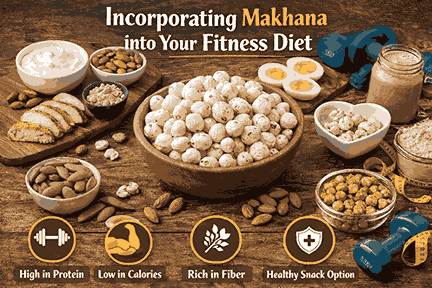
- As a standalone snack: Dry-roast plain makhana in an air-fryer or pan (no oil). Lightly salt or toss with spices (turmeric, black pepper, cumin, garam masala, or a cinnamon-cocoa blend) for flavour. A large bowl of air-popped makhana can be satisfyingly filling despite being under 150 calories. Use measured servings (e.g. ½–1 cup) to track intake.
- Boost its protein: Pair makhana with other protein sources. For example, mix roasted makhana with a handful of roasted almonds and pumpkin seeds, or add a scoop of unflavored whey/plant protein powder and shake to coat – this can bump the protein content significantly (one brand suggests such a mix can match a protein bar’s content). You could also enjoy makhana with a side of Greek yogurt dip or cottage cheese to create a more balanced snack.
- Timing: Makhana’s slow-digesting carbs make it great pre-workout. Have some ~30 minutes before cardio or an endurance session to sustain energy. After intense strength workouts, consider following makhana with a protein-rich drink or meal (since makhana alone has modest protein). For weight-loss goals, makhana is excellent as an evening or movie-night snack – satisfying crunch with minimal calories.
- Recipes: Incorporate makhana into meals. Try a savory makhana chaat (fox nuts with yogurt, veggies, and spices), or makhana curry/khichdi (lataemakhanay Curry) for protein plus volume. Even sweet makhana kheer (pudding) can be made with low-fat milk and limited sugar. These are higher-prep options but make your fitness diet more interesting.
Calories and nutrition aside, personal preference matters. If you crave a crunchy, savoury snack, makhana wins hands down over a sweet protein bar. One nutritionist quipped that “masala roasted makhana are perfect for snacking – light yet protein-rich”, emphasizing that even flavourful versions needn’t derail fitness goals.
Making the Choice: Makhana or Protein Snack?
In the end, the “best” snack depends on your goals and needs:
- For lean weight loss or calorie control: Makhana is a smart swap. You get fiber, crunch, and a modest protein bump without the caloric cost of nuts or bars. Its high volume helps curb hunger.
- For muscle gain and recovery: You’ll likely need additional protein beyond what makhana alone provides. In that case, consider having a protein bar or shake post-workout, and use makhana as a complementary snack for variety and fiber.
- For general health/snacking balance: There’s no harm in both! Many experts advise variety. For example, NDTV concludes that both fox nuts and roasted chana are “healthy in their own way”. Makhana is “lighter but less filling”, whereas chana (or a bar) “keeps you full longer”. Including a mix of protein-rich foods (legumes, dairy, lean meat) and fiber-rich snacks like makhana can cover all bases.
Key Takeaways
- Makhana = Low-fat, high-carb snack: About 347 kcal, 9.7g protein, 76.9g carbs, 14.5g fiber per 100g. Very low in fat, gluten-free.
- Protein snacks (chickpeas, nuts, bars) = Higher protein: Chickpeas ~19g protein/100g, peanuts ~24g, and bars ~33g. But they often come with more fat or additives.
- Satiety and health: Both makhana and other protein snacks can support fitness. Makhana’s fiber and slow carbs aid fullness and stable energy. Protein bars and nuts boost muscle-building but may be calorie-dense.
- Expert tip: Nutritionists suggest combining snacks. As one review notes, “higher protein at meals and snacks helps reduce hunger and support weight management”. You could snack on makhana plus a boiled egg or a dollop of Greek yogurt to get both fiber and protein in one sitting.
- Healthy snacking habits: Opt for unsalted/plain roasted makhana to keep sodium low. Avoid sweetened or fried versions. Measure portions to prevent overeating (handfuls of anything can add up).
Which will you choose? If you need a crunchy, low-calorie munchie, makhana is a winning choice. If you need a quick protein hit, a bar or nut-based snack is better. Many fitness enthusiasts enjoy both – for example, having makhana as an afternoon nibble and a protein bar post-gym. The key is balance and whole foods: try to pick snacks with minimal processing.
◆ If you found this comparison useful, share your favorite healthy snacks below or let us know if you’ve tried swapping makhana into your diet. Subscribe for more nutrition tips, and explore our related guides on high-protein meals and smart snacking habits. Happy snacking and stay fit!
Sources: Nutrition databases and expert publications are cited throughout (e.g. ) to support the information above. Each reference links to the original data and recommendations.