Premium Makhana from Bihar - festival offer - up to 25% OFF!

Makhana Nutrition Facts Explained: Why Fox Nuts Are a Super Snack

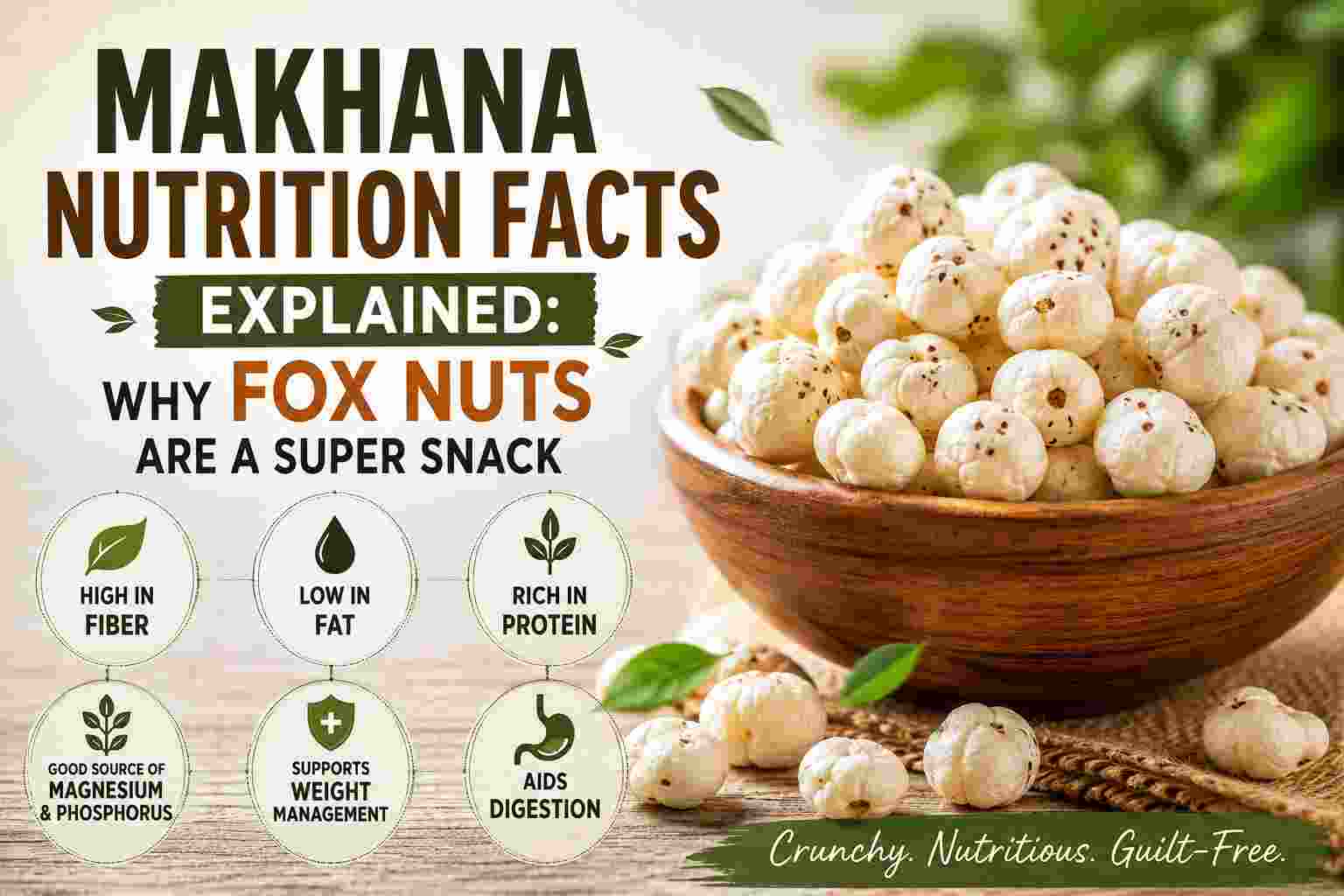
Fox nuts – also known as makhana or lotus seeds – are crunchy, air-popped snacks made from the seeds of the Euryale ferox water lily. Popular in India, China, and Southeast Asia, these “gorgon” nuts have long been a staple fasting food and traditional remedy. Often touted as a superfood, fox nuts are naturally low in calories and fat while packing a surprising nutrient punch. In this article we’ll dive deep into the nutrition facts of fox nuts, compare them to common snacks, and explain why their unique profile makes them a healthy addition to your diet.
Figure: Fox nuts (makhana) – popped lotus seeds – make a light, protein-rich snack.
What Are Makhana (Fox Nuts)?
Fox nuts come from the spiny aquatic plant Euryale ferox, a unique water lily grown mainly in India’s Bihar province (which produces ~90% of the world’s supply), as well as in China, Japan, and Korea. The seeds are harvested from lotus seedpods, dried, and then roasted or popped (much like popcorn) to create a light, airy snack. In India, makhana are deeply embedded in cultural foods – they form a creamy porridge or kheer for festivals, or a spicy chivda mix in savory recipes. In Chinese and Ayurvedic traditions, fox nuts are valued as a medicinal seed: they are believed to tonify the spleen, strengthen the kidneys, and stabilize body essence.
Makhana have even earned nicknames like “water ginseng” because of their energy-boosting properties. Indian diets often use them in Navratri and other fasts since they are filling yet permissible on restricted diets. Today they’re enjoyed roasted with spices, tossed in salads, or used in protein-rich smoothies and desserts.
Nutritional Profile of Fox Nuts
Fox nuts are nutrient-dense in a unique way: they are high in carbohydrates and fiber, modest in protein, and almost fat-free. Per 100 grams of roasted makhana, you’ll find roughly 347–356 calories, with only 0.1–1 g total fat. The bulk of the calories come from about 77 g of complex carbs (of which 8–14 g is dietary fiber). Protein is significant for a seed snack – around 9–10 g per 100 g. In other words, fox nuts have a similar carb/protein mix as popcorn but far less fat, making them a very low-glycemic, filling snack. Key micronutrients include potassium (500 mg), magnesium (60–67 mg), phosphorus (188 mg), and calcium (60 mg) per 100 g. They also supply trace iron (~2.6 mg per 100 g) and have antioxidant polyphenols like gallic and ellagic acid.
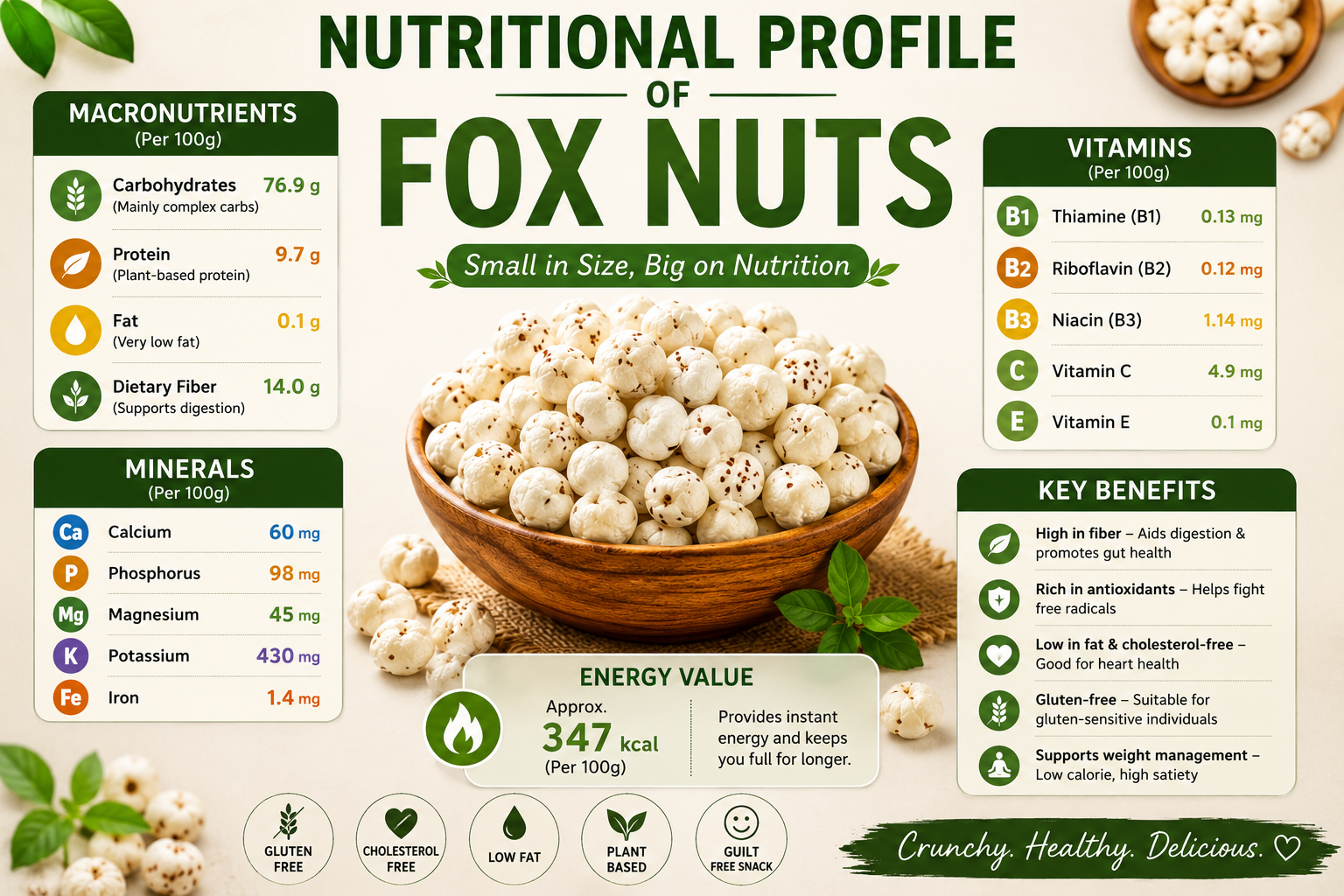
- High in Fiber, Low in Fat: Fox nuts are made up of nearly 75% starch while providing around 14% dietary fiber, making them a satisfying and nutritious snack. This is comparable to popcorn’s 15g fiber per 100g, yet popcorn has about 4.5g fat while fox nuts have essentially none.
- Protein: With nearly 10 g protein per 100g, fox nuts provide more protein than many cereals or grains. This is why they’ve long been valued in vegetarian diets.
- Minerals: They are especially prized for potassium and magnesium, which support blood pressure and muscle function, and have a modest calcium content (though lower than dairy).
- Antioxidants: Studies identify fox nuts as a source of natural antioxidants (kaempferol, gallic acid, etc.) that may reduce inflammation and oxidative stress.
Below is a quick nutrition comparison of fox nuts vs. common snacks (per 100g):
| Nutrient | Fox Nuts (100g) | Air-Popped Popcorn (100g) | Roasted Almonds (100g) |
|---|---|---|---|
| Calories | ~350 kcal | 387 kcal | 575 kcal |
| Carbohydrates | ~77 g | 78 g | 22 g |
| – Dietary Fiber | ~14 g | 13–15 g | 12.2 g |
| Protein | 9.7 g | 12.9 g | 21.2 g |
| Total Fat | 0.1–1 g | 4.5 g | 49.4 g |
| Calcium | 60 mg | – (negligible) | 264 mg |
| Magnesium | 67 mg | 40 mg (per 28g) ~145 mg/100g | 268 mg |
| Potassium | 500 mg | 93 mg (per 28g) ~333 mg/100g | 705 mg |
In summary, fox nuts and popcorn have similar carb and fiber content, but fox nuts pack no fat and a respectable protein boost. Compared to high-fat nuts like almonds, fox nuts are much lower in calories and fat, making them a lighter snack while still providing fiber and protein.
Fox Nuts vs Common Snacks
This nutrition profile gives fox nuts several advantages as a snack. Air-popped popcorn is low-calorie but about 5% fat, whereas fox nuts are virtually fat-free, meaning they deliver sustained energy without the greasy calories. A 100g serving of popcorn (~387 kcal) and of fox nuts (~350 kcal) have nearly the same calories and carbs, but fox nuts have more fiber and protein with almost zero fat. Compared to tree nuts and seeds (like almonds or cashews), fox nuts have roughly half the calories and a fraction of the fat. This makes them ideal for portion control.
Key Takeaway: Fox nuts offer a crunchy, filling snack with complex carbs and fiber, minimal fat, and a decent protein kick. They can satisfy cravings much like popcorn, but with a slightly richer nutrient profile.
Health Benefits of Fox Nuts
The unique nutrition of makhana translates into several health perks:
- Blood Sugar Control: Their high fiber and low glycemic index mean fox nuts release glucose slowly into the bloodstream. This helps maintain steady energy and can benefit those managing blood sugar levels.
- Heart Health: Fox nuts are naturally sodium-free and cholesterol-free. The ample potassium and magnesium they supply support healthy blood pressure, while the fiber and low fat help manage cholesterol.
- Weight Management: As Medanta notes, fox nuts are very low in fat but high in fiber. This combination promotes satiety – you feel full on fewer calories. In one study, even 15 calories of popcorn (a similarly fibrous snack) was as filling as 150 calories of potato chips. By that logic, fox nuts can curb overeating and support weight loss when used in place of deep-fried snacks.
- Digestive Health: With about 14g fiber per 100g, fox nuts aid digestion and help prevent constipation in a gentle way (no need for laxatives).
- Bone & Kidney Support: While not as rich as dairy, the calcium and phosphorus in makhana contribute to bone health. Traditional Chinese medicine also considers them gentle on the kidneys – their astringent quality and antioxidants may help “flush” toxins and support organ function.
- Antioxidant Effects: Research shows roasted fox nuts have a higher concentration of antioxidant polyphenols than raw ones. Compounds like gallic acid and kaempferol found in makhana may reduce inflammation and protect cells. Anecdotally, people report clearer skin and more energy after adding fox nuts to their diet.
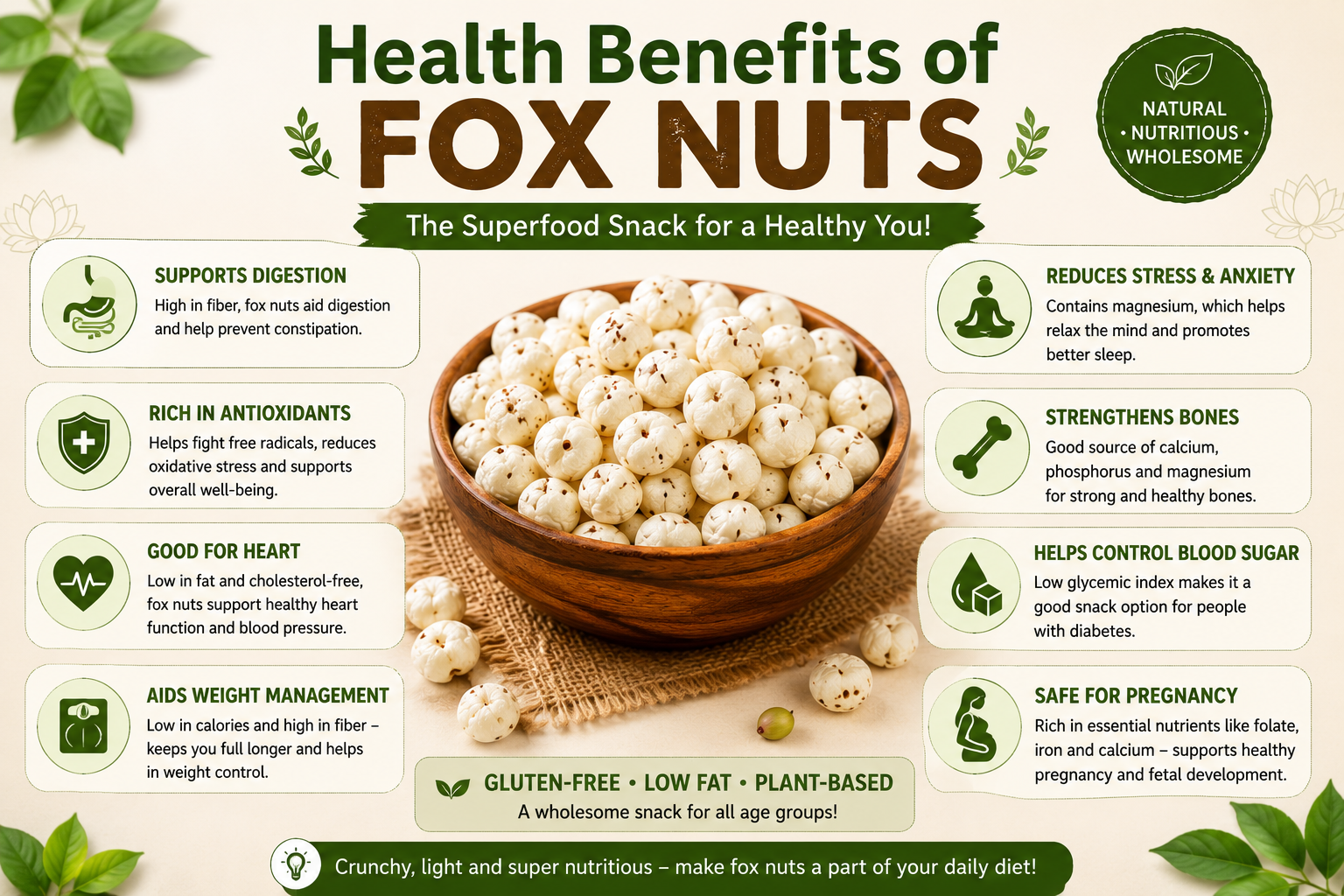
Each of these benefits is backed by science or traditional wisdom. For example, a Springer study concluded fox nuts’ high protein, low fat, and low GI make them a “nutritious snack in comparison to other high-fat, high-calorie snacks”. Health experts also note that fox nuts’ fiber and minerals naturally complement heart-healthy diets. In short, swapping chips or fried nuts for roasted makhana can reduce overall fat intake and introduce filling fiber and plant protein into your snacks.
Culinary Uses & Cultural Tidbits
In practice, fox nuts are incredibly versatile. Here are some ways they’re used:
- Roasted Snack: The simplest preparation is dry roasting. Lightly toss raw makhana in a pan with a little oil or ghee and salt or spices (turmeric, pepper, cumin) until crispy. This makes a savory munch that can be flavored like Indian chivda or plain sea salt. Some people even roast them with a dash of garlic powder or parmesan for a nutty twist.
- Chivda/Trail Mix: Roast fox nuts and mix them with peanuts, roasted chickpeas, almonds, dried fruits, and spices for a protein-rich snack mix. The crunch of makhana adds a unique texture.
- Curries & Soups: In Indian cuisine, makhana is added to rich gravies. For example, creamy makhana curry uses the popped seeds as a vegetarian “meat” substitute. In Chinese cooking, they appear in Cantonese lotus seed soup and herbal congees.
- Desserts: Sweet dishes like makhana kheer (a milk pudding) are popular in North India. Here, the seeds absorb milk and jaggery (or sugar), making a creamy porridge. Some home cooks blend roasted makhana into smoothies with milk and banana for extra thickness and protein.
- Fasting Food: Because they’re low in fat and easy to digest, makhana are a go-to “upvas” (fasting) food in Hindu traditions. A bowl of spicy roasted makhana is often eaten during Navratri or other fasts, providing energy and nutrients while adhering to diet rules.
By using fox nuts in these ways, you get their nutrition in a delicious form. For instance, I often spice-roast them with paprika and a pinch of salt for an afternoon snack – the result is just as crunchy as cheese puffs but with a clean ingredient list! (Pro tip: sprinkle on herbs like rosemary or spices like cinnamon for varied flavors.)
Conclusion & Take Action
Fox nuts (makhana) are a unique super-snack: gluten-free, low-fat, and rich in fiber and protein. Compared to most calorie-dense snacks, fox nuts offer the perfect combination of crispy texture and wholesome nutrition. Incorporating fox nuts into your meals – whether as a stand-alone popcorn substitute or mixed into recipes – can help boost your fiber, protein, and mineral intake effortlessly.
Try This: Next time you crave a salty snack, reach for a handful of roasted makhana instead of chips. Experiment by lightly roasting them with your favorite spice blend or tossing them into soups and salads. You’ll not only taste a new flavor but also reap the benefits of their low glycemic, nutrient-rich profile.
Share Your Thoughts: Have you tried fox nuts in your diet? Do you have a favorite makhana recipe or seasoning? Drop a comment below or share this article with fellow snack-lovers! For more on healthy eating and delicious recipes, subscribe to our newsletter or explore related content. Enjoy the crunch of health – your body will thank you!
Sources: Authoritative nutrition and research references have been cited throughout, including Medanta, Healthline, scientific journals, and Ayurvedic/TCM sources. Each fact can be traced to these credible sources.