Uncategorized

7-reasons-why-fox-nuts-are-a-healthy-snack-for-everyday-eating
Uncategorized

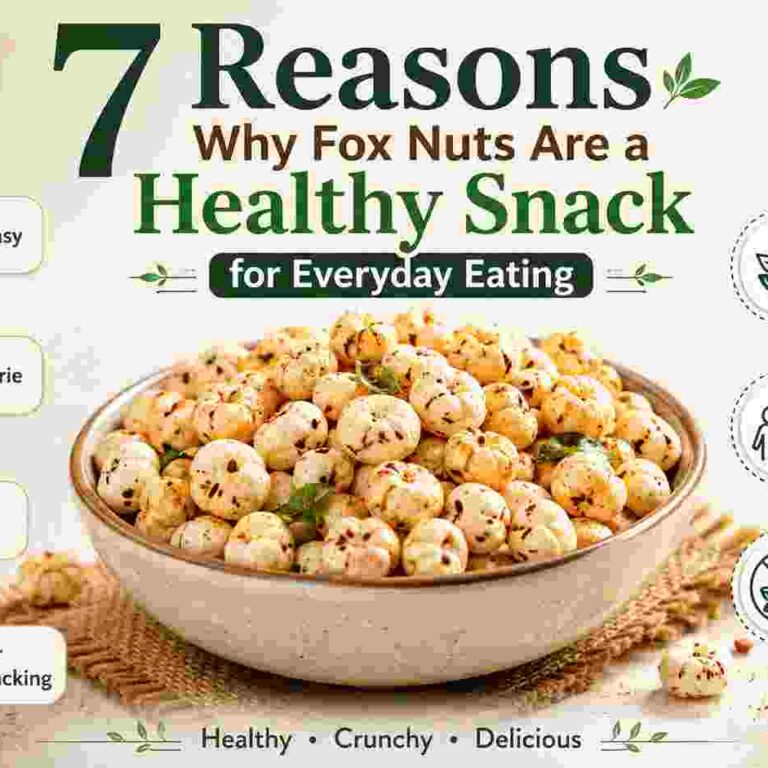
7 Reasons Why Fox Nuts Are a Healthy Snack for Everyday Eating

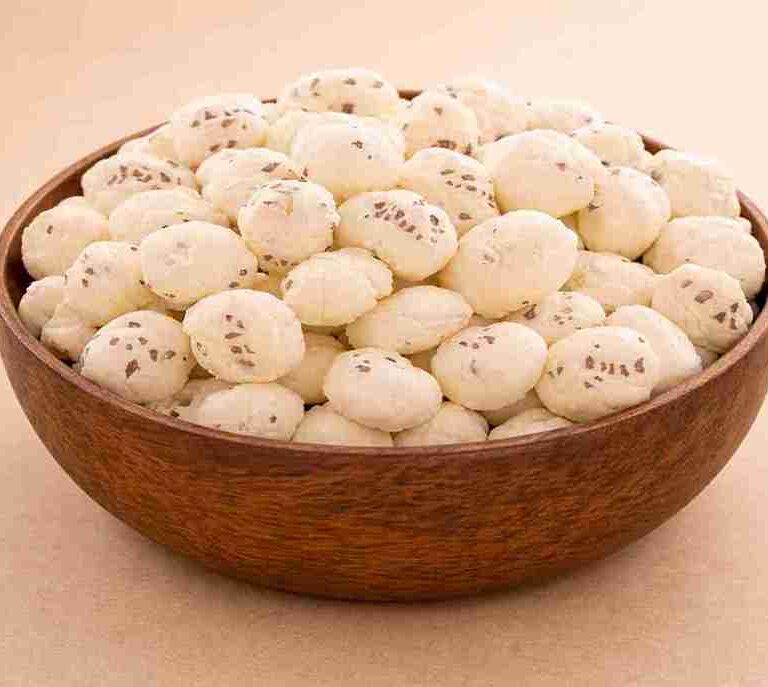
Introduction In recent years, fox nuts, also known as makhana, have become one of the most popular healthy snack options in India and beyond. Many people are now replacing fried snacks with roasted makhana because it feels lighter, crunchy, and easy to enjoy anytime during the day. Fox nuts are commonly roasted with simple spices and enjoyed by people of different age groups. Whether you want a quick evening snack, a tea-time companion, or a light snack while working, makhana can fit into many lifestyles. Let’s explore the top reasons why fox nuts are considered a healthy Indian snack. 7 Reasons Why Makhana Is a Healthy Snack 1. Light and Easy to Digest One of the main reasons people enjoy fox nuts is that they feel light compared to many deep-fried snacks. Roasted makhana has a simple texture that many people find easy to eat during the day or evening. Because of its light nature, it is often preferred as a snack that does not feel overly heavy. 2. Lower in Calories Than Many Fried Snacks Many packaged snacks are heavily fried and contain extra oil. In comparison, roasted makhana is often prepared with minimal oil, making it a more balanced option for people looking for a low calorie snack. This is one reason why fox nuts are becoming popular among health-conscious snack lovers who want something crunchy without choosing oily snacks every time. 3. Naturally Crunchy and Satisfying Crunchy snacks are enjoyable, but many options available in the market are highly processed. Fox nuts provide a naturally crunchy texture that feels satisfying during snacking time. Roasted makhana can also be flavored with simple seasonings like black pepper, mint, peri peri, or light salt, making it enjoyable without becoming too heavy. 4. A Good Option for Evening Snacking Evening cravings are common, especially after work or during tea time. Instead of choosing fried snacks daily, many people now prefer fox nuts because they are light and easy to prepare. A bowl of roasted makhana paired with tea or coffee can be a simple and enjoyable evening snack for families and individuals alike. 5. Can Be Roasted With Simple Spices One of the best things about makhana is that it can be enjoyed in many different ways. You can roast it in many ways depending on your taste preferences. Popular seasoning ideas include: This flexibility makes fox nuts a snack that rarely feels boring. 6. Suitable for Different Age Groups Fox nuts are enjoyed by children, adults, and older family members. Their crunchy texture and simple preparation style make them a popular household snack. Whether packed for travel, served during gatherings, or eaten while watching movies, makhana fits many occasions and preferences. 7. A Better Alternative to Chips and Oily Snacks Many packaged chips and fried snacks contain excessive oil and heavy seasoning. While occasional indulgence is normal, many people now look for lighter alternatives for regular snacking. Roasted makhana offers a crunchy experience that can feel more balanced for daily consumption. This is why fox nuts are increasingly becoming part of modern healthy snack choices. How to Enjoy Makhana in a Healthy Way There are many simple ways to enjoy fox nuts as part of your daily routine. Try Dry Roasting Dry roasting helps maintain the crunchy texture while using very little oil. Use Mild Seasoning Simple spices like black pepper, herbs, or light salt can add flavor without making the snack too heavy. Pair With Tea or Coffee Roasted makhana works well as a tea-time or evening snack. Store Properly Keep makhana in an airtight container to maintain freshness and crunchiness. Why Choose Quality Makhana? The quality of makhana matters when it comes to taste and texture. Premium-quality fox nuts are usually larger, crunchier, and cleaner in appearance. When choosing makhana, look for: At Golmoti Makhana, the focus is on providing quality makhana with a clean and premium snacking experience. Frequently Asked Questions (FAQs) 1. What are fox nuts? Fox nuts are the popped seeds of the lotus plant and are commonly known as makhana in India. 2. Is roasted makhana a good evening snack? Yes, many people enjoy roasted makhana as a light evening snack because of its crunchy texture and simple preparation. 3. Can fox nuts be flavored? Yes, fox nuts can be roasted with different seasonings such as black pepper, herbs, mint, or peri peri spices. 4. Are fox nuts better than fried chips? Many people prefer roasted makhana as a lighter alternative to heavily fried snacks and oily chips. 5. How should makhana be stored? Makhana should be stored in an airtight container to keep it fresh and crunchy. Conclusion Fox nuts have become a popular healthy Indian snack because they are crunchy, versatile, and easy to enjoy anytime during the day. From evening snacking to family gatherings, roasted makhana fits naturally into many lifestyles. If you are looking for a light and enjoyable snack option, premium-quality makhana can be a great addition to your snack collection. Explore premium fox nuts with Golmoti Makhana and enjoy a crunchy snacking experience made for everyday moments. Disclaimer: This article is for general informational purposes only and should not be considered medical advice.

amazing-benefits-of-makhana-you-should-know
Uncategorized

Amazing Benefits of Makhana You Should Know

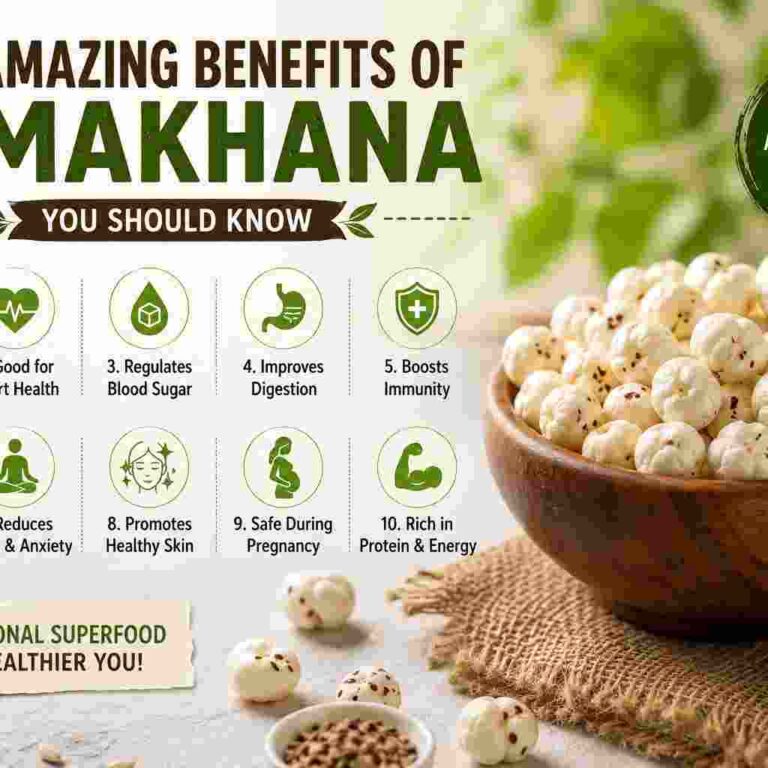
Introduction Some snacks feel healthy only because the packet says so. Fox nuts are different. Plain roasted makhana has a real nutritional story behind it: very low intrinsic fat, moderate protein, useful minerals, and a low glycemic index in one small human study. That does not make it a miracle food, but it does make it one of the more intelligent pantry swaps you can make when you want crunch without diving straight into deep-fried snacks.  What also makes makhana interesting is that it is not just a trend snack borrowed from wellness culture. It comes from Euryale ferox, an aquatic crop with deep roots in South Asia, and India remains the global leader in production. Official trade reporting from [APEDA’s makhana report](https://apeda.gov.in/sites/default/files/study_reports/Makhana_Report_English.pdf?utm_source=chatgpt.com) notes India’s dominant role in the category, while a [Press Information Bureau release](https://www.pib.gov.in/PressReleasePage.aspx?PRID=2165963&utm_source=chatgpt.com) says GI-tagged Mithila Makhana reached export markets including the UAE and USA in 2024–25.  That combination of tradition, practicality, and evidence is exactly why makhana deserves a closer look. If you want to understand the nutrition science behind fox nuts, the clearest place to start is the [Springer study on roasted fox nuts](https://link.springer.com/article/10.1186/s43014-021-00081-x?utm_source=chatgpt.com), then pair it with the official micronutrient background from the [NIH magnesium fact sheet](https://ods.od.nih.gov/factsheets/Magnesium-HealthProfessional/?utm_source=chatgpt.com) and [NIH phosphorus fact sheet](https://ods.od.nih.gov/factsheets/Phosphorus-HealthProfessional/?utm_source=chatgpt.com). Those sources paint a much more useful picture than generic “superfood” marketing.  A smarter way to think about fox nuts The most useful comparison is not “makhana versus every snack on earth.” It is plain or lightly seasoned fox nuts versus the heavily flavored versions people actually buy. That is where the real health difference shows up. Type of fox nuts snack What stays appealing What you need to watch Plain roasted Closest to the low-fat, low-GI base food studied in research Can feel bland if under-seasoned Light masala roasted Better flavor and crunch, which can make healthier snacking easier to stick with Sodium can rise quickly Sweet-coated Still portable and crunchy Added sugar can erode the “smart snack” advantage Ghee-heavy homemade Excellent aroma and richness Extra fat increases calorie density fast This table is a practical interpretation of the fox nut roasting study, combined with official sodium and saturated-fat guidance. The base food remains compelling, but the more salt, sugar, and fat you pile onto it, the more you drift away from what makes makhana useful in the first place. The [WHO sodium guidance](https://www.who.int/news-room/fact-sheets/detail/sodium-reduction?utm_source=chatgpt.com) recommends adults stay under 2,000 mg of sodium a day, and both the [Dietary Guidelines saturated fat factsheet](https://www.dietaryguidelines.gov/sites/default/files/2021-11/DGA_FactSheet_SaturatedFats-07-09_508c_0.pdf?utm_source=chatgpt.com) and the [FDA Nutrition Facts label guide](https://www.fda.gov/food/nutrition-facts-label/how-understand-and-use-nutrition-facts-label?utm_source=chatgpt.com) emphasize limiting saturated fat and sodium when you choose packaged foods.  That is the fresh perspective most makhana articles skip: fox nuts are not automatically healthy because they are fox nuts. They are healthiest when you preserve the strengths of the base ingredient. The benefits that matter most Here are the benefits that genuinely stand out, with the strongest evidence and the most practical value placed first. It gives you crunch without the fat load of many snack foods.One of makhana’s biggest advantages is simple: the base food is naturally very low in fat. In the roasted fox nut study, fat content remained below 1% on a dry basis, and the authors noted that fox nuts contain much less fat than many conventional nuts. APEDA’s market report similarly highlights makhana’s very low fat profile compared with almonds and cashews. That makes fox nuts especially useful for people who want a savory snack that feels indulgent without being oil-heavy.  It may support a steadier blood sugar response.This is one of the most interesting findings in the research. In a human trial with healthy adults, roasted fox nuts showed a glycemic index of about 37, which falls into the low-GI range. Broader evidence on low-GI eating patterns suggests that reducing dietary glycemic response can improve markers relevant to metabolic health, though results vary by population and overall diet. The important takeaway is not that makhana “treats” diabetes, but that plain roasted fox nuts appear to be a gentler carbohydrate snack than many refined, fast-digesting alternatives.  It offers more nutritional substance than its airy texture suggests.Fox nuts look feather-light, so people often assume they are nutritionally empty. They are not. In the roasting study, protein rose from 11.40% to 14.57% after roasting, and the authors also highlighted fox nuts as a good vegetarian protein source with an essential amino acid profile that compares favorably with many plant foods. This does not make makhana a primary protein food like beans, dairy, tofu, or eggs, but it does make it a more meaningful snack than the usual “empty crunch.”  It contributes minerals that matter every day.Roasted fox nuts were found to contain potassium, magnesium, phosphorus, calcium, iron, sodium, and zinc in the Springer study. What matters more than memorizing the numbers is understanding the roles: the NIH notes that magnesium is involved in more than 300 enzyme systems, while phosphorus is essential for bones, teeth, DNA, RNA, and energy metabolism. In other words, makhana is not just a crunchy carb; it also contributes minerals that support fundamental body functions.  Roasting improves more than texture.A lot of snack foods become less interesting nutritionally after processing. Fox nuts are unusual because roasting improved several markers in the study. Researchers found higher protein, higher mineral content, higher phenolics, higher flavonoids, stronger antioxidant activity, and much better crunch after roasting. The practical lesson is easy: if you are buying or making makhana, lightly roasted versions are not just tastier; they may also be the more functional choice.  It can support weight-management goals when used as a swap, not a free pass.This is where honesty matters. Makhana is often marketed as a weight-loss snack, but the better claim is narrower and more accurate: fox nuts can help if they replace higher-fat, more energy-dense snacks. The roasting study found that roasted fox nuts still deliver meaningful calories, and calorie density actually rose after roasting. At the same time, the combination of very low fat and low GI may make them more satisfying than many fried snacks. Low-GI dietary patterns have shown modest benefits for body weight in some reviews, but portion size still

why-fox-nuts-are-better-than-junk-snacks
Uncategorized

Why Fox Nuts Are Better Than Junk Snacks

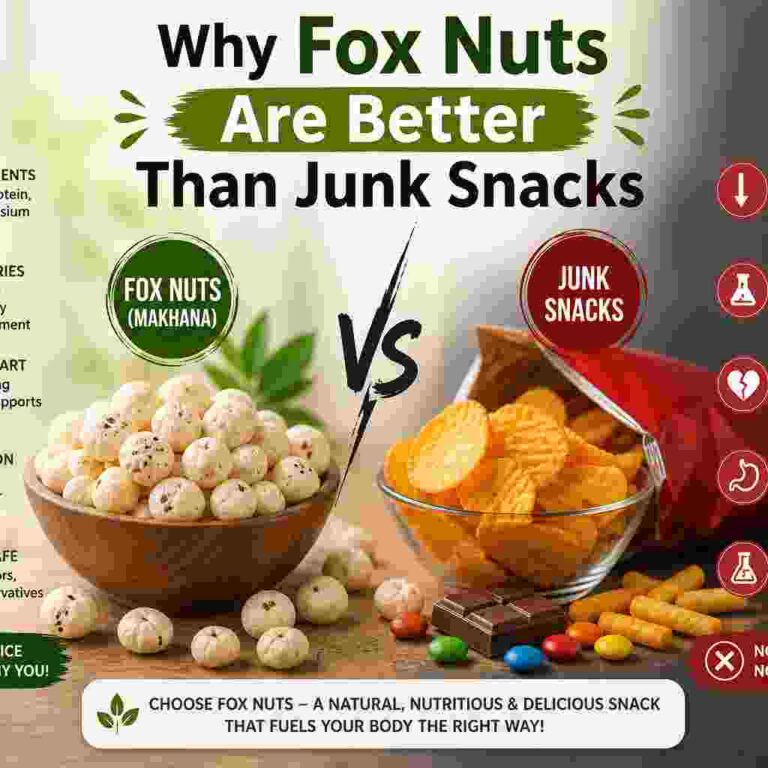
Introduction Most snack cravings are not really about hunger. They are about texture. You want crunch, salt, and something instantly satisfying. That is why packets of chips, puffs, and fried namkeen disappear so fast. This is exactly where fox nuts stand out. Plain roasted makhana gives you the crunch people chase in junk food, but without the same fat-heavy, highly engineered snack profile. The World Health Organization recommends limiting salty snacks, and nutrition guidance from Harvard notes that frequent intake of ultra-processed, hyperpalatable snacks high in salt, sugar, and fat can worsen diet quality and reinforce preference for those foods.  What makes makhana even more interesting is that it is not a new wellness fad pretending to be ancient. Fox nuts are the popped seeds of Euryale ferox, an aquatic crop with a long food history in South Asia and China. In other words, this is not “healthy snacking” invented in a marketing meeting. It is a traditional food that happens to fit today’s need for smarter snacking remarkably well.  What fox nuts do differently At a basic nutrition level, fox nuts look very different from typical junk snacks. Peer-reviewed and review sources describe makhana as high in carbohydrate, moderate in protein, and strikingly low in fat. Published compositions put raw makhana at about 76.9% carbohydrate, 9.7% protein, and 0.1% fat, while popped makhana is reported at about 84.9% carbohydrate, 9.5% protein, and 0.5% fat.  That matters because the biggest benefit of fox nuts is often misunderstood. Their advantage is not that they are some wildly high-protein snack. Social media sometimes oversells that part. A normal snack portion gives only around 3 grams of protein. The bigger win is that makhana deliver crunch with very little fat compared with chips and cheese puffs. So if you want the honest version, makhana beat junk snacks mainly on fat load, ingredient simplicity, and ease of portioning, not because they magically turn snack time into a protein shake.  There is also some promising science behind how makhana behave in the body. A 2022 study reported that roasted makhana had a low glycemic index of about 37 in human subjects, and the roasting process was associated with higher phenolics, flavonoids, minerals, and antioxidant activity. That does not make makhana a cure-all, but it does suggest that plain roasted fox nuts are more than empty crunch.  A fresh perspective worth noticing is that fox nuts are moving from folk wisdom into formal nutrition research. The National Institute of Nutrition has listed a project studying makhana and value-added products for nutritional profile, acceptability, inflammation, insulin resistance, and lipid outcomes, and one of its scientists has publicly referenced findings from a first clinical trial involving makhana rotis for type 2 diabetes. That is not final proof of broad health benefits, but it is a strong sign that makhana is being taken seriously by mainstream nutrition science.  Fox nuts versus junk snacks Here is the simplest way to compare fox nuts with classic junk snacks: line up a real snack serving, not a dream version of one. Snack Typical serving Calories Protein Fat Sodium Plain roasted fox nuts ~30 g ~105–115 ~2.9–3.0 g ~0.1–0.2 g Naturally very low unless salted Lay’s Classic potato chips 28 g 160 2 g 10 g 140–170 mg Crunchy Cheetos cheese snacks 28 g 160 2 g 10 g 210 mg Table notes: fox nuts values are approximate calculations from published makhana compositions for raw and popped seeds; the chip and cheese-puff values come from recent PepsiCo SmartLabel nutrition entries.  The numbers tell a clear story. Fox nuts do not always slash calories dramatically, but they usually cut fat in a major way, often reduce sodium if you choose plain or lightly salted versions, and move you away from a fried or highly engineered snack format. If snacking is a daily habit rather than an occasional indulgence, that shift matters.  The more interesting takeaway is this: the nutrition story of fox nuts is less about “superfood magic” and more about better trade-offs. You still get comfort. You still get crunch. You just get a version of it that usually asks less of your body than a fried, salty packet snack does.  The deeper reason fox nuts feel better The strongest case for fox nuts is not just nutritional. It is behavioral. The Harvard T.H. Chan School of Public Health notes that regular intake of ultra-processed hyperpalatable snacks can increase preference for those foods and lower overall diet quality. A 2024 umbrella review in The BMJ also found that greater exposure to ultra-processed foods was associated with a higher risk of adverse health outcomes, especially cardiometabolic, common mental disorder, and mortality outcomes, although the strength of evidence varied across outcomes.  That is why fox nuts can act like a quiet reset. They still give you something to munch on, but they are not built around the same oil-salt-flavor architecture that makes many junk snacks so easy to overeat. When people switch from chips to plain or lightly seasoned makhana, they are not only changing macros. They are changing the kind of food cue their palate keeps practicing.  There is also a cultural reason fox nuts deserve more credit. In India, makhana is closely tied to wetland farming systems in Bihar, which contributes more than 80% of India’s production according to recent state and agriculture-sector sources. The Agricultural and Processed Food Products Export Development Authority says India leads global makhana production, with Bihar at the center of that supply chain. So choosing fox nuts over junk snacks can also mean choosing a regional ingredient with real agricultural roots instead of a purely industrial snack template.  When fox nuts stop being healthy This is the part many blog posts skip: not every fox nuts pack deserves a health halo. Once makhana is fried in extra oil, loaded with buttery flavoring, coated in sugar, or heavily salted, the gap between fox nuts and junk snacks starts closing. That is why the most useful rule is not “buy makhana.” It is “buy plain or lightly seasoned makhana.” The U.S. Food and Drug Administration now emphasizes sodium, saturated fat, and

fox-nuts-(makhana)-vs-protein-bars-which-one-wins
Uncategorized

Fox Nuts vs Protein Bars: Which Snack Actually Wins?

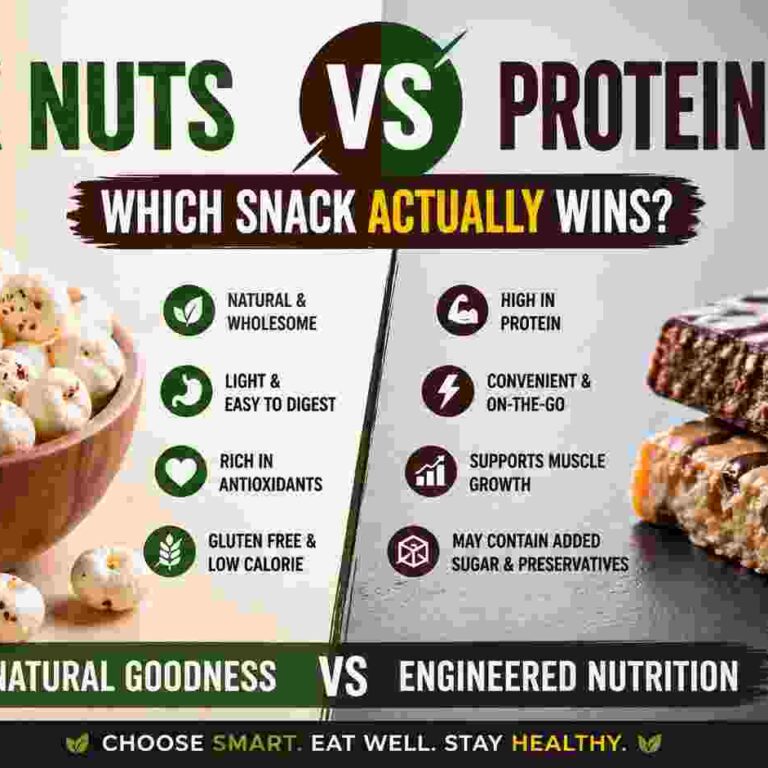
Introduction Fox nuts have become the “good snack” of modern pantries: light, crunchy, familiar, and easy to feel virtuous about. Protein bars, meanwhile, are the hyper-efficient overachievers of the snack world. They promise satiety, muscle support, and convenience in one wrapper. So when you’re standing in front of the cabinet at 4 p.m., what’s the better pick? The answer depends on what job you’re hiring the snack to do. If you want something crunchy, lighter, and less engineered, fox nuts have a real case. If you want a snack that can meaningfully move your protein intake, most fox nuts are simply not in the same league as a true protein bar. For context, published composition data for popped Euryale ferox put fox nuts at about 358 kcal and 9.7% protein per 100 g, which works out to roughly 107 calories and about 3 g protein for a 30 g snack portion. By contrast, current bar labels range from about 12 g protein for some RXBAR and KIND Protein options to 20 g for some Quest bars.  The fair comparison Most blog posts compare fox nuts to protein bars as if they are competing in the same weight class. They usually are not. A better comparison looks at four things: protein dose, calorie cost, ingredient complexity, and what kind of fullness the snack creates. That last point matters because protein does tend to increase satiety, which is one reason a well-formulated protein bar can keep you fuller than a crunchy but low-protein snack.  Option Representative serving Calories Protein Protein per 100 kcal Best fit Plain fox nuts ~30 g ~107 ~2.9 g ~2.7 g Light everyday snacking Quest bar example 1 bar 180 20 g ~11.1 g Post-workout or missed-meal backup RXBAR example 1 bar 180 12 g ~6.7 g Simpler ingredient list, moderate protein KIND Protein example 1 bar 250 12 g ~4.8 g Nut-forward, richer snack Using current labels from Quest Nutrition, RXBAR, and KIND Snacks, the protein-efficiency gap is pretty obvious: fox nuts are the lightest option, but not the strongest protein-delivery system. In plain English, if your snack’s main purpose is “give me protein,” a bowl of fox nuts loses quickly. If the purpose is “give me something crunchy that doesn’t feel heavy,” fox nuts become much more competitive.  That is the first big insight: this is not a clean-eating morality tale. It is a job-description problem. Where fox nuts win Fox nuts win on ingredient simplicity and snackability. A plain roasted makhana bowl feels like food. It does not feel like supplementation. That matters more than nutrition-nerd culture usually admits, because not every snack is solving a muscle-recovery problem. Sometimes you just want to chew something salty and crunchy without turning snack time into a chemistry project. They also tend to win on lightness. A modest serving of fox nuts gives you a visually generous portion for relatively few calories, and because they are usually very low in fat, they do not hit with the density of a nut-heavy bar. That makes them useful for desk snacking, evening snacking, or those moments when you want “more bites” rather than “more macros.” The protein is modest, but the snack experience is strong.  There is also real food-science value here. A 2022 study on roasted fox nuts found improvements in measured protein, phenolics, flavonoids, and antioxidant activity after roasting. That is not a free pass to call fox nuts a high-protein food, but it does support the idea that properly processed fox nuts can be more than an empty crunchy filler.  Fox nuts also avoid one drawback that some bars bring along: stomach drama. Some highly formulated bars use sugar alcohols or dense fiber systems to keep sugars low while pushing protein up. That can work well for some people, but not for everyone. The fox-nut advantage is that plain versions are usually easier to understand and easier to portion.  Where protein bars win Protein bars win on the thing their name claims: protein. The International Society of Sports Nutrition position stand notes that an acute dose of roughly 20–40 g of high-quality protein is a useful target in exercise contexts. If you use the published 9.7% protein figure for popped fox nuts, you would need a little over 200 g of fox nuts just to reach the lower 20 g end of that range. That is far beyond a normal snack portion. A single Quest bar gets there immediately, and even a 12 g bar puts you materially closer than fox nuts do.  Bars also win when your day is chaotic. A wrapped, pre-portioned bar is built for handbags, gym bags, airport delays, and the “I accidentally worked through lunch” problem. On those days, the better snack is often the one you will actually have with you. But protein bars are not one thing. This is the second big insight, and it changes the entire debate. A Quest-style bar is a formulation-first bar: protein isolates, prebiotic fiber, erythritol, and non-nutritive sweeteners are all part of the build. An RXBAR is far closer to a compact whole-food bar made from dates, egg whites, and nuts. A KIND Protein bar sits somewhere in between, with peanuts as the lead ingredient but also soy protein isolate, glucose syrup, honey, and sugar.  That ingredient spread matters because more processing deserves more label scrutiny. Harvard T.H. Chan School of Public Health notes that the ingredients list and nutrition label are useful tools for deciding when to include more processed foods, especially low-nutrient ultra-processed products high in added sugars, sodium, and unhealthful fats. Not every protein bar belongs in that bucket, but some clearly sit closer to it than others.  There is also a hidden comfort issue. The FDA’s sugar-alcohol guidance notes that these sweeteners can cause gas, bloating, and diarrhea in some people. That does not mean protein bars are “bad.” It means a bar that looks perfect on paper may be a poor everyday choice if it makes your stomach miserable.  The smarter verdict Here is the freshest way to think about

fox-nuts-vs-peanuts-nutrition-comparison
Uncategorized

Fox Nuts vs Peanuts

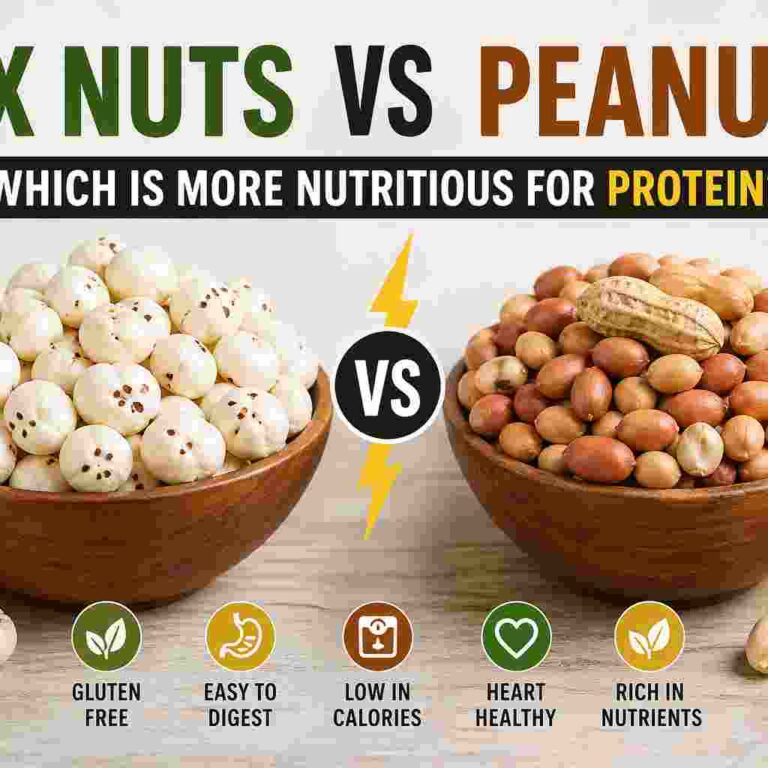
Why fox nuts and peanuts get compared at all The snack aisle loves a simple story: one crunchy “healthy” snack replaces another, and your life instantly gets cleaner, leaner, and more virtuous. That is exactly how fox nuts are often pitched. But the comparison is more interesting than the marketing. Fox nuts are the popped seeds of Euryale ferox and are deeply associated with Bihar, where makhana is a major crop and a familiar roasted snack. Peanuts, meanwhile, are not botanical nuts at all; they are legumes, though nutritionally they often behave more like nuts because of their fat, protein, and micronutrient profile. In other words, this is not really “nut vs nut.” It is a light popped seed snack versus a dense legume with nut-like nutrition.  That distinction changes the answer to the headline question. If you mean which food gives you more protein, healthy fats, fiber, and research-backed cardiometabolic benefits, peanuts usually come out ahead. If you mean which snack lets you eat a larger-looking portion for fewer calories, fox nuts make a very strong case. And if you mean which one fits a low-allergen, lighter evening snack routine, fox nuts may be the smarter choice. The real winner depends on what job you want the snack to do.  The comparison that matters most To keep this honest, I’m comparing plain fox nuts to plain dry-roasted peanuts without salt—not cheese-coated makhana, not honey-roasted peanuts, and not sweetened peanut butter spreads. For peanuts, I leaned on USDA FoodData Central data and related USDA-linked nutrition references. For fox nuts, I used peer-reviewed studies on popped and roasted Euryale ferox, then cross-checked practical advice about salt, sugar, and snack choice with guidance from Mayo Clinic and the FDA.  There are three lenses that matter here. The first is nutrition per 100 grams, which tells you how concentrated a food is. The second is nutrition per realistic snack portion, which matters more in real life because nobody casually eats 100 grams of fox nuts and 100 grams of peanuts the same way. The third is quality of evidence. A food can sound amazing in lab studies and still have much thinner evidence in humans than its reputation suggests. That last lens is where peanuts quietly gain ground.  Nutrition snapshot Metric Plain fox nuts Plain dry-roasted peanuts What it means in practice Calories per 100 g about 354–382 kcal about 585 kcal Fox nuts are clearly lighter Protein per 100 g about 9–15 g about 24 g Peanuts deliver much more protein Fat per 100 g about 0.05–0.68 g about 50 g Peanuts are far richer in healthy fats Carbs per 100 g about 79 g about 21.5 g Fox nuts are primarily a starch-based snack Approx. calories per 30 g portion about 106–115 kcal about 176 kcal Fox nuts usually “cost” fewer calories per snack Best nutritional use case lighter, lower-fat crunch protein-, fat-, and micronutrient-dense snack They solve different problems Human evidence base promising but still limited much stronger in cardiometabolic research Peanuts have deeper research support Fox-nut values vary by processing method, so the range above combines published popped-seed and roasted-seed analyses. Peanut values are USDA-linked figures for plain dry-roasted peanuts without salt. Portion estimates are calculated from those source values.  This table is the clearest reality check. Fox nuts are not “bad” at all—but they are not a like-for-like nutritional substitute for peanuts if your priority is protein density. If you swap peanuts for fox nuts and expect similar protein, fat quality, or micronutrient payoff, the numbers do not support that expectation. On the other hand, if you are trying to build a larger-feeling snack for fewer calories, the fox nuts column starts to look very attractive.  Where fox nuts genuinely shine Fox nuts win the volume game. Roasted fox nuts have a very low bulk density, which means a modest amount can fill a bowl and feel generous. One study reported a calorie density of about 382 kcal per 100 g after roasting, still much lower than dry-roasted peanuts at roughly 585 kcal per 100 g. That is why fox nuts often feel “lighter” even when you are eating a visually satisfying portion. This is not just psychology; it is the mathematics of low-fat, airy foods.  They also have a useful blood-sugar story. In a human glycemic-index study, roasted fox nuts came in at about 37, which places them in the low-GI range. The same paper found that roasting increased total phenolic content by about 36% and improved antioxidant activity. So fox nuts are not just empty puffed starch. They can be a smart option if you want something crunchy, relatively light, and gentler than many conventional packaged snacks like chips, candy, or sugary granola bars.  But here is the fresh perspective most “superfood” articles miss: fox nuts shine most when you judge them as a better alternative to ultra-processed snack foods, not when you force them into a head-to-head competition with nutrient-dense legumes or nuts. Much of the broader medicinal reputation around Euryale ferox still comes from in vitro and in vivo work, while the human evidence I found was much thinner, including a small GI study with 10 participants. That does not make the claims false; it means the evidence stack is still developing.  Where peanuts clearly pull ahead Peanuts are much stronger on protein, healthy fats, and overall nutrient density. Published reviews describe peanuts as rich in protein, fiber, folate, niacin, magnesium, vitamin E, arginine, monounsaturated fats, and phytochemicals such as polyphenols and phytosterols. In USDA-linked nutrition data, dry-roasted peanuts without salt provide about 24 grams of protein and 8.4 grams of fiber per 100 grams—numbers that are simply in a different league from fox nuts on a gram-for-gram basis.  Peanuts also have a much stronger human evidence base behind their health halo. A 2022 randomized clinical trial and meta-analysis found that peanut consumption was associated with lower triglycerides, and in healthy participants it also improved cholesterol ratios. Broader reviews have linked higher nut intake—including peanuts—to lower cardiovascular disease risk, and researchers at Harvard T.H. Chan School of Public Health have highlighted evidence that regular intake of nuts, including peanuts, is associated with lower cardiovascular disease risk. That is a very different level of evidence from a promising small GI trial or

makhana-vs-chips-healthy-snack-fox-nuts-guide
Uncategorized

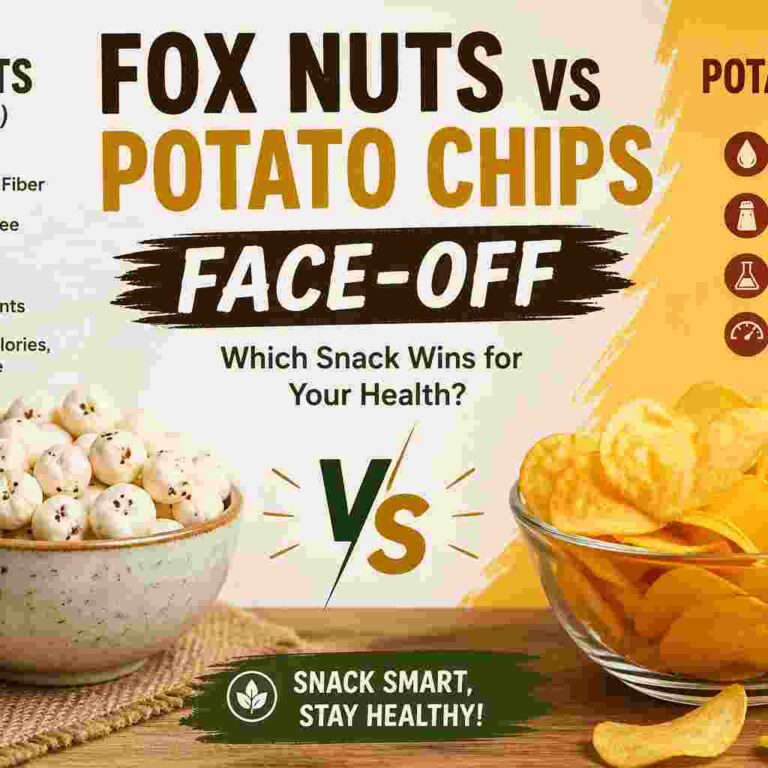
Makhana vs Chips: Fox Nuts vs Potato Chips Face-Off

Snacking can be a guilty pleasure or a healthful habit – and the choice between a bag of potato chips and a bowl of makhana (fox nuts) is a classic example. In recent years, fox nuts (also called makhana or lotus seeds) have surged in popularity as a “superfood snack.” Many health-conscious eaters wonder: Are makhana really healthier than chips? We dug into the latest research, nutrition data, and expert insights to compare these crunchy snacks side by side. Let’s unpack the facts. What Are Fox Nuts (Makhana)? Fox nuts are the popped seeds of the Euryale ferox water lily, long enjoyed in Asia for their mild, nutty crunch. In India, makhana has been a fasting snack and Ayurvedic remedy for centuries. Today, roasted makhana are sold in various flavors – from simple salted to spicy or sweet coated – and marketed as a nutritious alternative to processed chips. Fox nuts pack plant-based protein, fiber, and minerals into each light bite. For example, just one cup (32 g) of dried fox nuts contains about 106 calories, roughly 5 g protein, and a handful of minerals like calcium and magnesium. This nutrient profile makes makhana a “plant protein powerhouse” that dietitians often recommend for satiety and bone health By contrast, a typical handful of potato chips is fried or baked from refined potato. Chips deliver an addictive crunch but little nutritional value: they’re high in fats and simple starches with minimal protein or fiber. We’ll compare the two directly next. Nutritional Smackdown: Fox Nuts vs Potato Chips Let’s look at the numbers per 100 grams (about 3.5 oz), a standard comparison: Nutrient (per 100 g) Fox Nuts (Makhana) Plain Potato Chips Calories 332 kcal 536 kcal Protein 15 g 7 g Total Fat 2 g 35 g Saturated Fat 0.33 g 11 g Dietary Fiber 14.5 g 4.8 g Carbohydrates (net) 64 g 48 g Sodium (unsalted) ~1.6 mg ~8 mg Several key contrasts stand out. Fox nuts are far less calorie-dense: 100 g contains ~332 kcal, versus ~536 kcal in 100 g of chips. In practical terms, a 1 oz serving (~28 g) of chips has about 152 cal, while a similar weight of roasted makhana yields roughly 90–100 cal (based on the above per‑100 g figures). Makhana also deliver more than twice the protein and three times the fiber of chips per weight. This combination of protein and fiber contributes to greater fullness (satiety). In contrast, chips are “calorie-dense but nutrient-poor”, mostly fats and starch, which nutritionists warn can fuel mindless overeating. Even the fats in chips are a concern: a 100 g portion contains ~35 g total fat (11 g saturated), whereas fox nuts contain barely 2 g fat total (virtually all unsaturated). In short, fox nuts offer more protein and fiber per calorie, and far less fat and saturates, than potato chips. (See the table above for details.) Health Impacts: Beyond the Numbers Numbers aside, what do diets and studies say about snacking on each? Experts praise makhana as a “clean” snack: it’s naturally low in added salts, trans fats, and artificial additives. Many recipes simply dry-roast the seeds with minimal oil and herbs. This simple prep preserves their nutrients and yields only ~10 mg sodium per 100 g (unsalted). Chips, especially salted or flavored types, pack high sodium and often monosodium glutamate or preservatives, which over time can raise blood pressure. In fact, EatingWell notes that “salty, fried snacks… can have a greater impact on our cardiovascular health than we might realize.” Regularly consuming these greasy bites elevates blood pressure and cholesterol, contributing to heart disease and obesity. Another advantage of fox nuts is glycemic control. Clinical research shows fox nuts have a low glycemic index (GI). A University study found GI ≈ 45 for fox nuts, compared to about 56 for plain potato chips. (Lower GI foods cause slower blood sugar rises.) In practical terms, NDTV health reports that “fox nuts… can keep you full without causing drastic insulin spikes”, making them diabetes-friendly snacks. The same NDTV piece cites research confirming makhana’s low GI: “consuming makhana can keep blood sugar steady and provide long-lasting fullness”. By contrast, chips (starchy and refined) can trigger quicker insulin responses and, without fiber or protein to slow absorption, might lead to energy crashes and cravings shortly after snacking. Indeed, chips are often engineered to hit the “bliss point” of fat, salt, and crunch. That makes them delicious but easy to overeat: we rarely stop at a handful because they lack satiating fiber/protein. Dr. Marc Katz notes that mindless crunching on chips “can lead to excessive calorie intake without feeling more fullness”. In comparison, fox nuts’ fiber and protein give genuine satiety, helping control portion size. Simply put, you can feel more satisfied eating fox nuts vs. chips for the same calorie intake. Finally, antioxidants set fox nuts apart. They naturally contain ellagic acid, gallic acid and other phytochemicals, which help neutralize free radicals. Preliminary studies (in animals) suggest these compounds support heart, liver and kidney health and may even help regulate blood sugar. Potato chips provide essentially no antioxidant benefit. This means substituting a handful of nuts for chips adds not just nutrients but protective molecules. Flavor, Texture, and Variety Now, taste matters too. Chips come in crunch and flavor (salt, BBQ, sour cream, etc.), which is why they’re so addictive. Fox nuts also pack crunch but a milder base flavor. Plain roasted makhana are slightly nutty, crisping up well. They’re very versatile – you can spice them with black pepper, cinnamon, herbs or even drizzle a tiny bit of ghee to mimic buttery richness. Brands now sell seasoned varieties (cheese, peri-peri, caramel, etc.), offering many taste profiles with much lower fat. And unlike chips, flavored makhana are often made with natural spices and no artificial colors/preservatives, making them a cleaner comfort snack (especially for parents seeking healthier kids’ snacks). Texture-wise, fox nuts start crunchy and light. Chips are also crunchy but greasier. Some people might miss the oily mouthfeel; others appreciate that makhana don’t leave a greasy residue. If you’ve ever tried eating 5 chips vs. 5 makhana: the chip bag empties out faster. It’s not just in your head – it’s backed by the fat and salt content differences. Market Trends and Cultural Context The fox nuts

what-is-fox-nut
Uncategorized

What is Fox Nut? The Ancient Aquatic Seed Taking the Wellness World by Storm

If you’ve scrolled through health food blogs lately or wandered down the “healthy snacks” aisle of your local grocery store, you’ve likely encountered them: light, puffy, white kernels that look like popcorn’s sophisticated cousin. They go by many names—Fox Nut, Lotus Seed, Phool Makhana, or Gorgon nut. At first glance, they seem unassuming. But bite down on a roasted Fox Nut, and you experience a unique sensation: an airy crunch that dissolves into a satisfying, starchy bite. It’s this texture, combined with a neutral, slightly sweet flavor, that has allowed this ancient ingredient to stage a major comeback. But Fox Nut isn’t just a trendy snack. It is a nutritional powerhouse with roots deep in Asian history, spirituality, and traditional medicine. Today, we’re diving deep into the ponds of Eastern Asia to unearth the story of this remarkable seed and discover why it deserves a permanent spot in your pantry. Quick definition: the essentials phool makhana = the popped seed of the aquatic plant commonly known as Euryale ferox (often called gorgon nut or lotus seed in some regions). The raw seeds are hard, white kernels that are popped over heat (similar to popcorn) to become the airy, crunchy snack you recognize. A Nutritional Profile That Packs a Punch Why has phool makhana become the darling of nutritionists? The answer lies in its impressive chemical profile. While many snacks offer empty calories, Makhana offers a complex mix of macronutrients and micronutrients that promote wellness from the inside out. Here is a breakdown of what makes this seed so special: For a visual comparison of how phool makhana stacks up against other common snacks, take a look at the table below: A Culinary Chameleon: From Curries to Desserts One of the most exciting aspects of phool makhana is its versatility. In the West, it is often viewed simply as a savory snack—roasted with olive oil and sea salt. But in its native lands, it is a culinary chameleon. 1. Fox Nut: The Savory Route The classic preparation is simple: heat a teaspoon of ghee (clarified butter) in a pan, add the Fox Nut, and roast until crisp. Sprinkle with black salt and cayenne pepper for a warming, addictive snack that pairs perfectly with a cup of tea on a rainy day.For a more gourmet approach, try tossing them with rosemary and parmesan, or go bold with a chaat masala spice mix. 2. The Thickening Agent Before cornstarch was ubiquitous, Indian cooks used ground Fox Nut (often called Makhana ka atta) as a thickener for curries and gravies, specifically in dishes like Mughlai cuisine or during religious fasts when grains are prohibited. It adds a velvety texture without altering the flavor of the dish. 3. The Dessert (Kheer) Perhaps the most divine use of Fox Nut is in Makhana Kheer. The puffs are simmered gently in milk, sugar, and cardamom until they soften slightly but retain a bit of their bite. They absorb the creamy, sweet liquid, becoming tender dumplings in a rich, aromatic pudding. It is a staple dessert during festivals like Navratri. Personal Insight: I first experienced Fox Nut not as a snack, but as a dessert at a small eatery in Varanasi. The vendor slowly simmered the Makhana in reduced milk, topping it with slivers of pistachio. The texture was otherworldly—soft on the outside with a gentle chew in the center. It wasn’t until years later, seeing them in their raw, crunchy form at a health food store, that I made the connection. It was a powerful reminder that the same ingredient can be a crunchy, savory chip in one context and a luxurious, creamy pudding in another. How to Select and Store Fox Nut To get the most out of your Fox Nut experience, you need to start with a quality product. The Future of Fox Nut in the Global Market The global trajectory for Fox Nut is pointing sharply upward. As the demand for plant-based, gluten-free, and clean-label snacks explodes, this humble aquatic seed is perfectly positioned to become a global staple. According to market research reports, the Fox Nut processing industry is undergoing a massive transformation. What was once a manual, household-level trade is now attracting investment for mechanized processing units. Companies are experimenting with exciting flavors—from Tangy Tomato to Wasabi—to appeal to international palates while retaining the seed’s inherent health benefits. Furthermore, because it is cultivated in water, Fox Nut farming has a lower carbon footprint compared to many land-based crops and requires minimal pesticides. As consumers become more eco-conscious, the sustainability factor of Fox Nut will only add to its appeal. Conclusion: Embrace the Crunch So, what is Fox Nut?Fox Nut carries the calm of the pond and the energy of a fresh harvest. It offers a crunchy snack that satisfies cravings without the guilt of processed oils. For centuries, people have valued it as a medicinal food, and today science recognizes it as a modern superfood. Enjoy Fox Nut as a crunchy evening snack, a creamy dessert, or a natural thickener in soups and stews. This humble seed beautifully connects ancient wisdom with modern healthy living. Have you tried cooking with Fox Nut? Have a favorite Fox Nut recipe? Share it in the comments—we’d love to know how you enjoy this incredible ingredient. For more nutritious discoveries, explore our guide to other ancient grains making a comeback.

fox-nuts
Uncategorized

10 Powerful Benefits of Fox Nut: Why This Ancient Snack is a Modern Superfood

I still remember the first time I consciously tried Fox Nut. It was a rainy evening at my grandmother’s house, and she placed a steel bowl filled with what looked like tiny, white popcorn puffs in front of me. “She suggested choosing these as a healthier alternative to chips. I was skeptical. They looked bland, and I assumed they would taste like cardboard. One bite changed my mind. The texture was unlike anything else—incredibly light, yet satisfyingly crunchy. That was my introduction to Makhana, a ingredient that has silently been a staple in Indian households for centuries and is now finally getting the global recognition it deserves. In the West, you might know it as phool makhana , or by its scientific name, Euryale ferox. Harvested from the seeds of the prickly water lily, these nuts are foraged from ponds and then roasted to perfection. But beyond their delightful crunch lies a nutritional profile that rivals most modern superfoods. If you are looking for a snack that tastes good, fits every diet, and actually heals your body from the inside out, you need to know about phool makhana. Here are 10 transformative benefits of this ancient seed, backed by tradition and science. 1. Fox nut : The Ultimate Guilt-Free Snack for Weight Management Let’s address the biggest struggle of healthy living: snacking. We all crave that crunchy, savory bite at 4 PM. Potato chips and pretzels are loaded with empty calories and refined flours. Enter phool makhana. One of the most celebrated benefits of phool makhana is its incredibly low-calorie density combined with high volume. A full bowl of roasted phool makhana contains a fraction of the calories found in a handful of almonds or cashews. Moreover, phool makhana is rich in dietary fiber. Fiber is crucial for weight loss because it slows down digestion, keeping you fuller for longer. When you feel full, you are less likely to reach for that second (or third) cookie. By replacing high-fat, processed snacks with roasted phool makhana, you are essentially tricking your brain into thinking you’re indulging, while actually supporting a caloric deficit. 2. A Powerful Antioxidant Bomb Aging and disease are largely driven by oxidative stress caused by free radicals. The good news? Fox Nut is packed with antioxidants, specifically flavonoids and phenolic acids. Research suggests that the high concentration of these compounds in phool makhana helps neutralize these harmful free radicals. Regular consumption can help combat premature aging, reduce inflammation, and protect your cells from damage. In a world where we are constantly exposed to pollution and stress, eating a handful of phool makhana daily is a simple way to bolster your body’s natural defenses. 3. The Secret to Glowing Skin and Anti-Aging This benefit is personal for me. After eating phool makhana consistently for a few months, I noticed a change in my skin’s texture. It looked less dull and more “bouncy.” This isn’t a coincidence. Because phool makhana is rich in two specific compounds—Kaempferol and quercetin (powerful antioxidants)—it helps slow the breakdown of collagen. Collagen is the protein that helps keep the skin strong, firm, and elastic. Additionally, the presence of catalase and glycosides in phool makhana helps protect the skin from UV damage and environmental aggressors. If you want beauty from within, skip the expensive serums for a moment and add phool makhana to your diet. 4. Fox Nut : A Heart-Healthy Ally Heart problems remain one of the biggest health risks worldwide. Diet plays a massive role in heart health, and phool makhana is a heart-friendly food in two major ways. First, it is low in sodium and high in potassium. Potassium acts as a vasodilator, meaning it helps relax blood vessels and lowers blood pressure. Second, Fox Nut is low in saturated fat and contains no cholesterol. By using roasted Fox Nut as a snack, you are actively choosing a food that supports cardiovascular function rather than clogging your arteries. 5. Regulates Blood Sugar Levels For those managing diabetes or insulin resistance, finding safe snacks is a constant battle. Fox Nut has a low Glycemic Index (GI). This means that when you consume it, it does not cause a rapid spike in your blood sugar levels. The fiber content once again plays a hero here, as it slows the absorption of sugar into the bloodstream. Furthermore, Fox Nut contains compounds that may stimulate the release of insulin. While it is not a replacement for medication, incorporating Fox Nut into a diabetic diet provides a safe, crunchy alternative to high-carb snacks that can destabilize glucose levels. 6. Rich in Protein for Muscle Repair In the world of plant-based nutrition, protein is king. While Fox Nut isn’t as protein-dense as soy or legumes, it offers a respectable amount of high-quality protein relative to its calorie count. Protein is essential for repairing muscle tissue, producing enzymes, and maintaining overall body function. For vegetarians and vegans, phool makhana serves as an excellent supplementary protein source. Tossing a handful into your trail mix or enjoying it as a post-workout snack can aid in muscle recovery without the heaviness of animal proteins. 7. Fox nut : Lactation Support for New Mothers This is a benefit deeply rooted in traditional medicine, particularly in Ayurveda and Chinese practices. For centuries, new mothers have been encouraged to eat phool makhana to promote lactation and regain strength after childbirth. Why? phool makhana is believed to have a calming effect on the nervous system (which helps with postpartum stress) and is rich in calcium and iron. The high calcium content is vital for breast milk production. A traditional remedy involves cooking phool makhana powder with milk and sugar to create a nutritious, warming porridge for nursing mothers. It helps replenish energy levels while supporting milk supply. 8. Contains Essential Minerals (Calcium, Magnesium, and Iron) We often focus on macronutrients like protein and fat, but micronutrient deficiencies are rampant. Fox Nut is a mineral powerhouse. 9. A Gluten-Free Grain Alternative With the rise of celiac awareness and gluten sensitivity, many people are searching for safe grains and flours. phool makhana is naturally gluten-free. You can grind raw phool makhana into a fine flour to be used as a thickener in soups, or as a binding agent in gluten-free baking. It is far more nutrient-dense than refined white flour or cornstarch.

fox-nut-snacks
Uncategorized

Fox Nut Snack: The Ancient Seed That Became a Modern Munch

We’ve all been there. It’s 3:00 PM. The “after-lunch slump” has hit, and your hand is hovering over the office vending machine, caught between a bag of greasy potato chips and a sugar-laden granola bar. You want something crunchy. You want something satisfying. But you don’t want the guilt. fox nut snack Enter the hero of this story: Fox Nut Snacks. If you haven’t yet jumped on this bandwagon, you might be wondering what all the fuss is about. At first glance, they look like tiny, white popcorn balls or abstract pieces of styrofoam. But one bite reveals a light, airy crunch that shatters into a nutty, slightly sweet flavor that is surprisingly addictive. But why are people—from yoga instructors in California to office workers in London—replacing their almonds and popcorn with these puffed up seeds? It isn’t just a trend; it’s a return to ancient wisdom, packaged for modern convenience. Let’s crack open the story of Fox Nut Snacks and find out why that satisfying crunch is actually the sound of your snack game leveling up. What Exactly Are Fox Nuts? Before we dive into the “why,” let’s clarify the “what.” Despite the name, Fox Nuts aren’t nuts at all. They are the seeds of the Euryale ferox plant, a giant water lily native to ponds and wetlands in India and East Asia. In their raw form, they are harvested, dried, and then roasted until they pop—much like popcorn. In India, they are traditionally known as Makhana and have been a staple food for centuries, particularly during religious fasting periods. However, the modern iteration—FoxNutSnack—takes this humble ingredient and elevates it with gourmet seasonings, transforming it from a fasting food into a mainstream superfood snack. Fox nut snack:-The Nutritional Heavyweight Profile So, why do people reach for a bowl of these instead of a bag of chips? In a world where we are finally waking up to the dangers of empty calories, FoxNutSnack offer a profile that is incredibly hard to beat. 1. FoxNutSnack :-The Calorie-Crunch Ratio We often equate “crunchy” with “fattening.” Think about it: French fries, fried chicken skins, tortilla chips. They are all vehicles for oil. Fox nuts flip the script. When you roast them, they puff up, meaning you get a massive volume of food for a relatively low number of calories. You can eat a bowl full of these and feel like you’ve had a feast, without consuming the caloric load of a handful of cashews. 2. FoxNutSnack :A Heart-Healthy Crunch One of the biggest draws for health-conscious consumers is the impact on heart health. 3.Fox Nut Snack :Gluten-Free and Guilt-Free With the rise of gluten sensitivities and celiac awareness, finding satisfying, crunchy gluten-free snacks has been a challenge. FoxNutSnack are naturally gluten-free. They offer that wheat-based cracker texture without any of the wheat. Fox Nut Snacks vs. Other Popular Snacks Before understanding why people eat Fox Nut Snacks, let’s compare them to typical snack options. 📊 Nutritional Comparison Table Source references: Nutritional data supported by resources like the USDA FoodData Central and peer-reviewed nutrition journals discussing lotus seeds. This comparison alone explains a big part of the trend: people want healthier alternatives without sacrificing crunch. Why Do People Eat Fox Nut Snacks? Now let’s break it down into deeper insights. 1️⃣Fox nut snack: They’re a Smart Weight Management Snack One major reason people choose Fox Nut Snacks is portion control. Because they are: They help reduce overeating. According to research published in the Journal of Food Science and Technology, lotus seeds contain compounds that may support metabolism and digestive health. Fiber helps slow down digestion, which can make you feel full for a longer time. So instead of reaching for chips, many health-conscious individuals switch to Fox Nut Snacks. 2️⃣ Foxnutsnack :Naturally Gluten-Free & Easy to Digest For people with gluten sensitivity or those following a gluten-free diet, Fox Nut Snacks are a safe option. Unlike wheat-based snacks: This digestive comfort factor makes them appealing across age groups—from children to elderly consumers. 3️⃣ Foxnutsnack:-Cultural & Religious Significance Fox Nut Snacks are not just about health—they are deeply cultural. In India: This spiritual connection gives Fox Nut Snacks emotional value, not just nutritional value. Many global consumers are now discovering this heritage angle through Indian cuisine trends. 4️⃣Foxnutsnack:- Rich in Plant-Based Nutrients Fox Nut Snacks contain: Research has shown that lotus seeds contain flavonoids and other antioxidants that may help fight oxidative stress. This makes them attractive to: They align well with plant-based lifestyle choices. 5️⃣ Foxnutsnack :-Low Oil, High Crunch One underrated reason people eat Fox Nut Snacks is simple: 👉 They satisfy the craving for crunch. Crunch is psychologically satisfying. Studies in food psychology show that crunchy textures trigger stronger sensory satisfaction compared to soft foods. Fox Nut Snacks provide that same crisp texture as fried snacks—but with much less oil. That’s a big win. A Personal Perspective: Why I Switched to Fox Nut Snacks Let’s be honest—most of us don’t change snacks because of nutrition charts. We change because we feel the difference. Many people report: In my own observation (and from talking to small snack business owners), customers often say they switched after feeling sluggish from fried snacks. Fox Nut Snacks feel lighter. And that feeling builds loyalty. Are Fox Nut Snacks Really That Healthy? Let’s clarify something important. They are healthy when roasted, not deep-fried or sugar-loaded. ⚠️ Watch Out For: Always check: Healthy snacking depends on preparation method. Global Rise of Fox Nut Snacks Healthy snack products are gaining popularity, and the global market continues to grow. Market research shows a growing global demand for plant-based snack options. Fox Nut Snacks fit perfectly into: Brands are now marketing makhana as a “superfood popcorn alternative.” And consumers are responding. Visual Breakdown: Why People Prefer Fox Nut Snacks An infographic comparing: Traditional makhana harvesting in ponds (to highlight authenticity and origin story). Visual storytelling builds trust and improves retention. Psychological Reasons People Choose Fox Nut Snacks This part is rarely discussed. 🧠 1. Fox nut snack:Guilt-Free Eating People feel less guilty

makhana-seeds
Uncategorized

What Are Makhana Seeds?

Makhana seeds are the seeds of the lotus plant that grow in water. They are commonly known as makhana or fox nuts. In India, the highest production of makhana takes place in the state of Bihar. Makhana seeds are round, light in weight, and white in color. They are considered a healthy and light snack. Makhana are also important during fasting, festivals, and religious ceremonies. Nowadays, health-conscious people include makhana in their daily diet. How Are Makhana Seeds Cultivated? Makhana seeds are not grown like normal crops on dry land. They are cultivated in ponds or water-filled fields. That is why makhana farming is different and requires more effort. First, farmers prepare ponds or water-filled fields. Then makhana seeds are sown in water. After some time, the plant starts growing, and its large leaves spread over the surface of the water. When the plant fully grows, flowers appear. These flowers naturally produce makhana seeds. After ripening, the seeds fall into the water. Workers collect the makhana by entering the pond. How Are Makhana Seeds Prepared? After farmers take makhana seeds out of the pond, they are not ready to eat.They go through several steps before becoming edible. 1. Cleaning and Drying First, workers properly clean the makhana. Then they dry them in sunlight to remove moisture. 2. Roasting Workers roast the dried makhana over high heat. This creates pressure inside the seeds. 3. Popping Workers crack the roasted makhana using a wooden hammer or a machine. When cracked, the white edible part comes out. This is the makhana that we eat. This whole process requires skill and experience. Experts consider makhana seed preparation a specialized skill. The Growing Timeline: A Step-by-Step Look Phase 1: Dormancy and Preparation (Winter: November – February) The Makhana cycle begins in the winter. The seeds (or previous harvest remnants) lie dormant at the bottom of the pond. Farmers prepare the pond bed by clearing weeds and ensuring the water level is appropriate. However, active growth has not yet begun. Phase 2: Germination and Seedling Stage (Spring: March – April) As the water temperature begins to rise in early spring, the dormant seeds naturally start to germinate. This is the true start of the growth period. Phase 3: Vegetative Growth (Summer: May – June) This is the phase where the plant establishes dominance. The giant, prickly lily pads spread across the surface of the water, requiring a lot of sunlight and space. Phase 4: Flowering and Fruiting (Monsoon: July – September) This is the most critical phase for the harvest. Once the plant is mature, it begins to flower. Phase 5: The Transformation (Post-Harvest) The timeline does not end with picking the fruit. Once collected, the seeds undergo a rigorous post-harvest process to become the edible makhana: Summary of the Timeline (makhana seeds) Factors That Affect Growth The timeline mentioned above is ideal. However, several factors can delay or accelerate the process: In conclusion, growing makhana is a testament to patience. From a dormant seed in winter to a popped snack on your plate, the journey takes the better part of a year, requiring the skill and dedication of farmers who work in some of the most challenging aquatic conditions. Nutritional Value of Makhana Seeds Makhana seeds contain many important nutrients, such as: Because of these nutrients, makhana seeds are considered a healthy food option. Benefits of Makhana Seeds 1. Helps in Weight Control makhana seeds Makhana seeds are low in calories and fat, which helps in managing weight. 2. Good for Heart Health Makhana seeds contain low sodium and good amounts of magnesium, which are helpful for heart health. 3. Good for Digestion Makhana seeds contain fiber, which improves digestion. 4. Provides Energy Eating makhana seeds gives quick energy and reduces tiredness. Importance of Makhana Seeds in India In India, makhana seeds are mainly grown in Bihar. Thousands of farmers in Bihar depend on makhana seeds farming for their livelihood. Today, the demand for makhana seeds is increasing not only in India but also in other countries. That is why the makhana seeds business is growing rapidly. Conclusion Makhana seeds are natural, nutritious, and tasty seeds that grow in water. They take about 4–5 months to grow and require a lot of effort to prepare. Because of their health benefits, makhana seeds have become popular among people of all age groups. If you want a light and healthy snack, makhana seeds can be a great choice. In Which Districts of Bihar Are Makhana Seeds Grown? The highest production of makhana seeds in India takes place in Bihar. The climate and large number of ponds make it suitable for makhana farming. Major districts of Bihar where makhana seeds are grown: Important Note The Mithilanchal and regions of Bihar are especially famous for makhana seeds production because of the large number of ponds and water-rich areas.

Golmoti – Premium Quality Makhana

Our Promise

At Golmoti, premium quality makhana comes first.
We ensure every pack delivers freshness, purity, and authentic taste.

Contact Us

India,Bihar, Dist-Darbhanga,Benipur,Pauri.847201

support@golmoti.com

Copyright ©  2026 All right reserved

Scroll to Top