Premium Makhana from Bihar - festival offer - up to 25% OFF!

10 Makhana (Fox Nuts) Nutrition Facts Explained

Makhana – commonly called fox nuts or lotus seeds – are crunchy puffed seeds harvested from the aquatic lotus plant Euryale ferox. These popped seeds are a beloved snack across India and Asia. They’re often roasted or fried much like popcorn, and celebrated not just for their light, popcorn-like texture but for their impressive nutrient profile. In this post, we’ll explore 10 fascinating nutrition facts about makhana (fox nuts), backed by research. You’ll learn about their calories, macronutrients, vitamins, minerals, and health-boosting compounds. (Hint: they’re low in calories and fat yet rich in protein, fiber, and vital minerals.)
Nutritional Profile – Calories, Protein, Fats, Carbs
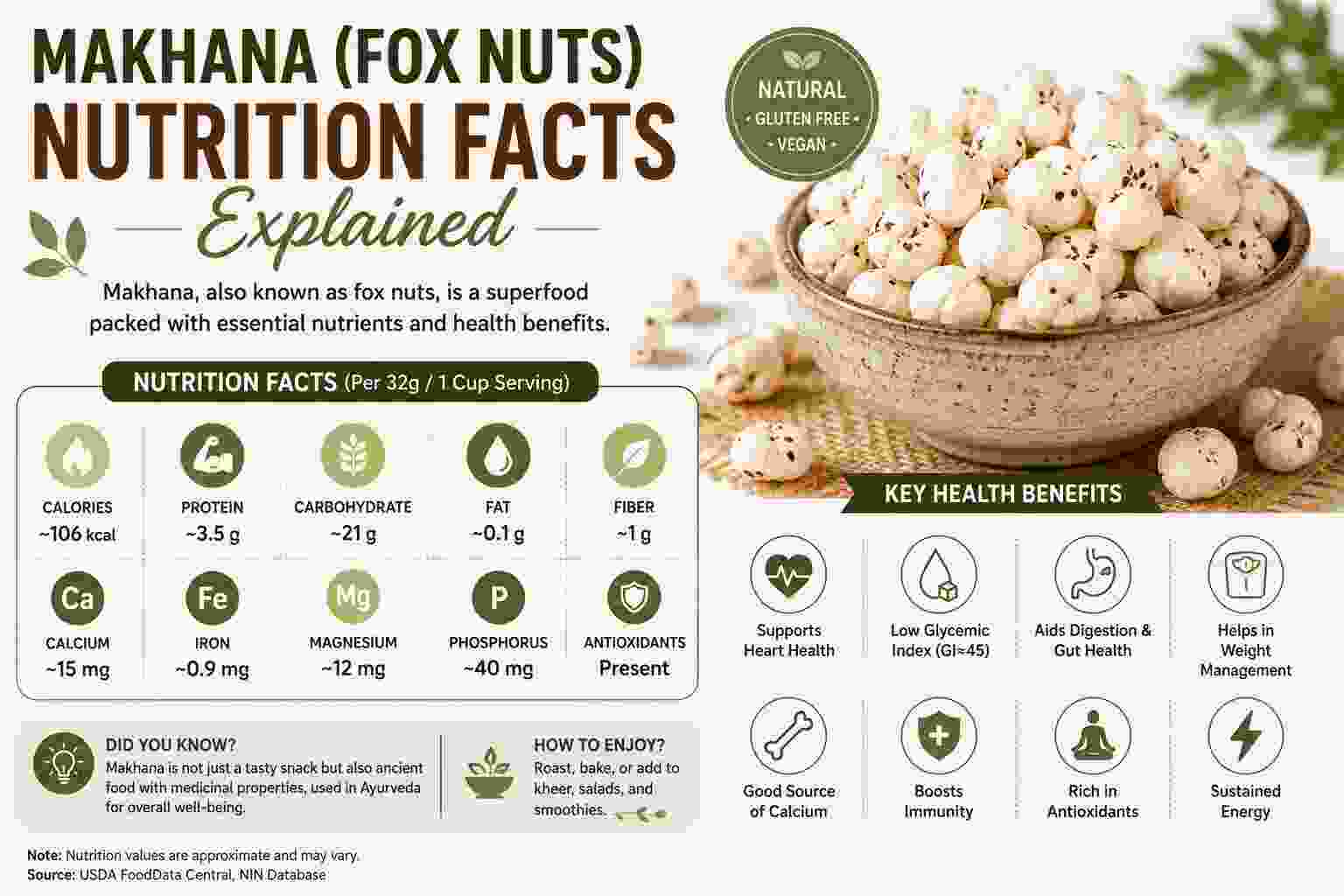
Makhana are surprisingly low in calories for a snack. One cup (about 32 g) of dried makhana contains roughly 106 calories. By comparison, 100 g of makhana (about 3 cups) has around 332 kcal. The snack’s calorie makeup is mostly complex carbohydrates. Per 100 g, makhana have about 64 g carbs, 15 g protein, and only 2 g fat. In other words, fox nuts are almost fat-free – most of their calories come from carbs and protein. This makes them an excellent low-fat alternative to oily chips or nuts.
Popcorn is a common comparison: 100 g of air-popped popcorn has about 387 kcal (higher than makhana) with 78 g carbs, 13 g protein, and 4.5 g fat. In contrast, 100 g of dry-roasted peanuts packs roughly 567 kcal with about 25–26 g protein and 49 g fat (much richer and higher-calorie). See Table 1 for a quick macro comparison:
| Nutrient (per 100g) | Makhana (Lotus seeds, dried) | Air-Popped Popcorn | Dry-Roasted Peanuts (unsalted) |
|---|---|---|---|
| Calories | 332 | 387 | ~567 |
| Protein | 15.0 g | 13 g | ~26 g |
| Total Fat | 2.0 g | 4.5 g | ~49 g |
| Carbohydrates (net) | 64.0 g | 78 g | ~16 g |
| Dietary Fiber | 2.0 g | 14 g | ~9 g |
| Calcium | 163 mg (16% DV) | 7 mg (0.7% DV) | ~92 mg (9% DV) |
| Magnesium | 210 mg (50% DV) | 144 mg (34% DV) | ~168 mg (40% DV) |
| Potassium | 1368 mg (40% DV) | 329 mg (10% DV) | ~705 mg (15% DV) |
Table 1. Approximate nutrition of 100 g makhana versus air-popped popcorn and peanuts. %DV = Daily Value.
In summary, Fact 1: Makhana are low-calorie, low-fat snacks. A serving is very filling (thanks to volume and airiness) but keeps calories modest. This makes them a smart crunchy snack for weight control.
High in Protein and Fiber
Despite being light, makhana are a good source of plant protein. As Table 1 shows, about 15% of makhana’s weight is protein. A single cup (32 g) contains roughly 5 g protein. This protein content is higher (per calorie) than many grain snacks. Protein promotes satiety and muscle maintenance, which is why fox nuts are often eaten during fasting in India (to stave off hunger).
Makhana also supply some dietary fiber. Their carbohydrate content includes resistant starch and fiber, which digest slowly. This means they act like a low-glycemic snack: indeed, studies report a glycemic index (GI) of about 45 for lotus seeds, which is relatively low (GI <55 is considered low). In practical terms, Fact 2: These complex carbs and fiber help stabilize blood sugar. The combination of protein and fiber can help you feel full longer – a plus for appetite control.
Rich in Essential Minerals
One of makhana’s standout features is its mineral richness. Table 1 hints at this: fox nuts are especially high in phosphorus, magnesium, potassium, and manganese. For example, 100 g of makhana provides about 626 mg phosphorus (≈89% DV), 1368 mg potassium (≈40% DV) and 210 mg magnesium (50% DV). It even offers 163 mg calcium (16% DV) – more calcium per gram than plain milk!
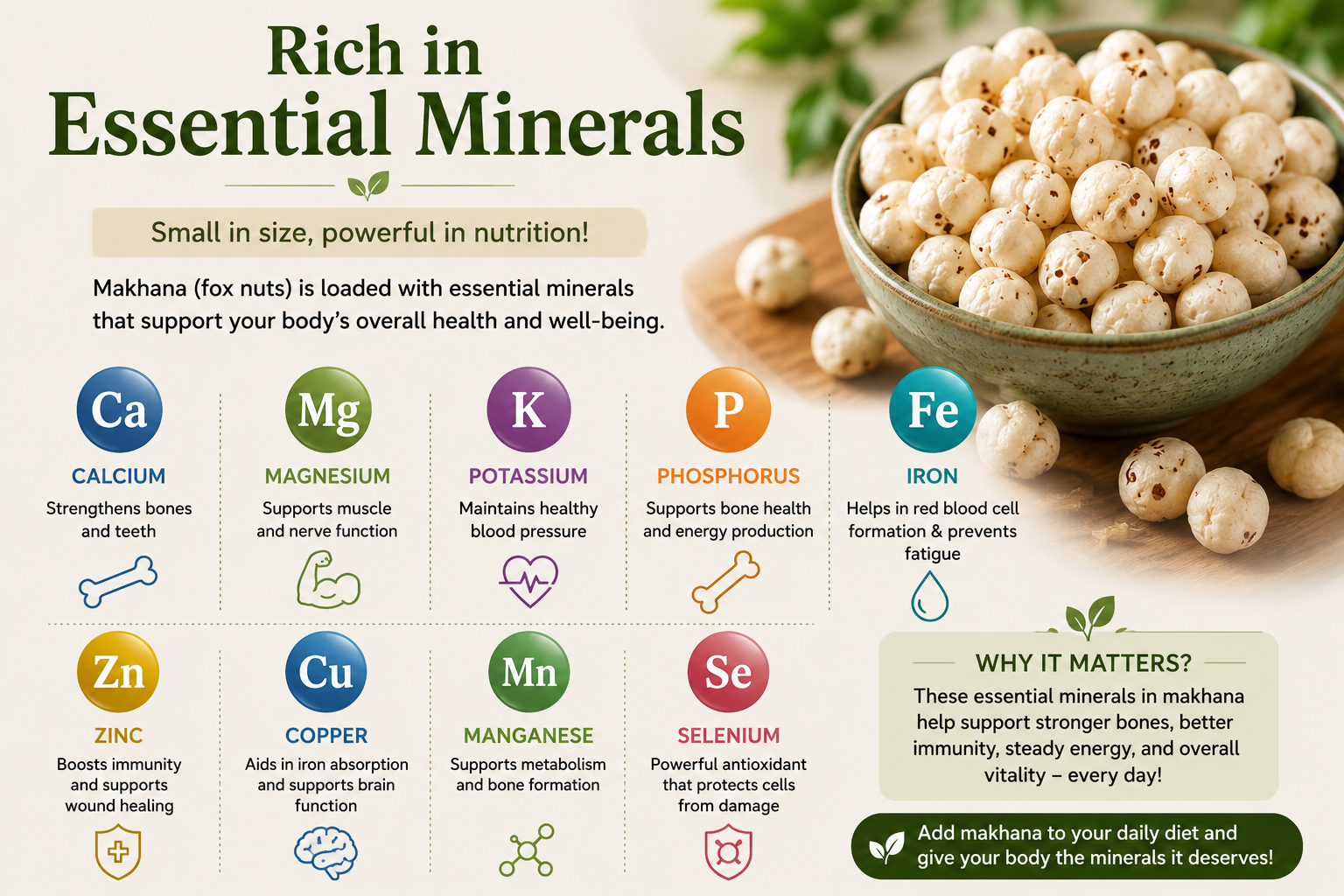
Additionally, 100 g contains 2.3 mg manganese (about 100% DV) and 3.5 mg iron (44% DV). These minerals play many roles: potassium helps regulate blood pressure, magnesium and calcium support bones and metabolism, and iron is vital for blood health. In fact, one study notes that makhana’s mix of low sodium and very high potassium content can promote a healthy blood pressure.
In short, *Fact 3: Fox nuts are nutrient-dense – rich in minerals often lacking in snacks. Eating them can boost intake of bone-building calcium and magnesium, BP-friendly potassium, and more.
Antioxidant Power
Makhana aren’t just about macros and minerals—they contain beneficial antioxidants too. Research has identified compounds like gallic acid, ellagic acid, and epicatechin in lotus seeds. These antioxidants can neutralize free radicals in the body, potentially reducing inflammation and the risk of chronic diseases. According to health experts, a diet high in antioxidants is linked to heart health, lower cancer risk, and better blood sugar control.
Thus Fact 4: Fox nuts have antioxidant phytochemicals. (Cooking does destroy some antioxidants – raw seeds have the highest activity – but roasted seeds still retain many beneficial compounds.) Enjoying makhana as a snack can add plant-based antioxidants to your diet in a tasty form.
Blood Sugar Friendly (Low Glycemic)
Building on the fiber point, makhana help regulate blood sugar. The resistant starch and fiber slow digestion of carbs. A published study notes that lotus seeds have a low glycemic index (~45). Animal research (mice and rats) also suggests makhana extracts may improve blood sugar control by boosting antioxidant enzymes. While human studies are limited, the combination of complex carbs, fiber, and protein means Fact 5: Makhanas are less likely to spike your blood sugar than sugary or refined snacks. That makes them a decent snack for people monitoring their blood sugar, as long as they are eaten in moderation.
Heart-Health Highlights
Fox nuts are known for their heart-friendly nutritional properties. As noted, they’re very low in fat (only 2 g per 100 g) and contain virtually no cholesterol. The little fat they do have is mostly unsaturated. Importantly, they are naturally very low in sodium: just about 5 mg per 100 g (essentially sodium-free). Meanwhile, their potassium content (40% DV) helps balance sodium and maintain healthy blood pressure. A journal review states that “makhana contains low sodium and high potassium which reduces blood pressure”.
Combined with the fiber and antioxidants, these factors make Fact 6: Fox nuts a heart-friendly snack. In fact, animal studies found that compounds in makhana helped reduce cholesterol and triglycerides in diabetic rats. While more human data are needed, swapping potato chips for roasted fox nuts is a smart step for cardiovascular wellness.
Vegan, Gluten-Free & Allergen-Friendly
Fox nuts are plant seeds, so they’re naturally vegan and gluten-free. They provide protein and fiber without any animal ingredients. This makes them a great snack for vegetarians, vegans, and anyone on a gluten-free diet. (One caveat: although they’re not true nuts, if you have severe nut allergies you may want to test tolerance; however allergic reactions to makhana are quite rare.)
Fact 7: Fox nuts are a safe snack for many diets. You can enjoy them even if you’re avoiding gluten or looking for plant-based protein. In Indian tradition, they’re actually categorized with dry fruits used during fasting because they’re nourishing yet fit the “no-grain” rules of fast days.
Culinary Versatility
Beyond plain snacking, makhana are culinarily versatile, which ties into their nutrition. They have a mild, nutty flavor that absorbs spices and flavors well. You’ll find them seasoned with chili, turmeric, or herbs, or tossed into trail mixes and savory mixes. They also puff up when roasted (like popcorn) and can even be ground into flour for gluten-free baking.
The low calorie count and neutral taste mean Fact 8: You can enjoy more volume of makhana than many snacks for the same calories. A large handful goes a long way. This satiety benefit pairs with their nutrients to make them a surprisingly filling treat. (Fun fact: a study found that air-popped fox nuts are about 30 g per 100 kcal, meaning you can eat a lot by weight for not many calories.)
Aid to Healthy Aging
Emerging research suggests makhana may have anti-aging skin benefits too. They contain amino acids like glutamine, cystine, arginine and methionine which support collagen production. Some cosmetic studies report compounds from lotus seeds can reduce wrinkle appearance. Plus, antioxidants slow age-related cell damage. So Fact 9: The nutrients in makhana might help skin health. (It’s not a substitute for cream or sunscreen, of course, but it’s one more reason to toss them in your diet.)
Comparative Healthier Choice
Finally, for those swapping snacks, Fact 10: Fox nuts are a healthier crunchy alternative. Unlike potato chips or fried namkeen, they’re not deep-fried and carry none of the trans fats or heavy oils. Compared to nuts like peanuts or almonds, fox nuts have far fewer calories and fat per serving (see Table 1) – you can enjoy them in greater quantity without as many calories. Think of roasted makhana as the popcorn of nuts: airy, crispy, and guilt-light.
Quick Takeaways (Key Insights)
- Low in calories and fat, fox nuts provide around 106 calories per 32-gram serving. only ~2g fat per 100g.
- High Protein: ~15g protein per 100g, helping fullness.
- Fox nuts contain fiber and complex carbohydrates, along with resistant starch that supports slow digestion and steady energy release.
- Minerals Rich: Good source of Ca, Mg, P, K, Mn, Fe – heart and bone friendly.
- Antioxidants: Contains gallic and ellagic acids that fight inflammation.
- Cardio-Healthy: Very low sodium, no cholesterol; high K:Na ratio helps blood pressure.
- Diet Friendly: Vegan, gluten-free, nut-free, nutrient-dense snack alternative.
- Versatile & Tasty: Roasted, spiced, or in dishes; more volume for fewer calories vs. chips/nuts.
Conclusion & Take Action
Makhana (fox nuts) may be small, but their nutrition profile is mighty. As we’ve seen, they’re a lightweight, crunchy snack loaded with protein, fiber, antioxidants, and essential minerals. Whether you’re looking to boost protein intake, control calories, or simply find a fun, healthier snack, makhana deliver in all these ways. Plus, their long shelf-life and ready availability (especially online or at specialty stores) make them an easy pantry staple.
Ready to try makhana yourself? Share your thoughts below! Do you roast them with your favorite spices, or enjoy them plain? If you found these nutrition facts eye-opening, spread the word – share this post with fellow snackers. And don’t forget to subscribe for more deep-dives into healthy foods. Next up: a tasty makhana recipe?