Premium Makhana from Bihar - festival offer - up to 25% OFF!
Makhana vs Chips: Fox Nuts vs Potato Chips Face-Off

Snacking can be a guilty pleasure or a healthful habit – and the choice between a bag of potato chips and a bowl of makhana (fox nuts) is a classic example. In recent years, fox nuts (also called makhana or lotus seeds) have surged in popularity as a “superfood snack.” Many health-conscious eaters wonder: Are makhana really healthier than chips? We dug into the latest research, nutrition data, and expert insights to compare these crunchy snacks side by side. Let’s unpack the facts.
What Are Fox Nuts (Makhana)?
Fox nuts are the popped seeds of the Euryale ferox water lily, long enjoyed in Asia for their mild, nutty crunch. In India, makhana has been a fasting snack and Ayurvedic remedy for centuries. Today, roasted makhana are sold in various flavors – from simple salted to spicy or sweet coated – and marketed as a nutritious alternative to processed chips. Fox nuts pack plant-based protein, fiber, and minerals into each light bite. For example, just one cup (32 g) of dried fox nuts contains about 106 calories, roughly 5 g protein, and a handful of minerals like calcium and magnesium. This nutrient profile makes makhana a “plant protein powerhouse” that dietitians often recommend for satiety and bone health
By contrast, a typical handful of potato chips is fried or baked from refined potato. Chips deliver an addictive crunch but little nutritional value: they’re high in fats and simple starches with minimal protein or fiber. We’ll compare the two directly next.
Nutritional Smackdown: Fox Nuts vs Potato Chips
Let’s look at the numbers per 100 grams (about 3.5 oz), a standard comparison:
| Nutrient (per 100 g) | Fox Nuts (Makhana) | Plain Potato Chips |
|---|---|---|
| Calories | 332 kcal | 536 kcal |
| Protein | 15 g | 7 g |
| Total Fat | 2 g | 35 g |
| Saturated Fat | 0.33 g | 11 g |
| Dietary Fiber | 14.5 g | 4.8 g |
| Carbohydrates (net) | 64 g | 48 g |
| Sodium (unsalted) | ~1.6 mg | ~8 mg |
Several key contrasts stand out. Fox nuts are far less calorie-dense: 100 g contains ~332 kcal, versus ~536 kcal in 100 g of chips. In practical terms, a 1 oz serving (~28 g) of chips has about 152 cal, while a similar weight of roasted makhana yields roughly 90–100 cal (based on the above per‑100 g figures). Makhana also deliver more than twice the protein and three times the fiber of chips per weight. This combination of protein and fiber contributes to greater fullness (satiety). In contrast, chips are “calorie-dense but nutrient-poor”, mostly fats and starch, which nutritionists warn can fuel mindless overeating.
Even the fats in chips are a concern: a 100 g portion contains ~35 g total fat (11 g saturated), whereas fox nuts contain barely 2 g fat total (virtually all unsaturated). In short, fox nuts offer more protein and fiber per calorie, and far less fat and saturates, than potato chips. (See the table above for details.)
Health Impacts: Beyond the Numbers
Numbers aside, what do diets and studies say about snacking on each? Experts praise makhana as a “clean” snack: it’s naturally low in added salts, trans fats, and artificial additives. Many recipes simply dry-roast the seeds with minimal oil and herbs. This simple prep preserves their nutrients and yields only ~10 mg sodium per 100 g (unsalted). Chips, especially salted or flavored types, pack high sodium and often monosodium glutamate or preservatives, which over time can raise blood pressure. In fact, EatingWell notes that “salty, fried snacks… can have a greater impact on our cardiovascular health than we might realize.” Regularly consuming these greasy bites elevates blood pressure and cholesterol, contributing to heart disease and obesity.
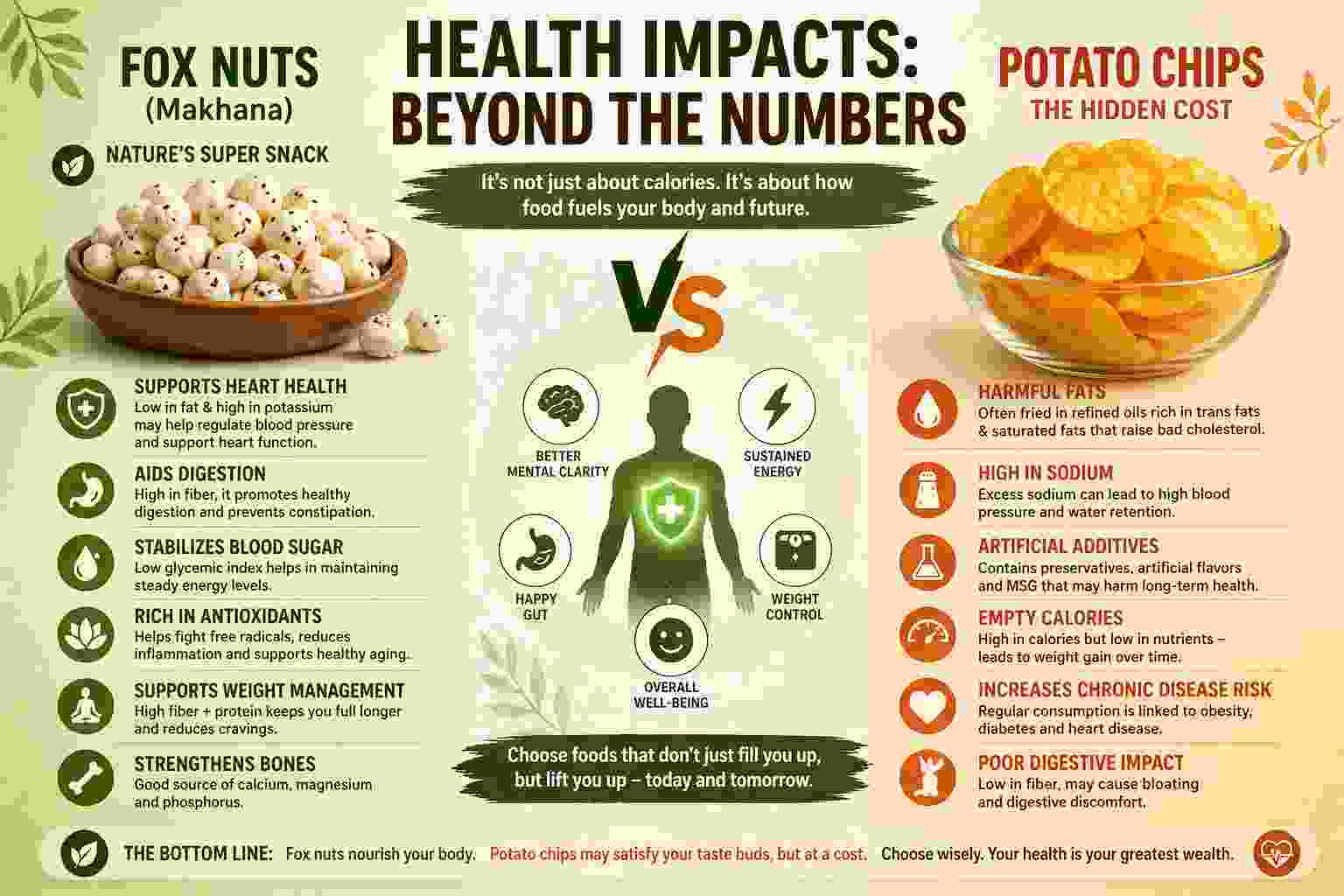
Another advantage of fox nuts is glycemic control. Clinical research shows fox nuts have a low glycemic index (GI). A University study found GI ≈ 45 for fox nuts, compared to about 56 for plain potato chips. (Lower GI foods cause slower blood sugar rises.) In practical terms, NDTV health reports that “fox nuts… can keep you full without causing drastic insulin spikes”, making them diabetes-friendly snacks. The same NDTV piece cites research confirming makhana’s low GI: “consuming makhana can keep blood sugar steady and provide long-lasting fullness”. By contrast, chips (starchy and refined) can trigger quicker insulin responses and, without fiber or protein to slow absorption, might lead to energy crashes and cravings shortly after snacking.
Indeed, chips are often engineered to hit the “bliss point” of fat, salt, and crunch. That makes them delicious but easy to overeat: we rarely stop at a handful because they lack satiating fiber/protein. Dr. Marc Katz notes that mindless crunching on chips “can lead to excessive calorie intake without feeling more fullness”. In comparison, fox nuts’ fiber and protein give genuine satiety, helping control portion size. Simply put, you can feel more satisfied eating fox nuts vs. chips for the same calorie intake.
Finally, antioxidants set fox nuts apart. They naturally contain ellagic acid, gallic acid and other phytochemicals, which help neutralize free radicals. Preliminary studies (in animals) suggest these compounds support heart, liver and kidney health and may even help regulate blood sugar. Potato chips provide essentially no antioxidant benefit. This means substituting a handful of nuts for chips adds not just nutrients but protective molecules.
Flavor, Texture, and Variety
Now, taste matters too. Chips come in crunch and flavor (salt, BBQ, sour cream, etc.), which is why they’re so addictive. Fox nuts also pack crunch but a milder base flavor. Plain roasted makhana are slightly nutty, crisping up well. They’re very versatile – you can spice them with black pepper, cinnamon, herbs or even drizzle a tiny bit of ghee to mimic buttery richness. Brands now sell seasoned varieties (cheese, peri-peri, caramel, etc.), offering many taste profiles with much lower fat. And unlike chips, flavored makhana are often made with natural spices and no artificial colors/preservatives, making them a cleaner comfort snack (especially for parents seeking healthier kids’ snacks).
Texture-wise, fox nuts start crunchy and light. Chips are also crunchy but greasier. Some people might miss the oily mouthfeel; others appreciate that makhana don’t leave a greasy residue. If you’ve ever tried eating 5 chips vs. 5 makhana: the chip bag empties out faster. It’s not just in your head – it’s backed by the fat and salt content differences.
Market Trends and Cultural Context
The fox nuts trend isn’t a fluke. Market analysis reveals a booming fox nuts market, driven by global demand for clean, plant-based snacks. One industry report notes the “shift towards healthier snack options” fueling this boom: globally, the fox nuts market was valued at $44.4 billion in 2023, and could reach about $97.5 billion by 2030. Asia-Pacific leads consumption (especially India, where they’re called makhana), but North America and Europe are growing fast as people discover the snack. The report highlights that fox nuts are “the replacement for regular snacks such as chips and popcorn” – a telling sign that producers see them as direct healthier substitutes.
In Indian culture, makhana have long been a festival or fasting food; their comeback in urban diets ties ancient tradition to modern health trends. Urban health-food cafes and even online stores now offer gourmet makhana mixes alongside usual salted peanuts or pretzels. Social media videos abound of people sprinkling spice mixes on popping makhana as a DIY snack. This cultural cachet as a “heritage health snack” gives fox nuts a marketing boost that potato chips simply don’t have (chips have their own legacy, but mostly as comfort food, not health food).
Key Takeaways: Should You Swap?
- Nutrient Density: Fox nuts are lower in calories and fat, higher in protein and fiber than chips. This makes them more filling per calorie.
- Heart and Metabolism: High salt/fat chips can raise blood pressure and contribute to weight gain, whereas makhana’s low sodium and healthy fats are gentler on your heart.
- Blood Sugar: Makhana’s low glycemic index means steadier blood glucose. For diabetics or snackers avoiding sugar crashes, that’s a win.
- Mindful Eating: It’s easier to overeat chips due to addictive flavor engineering; makhana’s natural crunch and fiber help you feel satisfied sooner.
- Flavor & Use: Chips have more intense seasoning; makhana are milder but endlessly customizable (dry-roast with spices). Both can be part of a fun snack mix.
However, note: portion control still matters. Natural foods like makhana can also add up if you don’t watch servings. A personal tip: it’s easy to binge healthy snacks too. So we recommend measuring a portion (a quarter-cup of makhana, about 50 kcal, is a good start) and savoring slowly.
Conclusion and CTA
In summary, roasted fox nuts (makhana) generally outshine potato chips as a snack – in nutrition, in health impact, and even in cultural “cool” factor. That said, the best snack is one you enjoy in moderation. If you love chips, you don’t have to give them up entirely. But next time you crave crunch, try a handful of fox nuts. You might find yourself reaching for the lighter, crisp alternative without sacrificing flavor or satisfaction.
Did this snack showdown change your mind? Have you tried makhana instead of chips? Let us know in the comments! And if you found this useful, share the article or subscribe for more smart snack guides.
[…] exactly how fox nuts are often pitched. But the comparison is more interesting than the marketing. Fox nuts are the popped seeds of Euryale ferox and are deeply associated with Bihar, where makhana is a […]
[…] fresh perspective worth noticing is that fox nuts are moving from folk wisdom into formal nutrition research. The National Institute of […]