Premium Makhana from Bihar - festival offer - up to 25% OFF!
Is Makhana Good for Kidney Health? Unpacking the Facts

Ever grabbed a handful of makhana (fox nuts) and wondered, “Is this really safe for my kidneys?” These crunchy lotus seeds have earned a reputation as a trendy super-snack – low in fat, high in protein, and packed with antioxidants. Fitness buffs and health bloggers love them for weight loss and stable blood sugar. But if you have kidney concerns, you might pause before indulging. Why? Because, as experts warn, makhana’s high potassium content can pose a hidden risk for renal health. In this deep dive, we’ll look at what makhana really contains, how it stacks up against other snacks, and whether it’s a friend or foe for your kidneys.
Makhana (fox nuts)
Also known as lotus seeds or fox nuts, makhana are puffy snacks harvested from aquatic plants in Asia. They’re light and crunchy, often roasted with spices. Nutrition-wise, makhana are indeed notable – they’re about 84–85% carbs and ~9–10% protein by weight, with negligible fat. In fact, the Times of India calls makhana a “superfood” precisely because it “boasts high protein and low fat”. Traditional systems (Ayurveda and Chinese medicine) even used makhana in remedies for diarrhea, leucorrhea, and yes – kidney ailments. This suggests some belief in kidney benefits. Modern analyses highlight that makhana is rich in minerals: a cup (about 32 g) delivers roughly 438 mg potassium and 200 mg phosphorus. It also provides modest amounts of magnesium, iron, and small calcium. In short, makhana is nutrient-dense – but not without its quirks.
On the plus side, makhana contains antioxidants (like gallic acid, epicatechin and others) which fight inflammation, and its low glycemic index makes it appealing for blood sugar control. However, those same nutrients – potassium and phosphorus – are exactly what kidney patients often must limit. Imagine your kidneys as filters: too much potassium is like pouring extra weight on the filter, potentially causing trouble. Guidelines for chronic kidney disease (CKD) typically cap daily potassium at around 2000 mg or less. A 32 g serving of makhana already supplies ~438 mg (so ~1,300 mg per 100 g). By comparison, a small 1‑ounce (28 g) serving of air-popped popcorn has only about 85 mg potassium. In other words, a cup of makhana packs roughly five times the potassium of the same-weight popcorn. This matters because too much potassium can overload failing kidneys and lead to hyperkalemia, a dangerous condition that can disrupt heart rhythm.
The concerns aren’t just theoretical. Nutritionists explicitly caution that for people with CKD or on low-potassium diets, makhana should be eaten only in very small amounts, if at all. A Times of India health article quotes a dietitian saying, “If you have kidney issues or CKD and you are on a low potassium diet, then you should definitely avoid eating makhanas totally”. In plain terms: for kidney patients, even a few servings of makhana could contribute dangerously to potassium buildup. Likewise, Moneycontrol (a health news site) notes that makhana’s “notable potassium content” means it’s “contraindicated for individuals on low-potassium diets, particularly those with chronic kidney disease”.
Beyond potassium, there’s another kidney angle: oxalates and stones. Makhana naturally contains oxalates – compounds that can combine with calcium to form kidney stones. For people prone to calcium-oxalate stones, every oxalate-rich snack is another risk factor. Doctors warn that “excessive oxalate intake may reduce calcium absorption and heighten stone formation,” and they link high-oxalate diets to more kidney stones. In other words, if you’ve ever had kidney stones, makhana could raise your risk. (This isn’t unique to makhana – many nuts and seeds have oxalates – but the takeaway is clear: moderation is key.)
Fresh, low-potassium snacks like carrot sticks, cucumber slices, and berries offer a colorful, kidney-friendly alternative to higher-potassium treats.
To make it concrete, here’s a quick comparison of makhana versus other common snacks on minerals important to kidney health:
| Snack | Potassium (mg/100 g) | Phosphorus (mg/100 g) |
|---|---|---|
| Makhana (lotus seeds) | ~1368 | ~625 |
| Air-popped popcorn | ~300 | ~300 |
| Apple (raw, peeled) | ~107 | ~11 |
| Carrot sticks (raw) | ~235 | ~33 |
| Cucumber (raw, peeled) | ~140 | ~21 |
Table: Potassium and phosphorus per 100 g of various snacks. Makhana is much higher in both minerals than typical fruits or vegetables.
The table highlights the point: a standard serving of makhana (100 g is a lot – usually you’d eat 30 g or less) carries far more potassium and phosphorus than the same weight of apple, carrot or popcorn. For kidney health, high phosphorus is also a worry (since failing kidneys struggle to excrete phosphorus too). By comparison, those fruits/veggies are kidney-friendly choices. Even popcorn, which feels like an innocent snack, has much lower K and P.
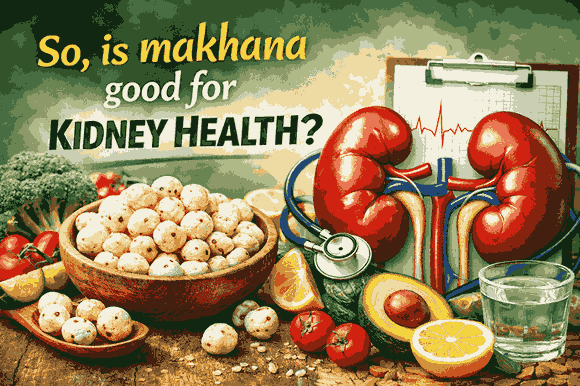
So, is makhana good for kidney health?
For otherwise healthy people, it’s a nutritious snack with benefits. But for those with kidney disease or stone-formers, it’s a red flag. If your kidneys are weakened, dietitians advise extreme caution. Some might still fit small portions into a controlled diet with doctor guidance (and careful tracking of total potassium/potassium intake). Others – especially anyone on dialysis or with advanced CKD – are usually told to skip makhana altogether.
Interestingly, there is emerging research on makhana’s potential kidney benefits – but in a very different context. For example, a 2023 study in Foods gave diabetic mice a concentrated extract of germinated Euryale ferox (the plant that makes makhana). The treated mice showed improved kidney function markers: their blood urea nitrogen and creatinine levels (key kidney tests) dropped, and kidney tissue looked healthier under the microscope. The authors believe antioxidants and other bioactives in germinated makhana helped reduce diabetic kidney damage. This sounds promising, but caution: it’s an animal study using extracts, not eating popped makhana. It suggests the plant has beneficial compounds, but doesn’t directly say a bowl of makhana will heal your kidneys. In practice, nutrition matters.
Key Takeaways: Makhana packs a nutritional punch – but also a potassium punch. If you’re enjoying makhana as a wholesome snack, be aware that kidneys pay the price if you overdo it. Health experts remind us that even the healthiest snack can be harmful if it’s not right for your body. If you have CKD or other kidney issues, talk to a renal dietitian before adding trendy foods like makhana. They might suggest limiting portion size (e.g. a tablespoon or two, counting it in your daily potassium budget) or switching to lower-potassium alternatives some days. Pairing makhana with plenty of water and fiber-rich foods can help flush excess minerals and support digestion (remember, makhana is low-fiber itself).
Conclusion:
Makhanas are tasty and nutrient-dense, but they’re not universally kidney-friendly. For most people, an occasional small serving is fine. For anyone with renal concerns or kidney stone risk, it’s best to enjoy them sparingly, if at all. Always keep an eye on portion sizes, and balance them with fruits and veggies low in potassium. And above all, listen to your healthcare providers. Your kidneys will thank you for the careful approach!
Have thoughts or experiences with makhana and kidney health? Share in the comments below! Feel free to explore our Kidney-Friendly Diet Guide and subscribe for more science-backed nutrition tips. Your kidneys are one-of-a-kind – let’s keep them happy together!
FAQs
Q: Can people with chronic kidney disease eat makhana at all?
A: Patients with CKD are usually on strict low-potassium, low-phosphorus diets. Since makhana is high in both minerals, doctors generally recommend avoiding it or only eating very small portions under guidance. Check with your nephrologist or dietitian for personalized advice.
Q: How much makhana is safe if I have mildly reduced kidney function?
A: There’s no one-size answer. Some dietitians suggest limiting high-potassium snacks to a few tablespoons per serving. If allowed, measure portion (e.g. 15–30 g) and count that potassium towards your daily limit. Most important: monitor lab values (electrolytes) and symptoms, and adjust accordingly.
Q: Does roasting or adding spices change makhana’s impact on kidneys?
Roasting or seasoning changes flavor but not the inherent nutrients. Salted or spiced makhana could even contain extra sodium (salt), which is another concern for kidneys. The potassium and phosphorus remain the same whether raw or roasted, so preparation doesn’t reduce the kidney burden.
Q: Are there any kidney-friendly benefits of makhana at all?
As a light snack, makhana is low in saturated fat and contains antioxidants. For a healthy person, they can be part of a balanced diet. However, any benefit must be weighed against the high potassium content for kidney patients. The antioxidants noted in research do not override the electrolyte issue when it comes to CKD.
Q: What are some good low-potassium alternatives to makhana?
Crunchy veggies like cucumber or carrot sticks, air-popped popcorn, rice cakes, and apple slices are lower in potassium and usually safe in moderate amounts for kidney diets. Berries and grapes are also relatively low-K fruits. Always rinse and prepare produce as advised by your dietitian.
Call to Action
Curious to upgrade your daily snacking habits? Start small—swap just one processed snack with makhana this week and notice the difference.
Got questions or your own experience with makhana? Drop them below—your insight might help someone else make a smarter choice.
Select 54 more words to run Humanizer.
[mc4wp_form id=1048]
[…] hunger without breaking your calorie bank. Dietitians note that you can munch a serving of roasted fox nuts and still feel full “without significantly raising [your] regular calorie consumption,” making […]