Premium Makhana from Bihar - festival offer - up to 25% OFF!
Makhana for Thyroid: Benefits Explained

Thyroid disorders (like hypothyroidism) often leave you feeling sluggish, making metabolism seem impossible to kickstart. Enter makhana (fox nuts or lotus seeds), an age-old Indian superfood now trending globally. Packed with nutrients, antioxidants, and a surprisingly thyroid-friendly profile, makhana is making waves as a gluten-free, metabolism-boosting snack. In this post, we’ll dive deep into makhana’s nutrition, its thyroid-specific benefits, how it stacks up against other thyroid-friendly foods, and practical tips for adding it to your diet.
What Is Makhana and Why Is It Nutrient-Rich
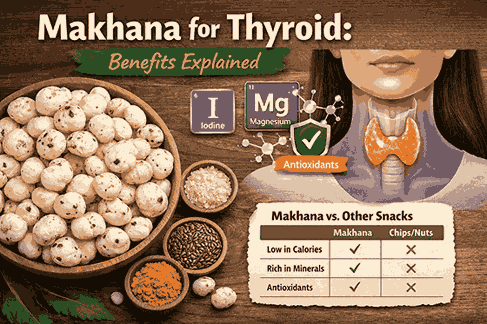
Makhana (fox nuts) are the popped seeds of the Euryale ferox aquatic plant, traditionally harvested and roasted. A 100g serving contains about 350 calories, 9.7 g protein, 14.5 g fiber, and 0.1 g fat – making it a high-fiber, protein-rich snack. It also delivers key minerals per 100g: roughly 67 mg magnesium, 500 mg potassium, 200 mg phosphorus, 60 mg calcium, and 1.4 mg iron. Crucially, researchers note it even contains traces of iodine (in addition to vitamins B1, carotene, and other micronutrients) – the very element your thyroid needs to produce hormones. In short, makhana is low in fat, high in protein/fiber and loaded with thyroid-supporting minerals.
- High in Antioxidants: Makhana is rich in polyphenols like gallic acid, ellagic acid and epicatechin. These antioxidants fight oxidative stress, which can harm the thyroid gland.
- Magnesium & Zinc: Every 100g provides ~67 mg magnesium and small amounts of zinc (up to ~1.1 mg when roasted). Both minerals are co-factors for thyroid hormone production. Magnesium is involved in the conversion of T4 into active T3, and zinc is critical for the thyroid-peroxidase (TPO) enzyme that makes thyroid hormones.
- Iodine Content: Though not as high as iodized salt or seaweed, makhana does contain iodine. Iodine is essential for making T3 and T4, so even small amounts are valuable.
In summary, makhana provides a nutrient-packed package: protein, fiber, magnesium, and iodine – all wrapped in a gluten-free, low-fat seed. Its unique nutrient blend makes it an attractive choice for thyroid patients looking to support hormone balance and metabolism.
How Makhana Supports Thyroid Function
Hypothyroidism often brings weight gain, constipation, fatigue and brain fog. Let’s explore how makhana’s nutrients can help counter those issues:
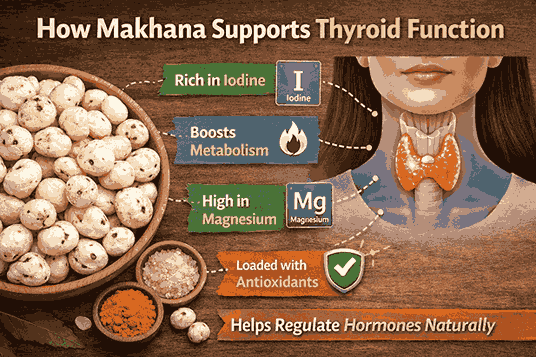
- Boosts Metabolism: Makhana’s high-protein (≈10%) and high-fiber content help you feel full and energized. Adequate protein supports muscle maintenance and hormone production, while fiber keeps digestion regular. These factors can gently nudge your metabolic rate upward, important for underactive thyroid cases. (As one dietician notes, “Adding makhana seeds to your diet can help increase protein and fiber intake, which may benefit weight loss”.)
- Balances Hormones: The magnesium and zinc in makhana play direct roles in hormone chemistry. Magnesium aids the enzyme that converts inactive T4 into active T3, and zinc is essential for the thyroid peroxidase that crafts thyroid hormones. Deficiencies in either mineral have been linked to hypothyroidism. By providing both, makhana can support more efficient thyroid hormone production.
- Reduces Inflammation: Antioxidants like gallic and ellagic acid help calm oxidative stress and inflammation. Chronic inflammation can worsen autoimmune thyroid conditions (e.g. Hashimoto’s) and impair thyroid function. Regularly snacking on antioxidant-rich foods like makhana could help protect thyroid cells from damage.
- Supports Nutrient-Rich Diet: Makhana contributes other beneficial micronutrients (potassium, phosphorus, etc.) to a thyroid-friendly diet. Its gluten-free nature is a bonus for those with Hashimoto’s thyroiditis, since many patients are sensitive to gluten. As one health coach puts it, “It’s a natural gluten-free snack that can be one of the safest options for thyroid patients”.
Example Benefits (Thyroid-Specific): Many thyroid patients report that adding makhana to their diet helps with chronic tiredness and weight control. For example, its protein can reduce food cravings and keep energy steady, while fiber improves gut health (important since hypothyroidism often causes constipation). Anecdotally, some say roasted makhana feels like “nature’s popcorn”—satisfying to snack on, yet much healthier than chips.
Makhana vs Other Thyroid-Friendly Foods
Curious how makhana stacks up against classic thyroid superfoods? Here’s a simple comparison highlighting the key nutrients in each of these foods.
| Food/Nutrient | Makhana (100g) | Other Thyroid Allies (Key Nutrients) |
|---|---|---|
| Magnesium | ~67 mg (17% RDA) | Pumpkin seeds: 262 mg (free T4→T3 conversion) |
| Zinc | ~1.0–1.8 mg | Red meat: ~5 mg (TPO enzyme); Oysters: ~50 mg (antioxidant support) |
| Iodine | Trace (present) | Seaweed: Very high (raw materials for T3/T4); Iodized salt: ~77 μg per 0.5 tsp. |
| Protein | 9.7 g | Egg (1 large): 6 g; Greek yogurt (100g): ~10 g (help with hormone production) |
| Fiber | 14.5 g | Legumes (100g): ~7–10 g (aids satiety and digestion) |
| Special Traits | Gluten-free; low-fat; antioxidant-rich | Brazil nuts: Selenium (200%+ DV, antioxidant for T4); Berries: Antioxidants (protect thyroid); Leafy greens: Magnesium, iron, vitamins for thyroid enzymes. |
The takeaway: Makhana isn’t the highest in any one nutrient (like seaweed is for iodine or Brazil nuts for selenium), but it offers a well-rounded mix of fiber, protein, magnesium and antioxidants. These help complement other thyroid foods. For example, you could snack on makhana alongside a few Brazil nuts (for selenium) or a sprinkle of seaweed (for iodine) to cover all bases.
How to Enjoy Makhana & Precautions
To reap thyroid benefits, enjoy makhana in its pure, roasted form – not deep-fried or heavily salted. Opt for dry-roasted makhana with minimal oil and seasonings (like turmeric or black pepper). You can toss it with herbs and spices for flavor, mix it into trail mixes, or even grind it into flour for gluten-free baking. It also makes a creamy kheer (pudding) or smoothie base.
Best Practices:
- Portion Control: A typical serving is just 25–30 grams (about one small bowl). This provides nutrients without excessive calories.
- Snack Timing: Makhana is great mid-morning or mid-afternoon to curb hunger. Pair it with fruit or yogurt for a balanced mini-meal.
- Avoid Excess Salt: Since thyroid issues often go hand-in-hand with high blood pressure, skip extra salt on your makhana. Use herbs or a pinch of rock salt instead.
Who Should Caution: Makhana is healthy, but like any food, moderation is key. Because of its high potassium (500 mg/100g), people with kidney problems should limit intake. Also, those on very low-carb diets should account for its ~77g carbs per 100g. Finally, if you experience any digestion issues (bloating or gas) after eating a lot of makhana, try smaller amounts.
Quick Tip:
Some thyroid practitioners suggest starting with organic, unsalted makhana. This ensures you get nutrients without unwanted additives. For example, raw or lightly roasted organic makhana can retain more minerals like magnesium and phosphorus.
Conclusion
In a nutshell, makhana is a nutrient-packed, thyroid-friendly snack. Its blend of protein, fiber, magnesium, antioxidants and even iodine can support hormone production, boost metabolism, and help manage common hypothyroid symptoms. And it proves healthy eating doesn’t have to be dull – who knew these crunchy lotus seeds could be so beneficial? Give makhana a try as a daily snack or recipe ingredient, and see how your body responds. Your thyroid (and taste buds) may thank you!
Liked this post? Share your experience with makhana or thyroid-friendly foods in the comments. Have a favorite makhana recipe or tip? We’d love to hear it! Don’t forget to subscribe for more nutrition insights and tasty health tips. Stay crunchy and healthy!