Makhana vs Almonds: Which is Better? (Fox Nuts vs Nuts)
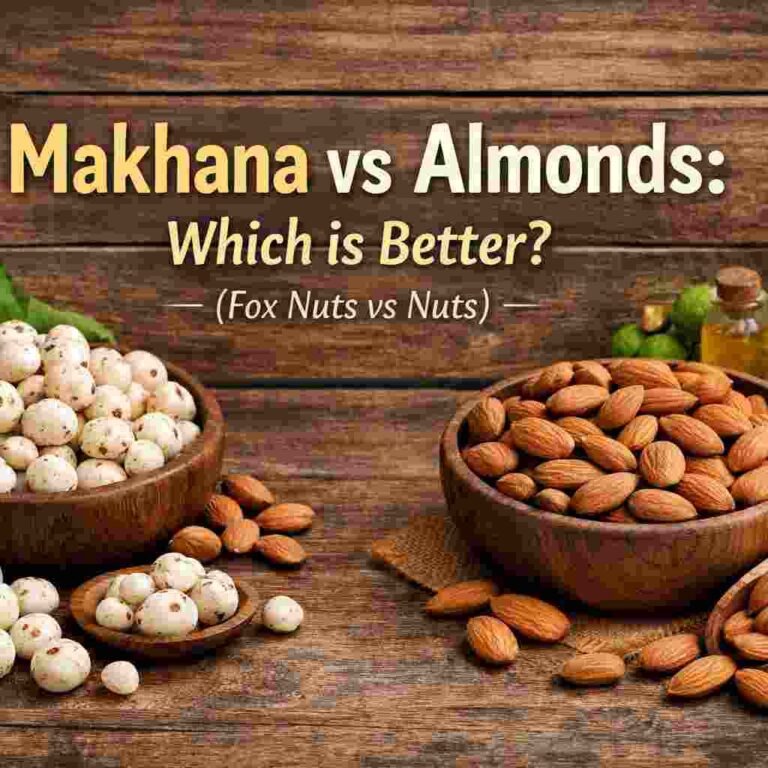
Introduction: If you’re torn between reaching for fox nuts (makhana) or almonds on snack patrol, you’re not alone. Both are touted as healthy snacks, but they have very different profiles. This guide dives deep into fox nuts vs almonds, comparing nutrition, health benefits, culinary uses, cost, and sustainability. You’ll get hard numbers, expert insights, and practical tips – so you can decide which snack earns a spot in your diet. Fox nuts (also called makhana or lotus seeds) are popping up on wellness blogs and grocery shelves as a low-calorie, nutrient-rich alternative to traditional nuts. Meanwhile, almonds – the classic tree nut snack – have decades of research backing their heart-healthy reputation. We’ll compare them side-by-side so you know the full story. What Are Fox Nuts (Makhana)? Fox nuts are the puffed seeds of the Euryale ferox plant, a prickly water lily native to Asia. In India and China, makhana has been eaten for centuries as a satvik (pure) food, often used in fasting recipes and festive dishes. Botanically, they’re lotus seeds, not true nuts – so people with nut allergies can enjoy them safely. Raw fox nuts are popped much like popcorn: heat causes the little seed to swell into a crunchy, puffed snack. In cuisine, they’re typically dry-roasted and lightly seasoned (salt, spices or ghee) and eaten on their own, or added to salads, curries, kheer (pudding), and trail mixes. Nutritionally, makhana is prized for being low in fat and calories but high in fiber and minerals. For example, one cup (≈32g) of dried fox nuts provides about 106 calories, 4.9g protein, 438mg potassium, 200mg phosphorus, and 52mg calcium. It’s also a good source of antioxidants (like gallic and ellagic acid) and is considered a low glycemic index food (~37 on the GI scale). In short, makhana is a crunchy, airy super-snack that fills you up without packing on fat. What Are Almonds? Almonds are actually the edible seeds of the Prunus dulcis tree (a type of drupe) originating in the Mediterranean. Cultivated since ancient times (even mentioned in Genesis), they’re now grown worldwide. Unlike fox nuts, almonds are rich in healthy fats, vitamin E, and minerals. A 1-ounce serving (about 23 nuts) provides ~165 calories, 6g protein, 14g total fat (mostly heart-healthy unsaturated fat), 6g carbs, and 3g fiber. Almonds are celebrated for their nutrient density: they deliver calcium, magnesium, riboflavin and are especially high in vitamin E. Culinary-wise, almonds are ultra-versatile – eaten raw or roasted, tossed in salads, ground into flour, pressed into oil, or made into milk, butter and desserts. Their rich, buttery flavor makes them a staple in both sweet and savory dishes. In summary, almonds pack more fat, protein, and calories per ounce, whereas fox nuts are much lighter (mostly carbs) and very low in fat. We’ll break down these differences next. Nutritional Comparison The table below highlights the key differences in nutrients between 100g of each snack. (Note: actual serving sizes differ, but this gives an apples-to-apples view.) Nutrient (per 100g) Fox Nuts (Makhana) Almonds Calories 332 kcal ~579 kcal Protein 15 g 21 g Total Fat 2 g 50 g Carbohydrates 64 g ~22 g (6g/oz) Dietary Fiber – (label shows none; in reality ~14.5 g) ~11 g (3g/oz, see text) Vitamin E <1 mg (negligible) 25 mg (≈170% DV) Calcium 163 mg 262 mg Magnesium 210 mg 268 mg (from 100g data) A few observations from the table: Bottom line: Almonds are energy-dense (high fat & protein) and nutrient-packed (especially vitamin E), while fox nuts are much lighter and fibrous with fewer calories. Depending on your goals (energy vs. weight loss, etc.), one may suit you better. Health Benefits: Nuts vs Fox Nuts Heart & Cholesterol:Almonds are well-studied for heart health. They’re rich in unsaturated fats, fiber, plant sterols and vitamin E – all known to improve blood lipids. A recent clinical trial found that eating 2 ounces of almonds daily significantly lowered total and LDL (“bad”) cholesterol in adults with metabolic syndrome. Another meta-analysis confirmed even 1 ounce per day reduces LDL cholesterol. The vitamin E and monounsaturated fats in almonds help prevent oxidative damage and improve arterial function. By contrast, direct research on fox nuts and heart health is limited. However, makhana’s low fat and high fiber likely make it a heart-friendly snack too. Its antioxidants (gallic, ellagic acids, etc.) may also fight inflammation. In practice, substituting almonds for high-sugar or high-saturated-fat snacks tends to improve heart risk factors. Blood Sugar & Weight:Fox nuts have some unique advantages for blood sugar control and weight management. They have a low glycemic index (~37), meaning their carbs digest slowly and give a gentle rise in blood sugar. The high fiber content (~14.5g/100g) further blunts glucose spikes and helps you feel full. In fact, fiber-rich foods are known to promote satiety and assist weight loss. One nutritionist notes that fox nuts’ combination of 4g fiber per cup and virtually no fat makes them “ideal for weight loss” as a snack. Conversely, almonds are calorie-dense – but some studies suggest nuts can help weight control by boosting fullness despite their calories. Nuts’ fiber and fat slow digestion, which can curb appetite. Ultimately, if you’re reducing calories, fox nuts win on being low-calorie; if you want a protein-rich snack to boost metabolism, almonds may be better. Bone & Micronutrients:Almonds are notable for calcium and magnesium, nutrients important for bone health. A serving of almonds (≈28g) has about 76mg calcium and 77mg magnesium. By contrast, fox nuts deliver more minerals per gram: in 100g of makhana you get 163mg calcium and 210mg magnesium. So gram-for-gram, makhana actually provides very high levels of these bone-friendly minerals (though you’ll typically eat fewer grams of makhana). Both snacks can contribute to the diet’s mineral mix. Antioxidants & Anti-inflammatory:Almonds provide antioxidants like vitamin E and flavonoids that reduce oxidative stress. Fox nuts contain unique polyphenols (gallic acid, ellagic acid, epicatechin) that have been studied for anti-inflammatory effects. For example, rats given a lotus seed extract showed reduced blood sugar and fat levels, hinting at metabolic benefits. While these are preliminary, it suggests makhana may help lower chronic inflammation. In short, both snacks carry