Premium Makhana from Bihar - festival offer - up to 25% OFF!

Calories in Fox Nuts (Makhana): A Complete Guide for Weight Loss & Healthy Snacking

Imagine snacking on something crunchy, satisfying, and guilt-free – that’s fox nuts (makhana) for you. Once considered a “food reserved only for the gods” in India, makhana (fox nuts) have quietly become a favorite among dieters and health buffs. In this complete guide, we’ll crunch the numbers on calories, macros, and nutrition in fox nuts, and show how these humble lotus seeds can fit into a weight-loss or healthy snacking plan. You’ll learn why fox nuts pack lots of volume with relatively few calories, how they compare to popular snacks, and practical ways to enjoy them.
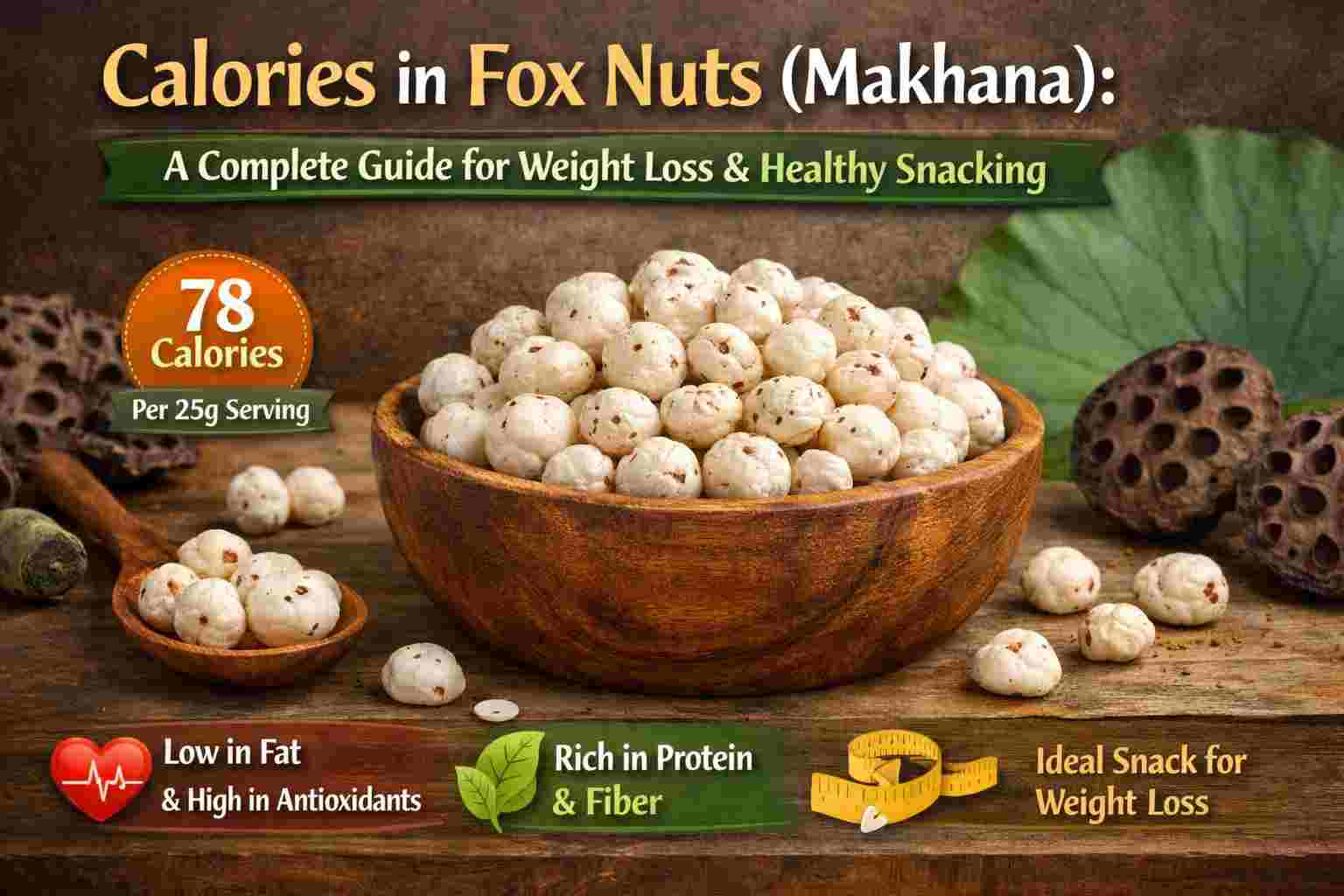
Fox nuts (makhana) are the popped seeds of the aquatic lotus plant Euryale ferox, also called lotus seeds or water-lily seeds. They start as hard, starchy seeds, which are heated until they puff up like popcorn. Traditionally used in Indian festivals and Ayurvedic recipes, makhana have long been prized as a light, “sattvic” (pure) food – often offered to deities or eaten during Hindu fasting days like Navratri and Ekadashi. Today, they’re simply enjoyed as a nutrient-rich snack.When roasted, fox nuts (makhana) turn light, fluffy, and perfectly crispy, making them a delicious snack that is naturally lower in fat and calories compared to most processed munchies.
Fox nuts are gaining fame because they deliver big crunch with relatively few calories. They’re mostly carbohydrate (mostly starch), with a decent amount of plant protein, fiber and almost no fat. For example, just 1 cup of dried makhana (about 32 g) has only about 106 calories. That same 32 g serving also provides around 5 g of protein and significant calcium, magnesium and other minerals. In contrast, 100 g of raw (unpopped) makhana contains roughly 350–360 kcal, whereas the popped/roasted product is around 328 kcal per 100 g. (The small calorie difference reflects moisture loss and any added oil when roasting.) By comparison, energy-dense nuts like almonds pack about 578 kcal per 100 g, so by weight fox nuts are much lighter.
Almonds (shown) are very energy-dense – about 578 kcal per 100 g – whereas 100 g of raw fox nuts has only ~362 kcal with negligible fat. This makes makhana a crispy, lower-calorie snack alternative to most nuts and chips.
In practical terms, these numbers mean you can eat a generous handful of makhana and stay within a moderate calorie budget. As The Times of India explains, makhana’s “low energy value per gram” lets you eat a decent volume without a big calorie hit. In other words, a large bowl of makhana will weigh more and look more filling than the same calories in potato chips or nuts, helping curb hunger. This is great for weight loss: volume eating with very crunchy, satisfying texture.
Nutrition Snapshot: Calories and Macronutrients
Let’s break down the key nutrition facts. According to USDA-based data, 1 cup (32 g) of dried fox nuts has:
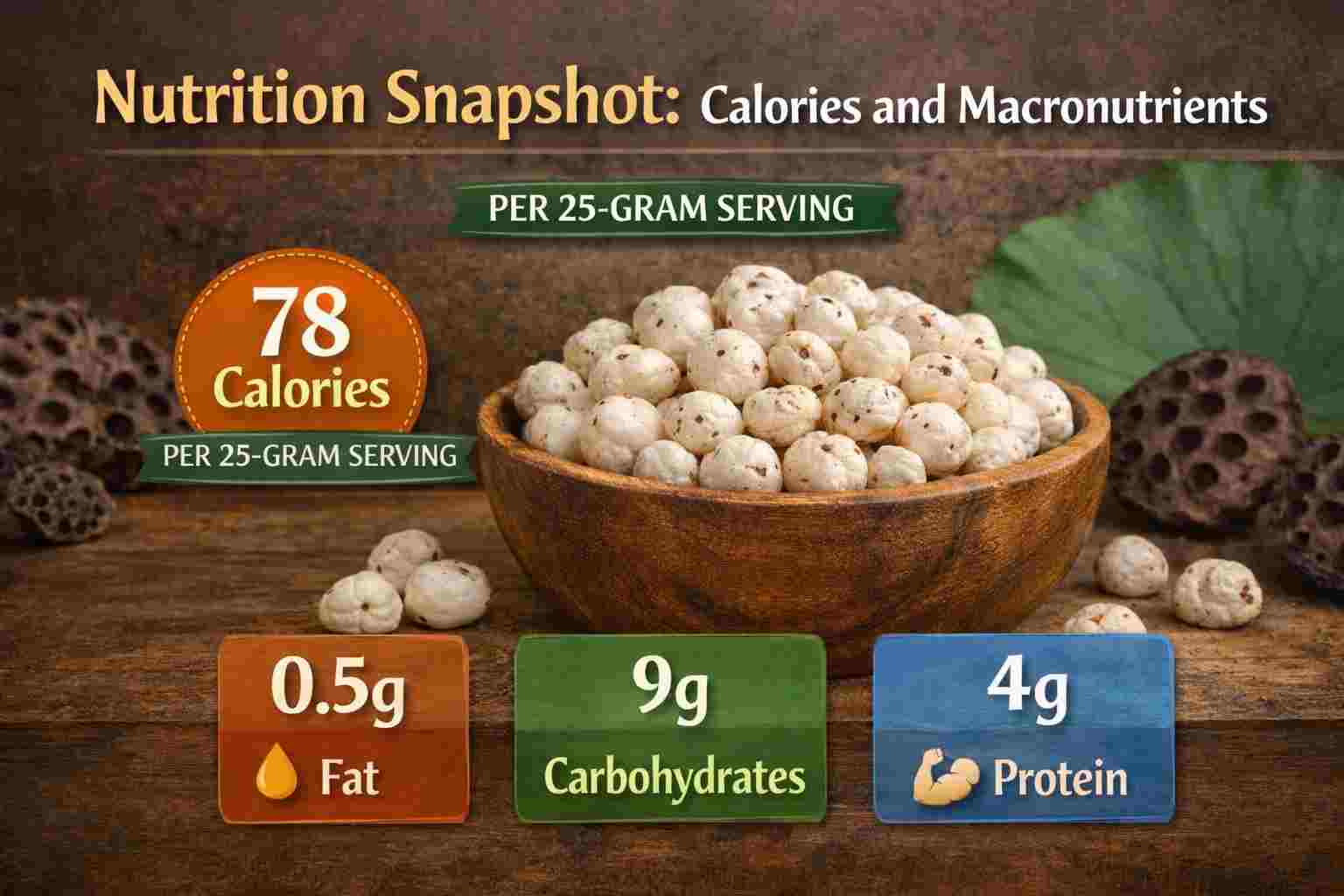
- Calories: ~106 kcal
- Protein: ~4.9 g
- Carbohydrates: ~20 g (mostly complex starch)
- Dietary Fiber: ~7–8 g (about 25% of total weight).
So you get about 3–4 g of protein and 7–8 g of filling fiber per 106 calories. Low fat (virtually 0.1 g) and low sugar make them a clean snack. Makhana are also surprisingly rich in minerals – each serving brings calcium, magnesium, potassium, phosphorus and iron – plus antioxidants like gallic and ellagic acid (which may have health benefits).
For larger servings, the totals climb predictably. Here’s a quick reference:
| Type | Serving Size | Calories |
|---|---|---|
| Raw Fox Nuts (makhana) | 100 g | ~362 kcal |
| Roasted/Popped Fox Nuts | 100 g | ~328 kcal |
| 1 cup dried makhana (≈32 g) | 32 g | ~106 kcal |
Even roasted makhana (if cooked without much oil) stay low in fat. Of course, frying them in butter or ghee will bump up the calories a bit – “there is a modest increase in calories when oil or ghee is used” during roasting. But plain dry-roasted or air-popped makhana remain nearly fat-free and light.
Raw vs. Roasted Fox Nuts
You’ll find raw (dried) makhana sold in Indian stores; these are popped but unseasoned. Roasting (dry on a skillet or in a bit of oil) to make them crispy is up to you. Raw makhana in powder form can even be made into gluten-free flour. Here’s how they differ nutritionally:
- Raw (unpopped) seeds: When dried but not fried, fox nuts are almost fat-free and rich in fiber and protein. This makes them ideal if you’re carefully watching calories or fat. You can then roast them at home with controlled oil and spices.
- Roasted/popped: Even when dry-roasted in a nonstick pan, makhana become airy and crunchy. They remain low-calorie, but if you add oil or seasonings you add some calories and sodium. For example, Granos notes that roasting with oil will slightly increase calories. Also, gentle roasting helps retain nutrients, whereas high-heat or oily cooking may reduce heat-sensitive vitamins and antioxidants.
In short, raw makhana (sun-dried, unseasoned) is basically pure lotus seed starch – still healthful, but bland on its own. Roasted makhana is more palatable (and safer to eat), with all their inherent protein and fiber, provided you don’t go overboard on frying. Choosing raw lets you control the fat and salt; choosing roasted is more convenient. Both forms share the same basic 330–360 kcal/100g range.
Makhana and Weight Loss: How They Help
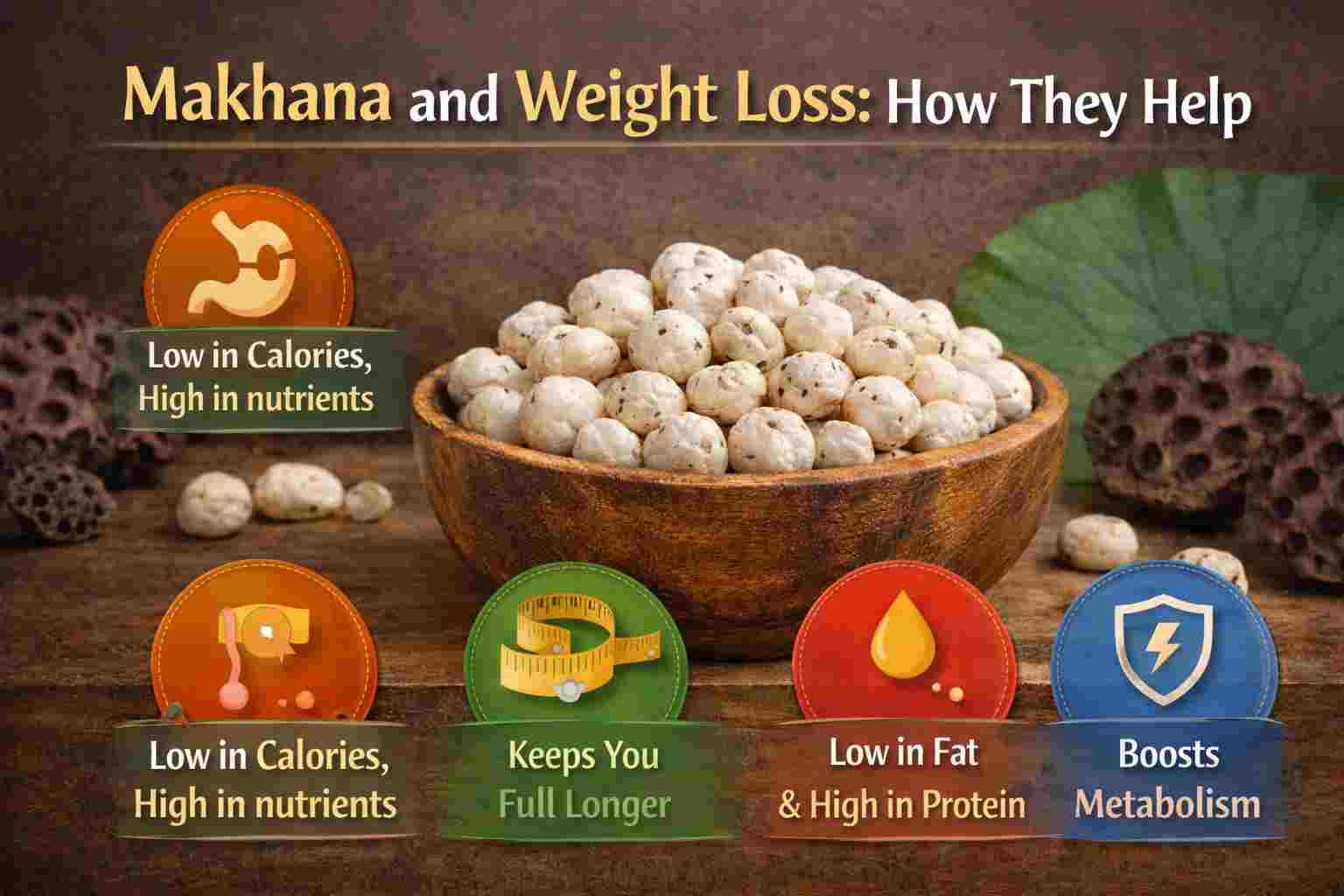
Why do fox nuts have a reputation as a diet-friendly snack? It’s all about protein, fiber, and portion volume. Health experts point out that makhana’s combination of protein and fiber helps with satiety and appetite control. As Healthline explains, adding makhana (fox nuts) to your diet “can help increase your intake of protein and fiber, two key nutrients that may benefit weight loss”. High-protein diets can reduce hunger and cravings, and fiber takes longer to digest, making you feel full longer. One industry source even highlights that “high protein and fiber make you feel fuller for longer, which cuts down on overindulgent snacking”.
Moreover, fox nuts have a low glycemic load. Their carbs are mostly complex starch, so they digest slowly, keeping blood sugar steady rather than causing spikes that lead to hunger later. Times of India notes that this slow energy release “stabilizes the blood sugar level and reduces sudden hunger”. In practice, this means munching on makhana (instead of, say, potato chips) is less likely to trigger the cravings that derail diets.
Importantly, though, remember that portion control still matters. Even low-calorie foods add up if you eat tons of them. One should be mindful that 100 g of makhana (which might be 3–4 cups popped) still contains ~340–360 calories, comparable to many snack foods. As Healthline warns (citing expert advice), eating large amounts (100 g or more) can contribute significant calories. In my own experience, snacking on a handful (about 30–40 g) is plenty to feel satisfied. For reference, ~30 g of plain roasted makhana is ~100–120 kcal, roughly the same as a small handful of nuts.
A bowl of nuts (almonds) – by contrast, 100 g of almonds packs ~578 calories. Fox nuts give you crunch and protein/fiber but at far lower calorie and fat density.
Fox Nuts vs. Popcorn and Other Snacks
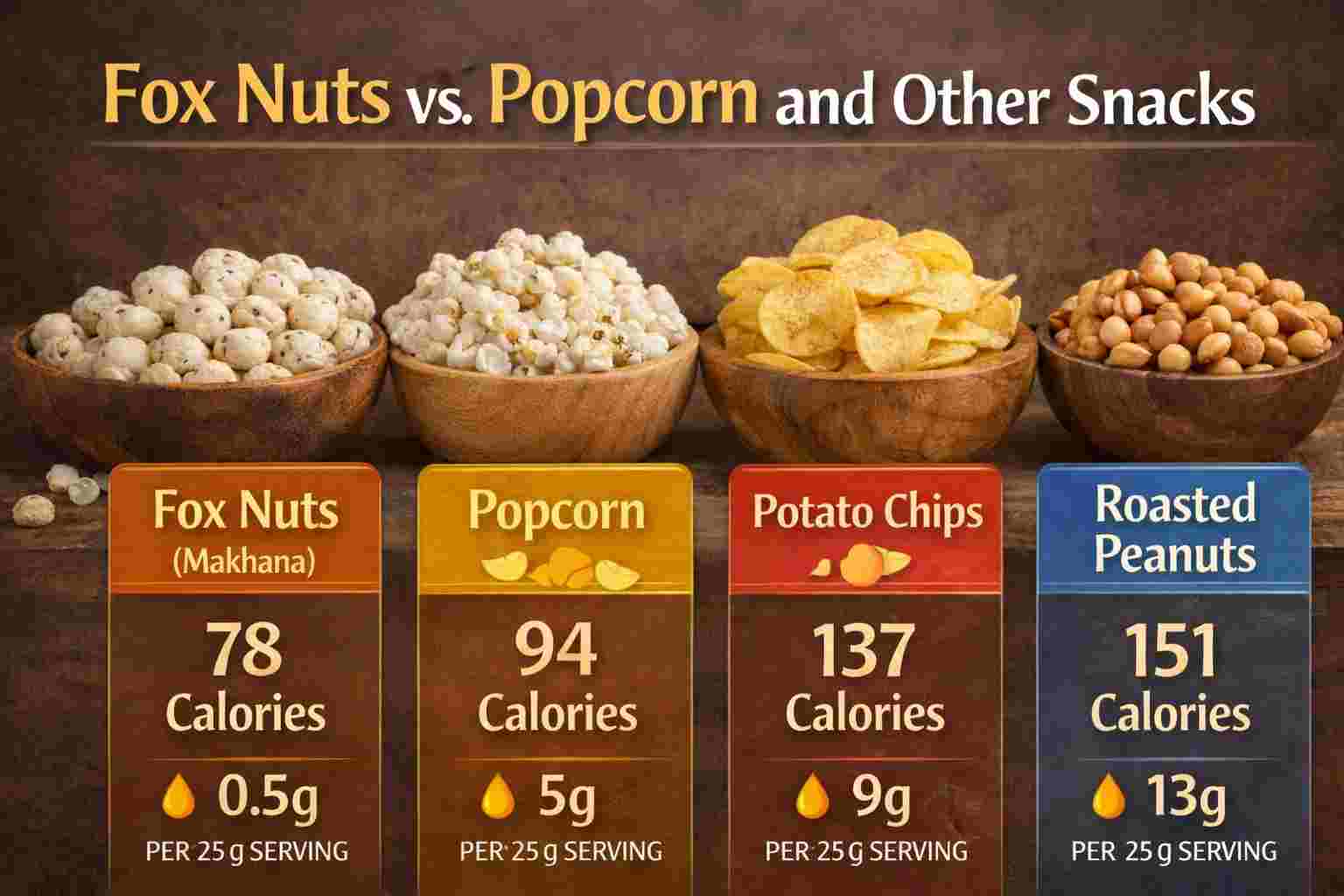
How do fox nuts stack up against popular snacks? Let’s compare per 100 g (about 3–4 cups popped):
- Fox Nuts (makhana): ~328–362 kcal, ~10 g protein, ~80 g carbs, ~15 g fiber, ~0.5 g fat.
- Air-Popped Popcorn: ~387 kcal, ~12 g protein, ~77 g carbs, ~15 g fiber, ~4.5 g fat (when plain).
- Almonds: ~578 kcal, 21 g protein, 19 g carbs, 12 g fiber, 50 g fat.
- Potato Chips (plain): ~535 kcal, 7 g protein, 51 g carbs, 5 g fiber, 35 g fat (per 100 g) — for perspective.
Fox nuts contain fewer calories and fat than most nuts or chips, and slightly fewer calories than plain popcorn. In other words, you get more crunchy volume with makhana for your calories. Unlike popcorn, fox nuts are naturally gluten-free and almost oil-free. The fiber in both is similar (roughly 14–15 g per 100 g), but popcorn has more fat from even a little oil in popping. Overall, makhana emerges as a lighter snack: it’s “nearly fat-free” yet still provides a crunch that satisfies like popcorn.
The Times of India sums it up: makhana’s low calorie density lets you munch more without spiking intake, and their slow-digesting carbs make them a “diabetic-friendly, low-GI snack.” In practice, substituting makhana for chips, crackers or sweets can cut your snack calories substantially. (A small confession: I used to eat a bowl of salted chips after dinner, but switching to dry-roasted makhana has allowed me to eat the same volume for way fewer calories.)
Serving Sizes & Calorie Chart
To help plan snacks, here’s a quick serving-size chart for fox nuts:
| Serving | Weight (approx) | Calories |
|---|---|---|
| 1 level cup of dried fox nuts | 32 g | ~106 kcal |
| 1 handful (about 30 g) | 30 g | ~100 kcal (estimate) |
| Raw fox nuts (uncooked) | 100 g | ~350–362 kcal |
| Roasted/popped fox nuts | 100 g | ~328–348 kcal |
| Flavoured (e.g. salty/masala) fox nuts | 100 g | ~350–360 kcal (often similar) |
Source: USDA & nutrition research (see sources).
As you see, one cup (≈32 g) is about 106 calories. Most packaged makhana snacks list calories per serving (e.g. 28 g or 30 g). One ounce (~28 g) of plain makhana is roughly 93 calories, so even a small snack bowl keeps you well under 150 kcal. If you season at home with just spices and a teaspoon of oil, fat stays minimal. However, heavily oil-fried versions or sugary-coated makhana (kheer/dessert) will raise the total.
Tips: Making the Most of Fox Nuts in Your Diet
To turn these numbers into results, use makhana smartly:
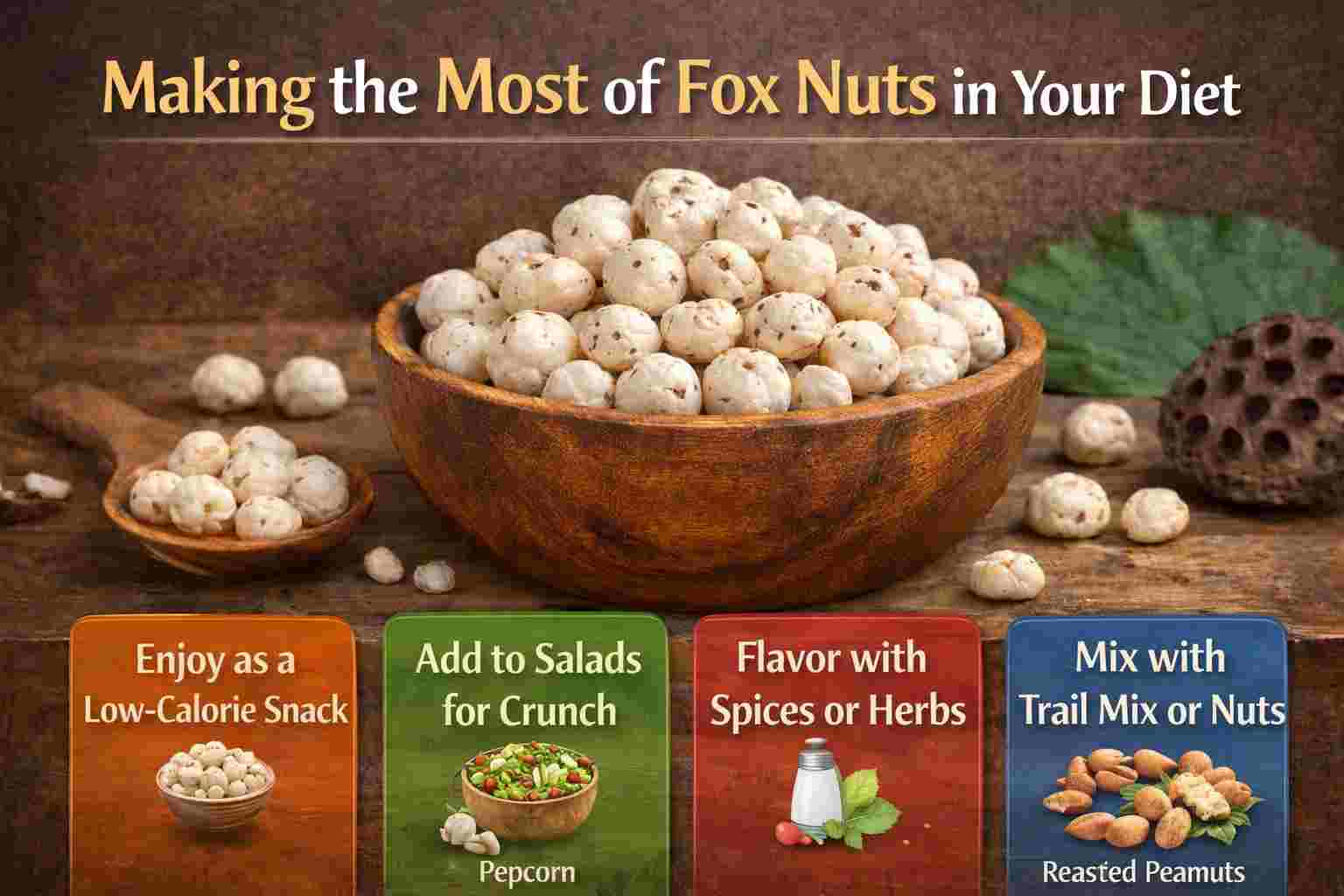
- Snack Alone: Dry-roast plain fox nuts in a nonstick pan (with no or minimal oil) and season with salt, pepper, chili powder, or turmeric. A cup makes a crunchy, low-cal treat for under 120 calories.
- Trail Mix Alternative: Add raw or roasted makhana to homemade trail mix with nuts, seeds and dried fruit. You’ll boost fiber and crunch without as many calories as all-nut mixes.
- Meal Addition: Toss popped makhana into soups, stews or salads for texture and extra nutrients. In South Asia, they’re often added to curries (called Makhana Kheer in sweet desserts or curries in places).
- Baking Flour: Grind dried makhana to make gluten-free flour. Use it to bake low-carb rotis or laddu (Indian sweets) in moderation. It thickens porridge or raita with protein and fiber.
Precautions and Pairing
Fox nuts are very safe, but a few notes: If you have kidney issues, be cautious – makhana has potassium and phosphorus, so it can accumulate. The Times of India warns kidney patients about the mineral load in makhana. Also, like any food, eat it in moderation: even low-calorie snacks add up. Stick to recommended serving sizes; avoid adding too much oil, salt or sugar during prep. If diabetic, makhana’s complex carbs and low GI are often helpful, but still count the carbs in your meal plan.
Pair makhana with other filling foods: a small bowl of makhana plus a side of yogurt or a piece of fruit makes a balanced snack. Its crunch will make you feel full, and the fiber/protein help stabilize blood sugar.
Conclusion
Fox nuts (makhana) prove that healthy snacking can be delicious and waistline-friendly. They’re naturally low in calories and fat, yet high in fiber, protein and minerals. This unique combo – plus their big crunchy volume – means you can indulge your snack cravings while still losing or maintaining weight. As you’ve seen, 100 g of makhana offers only ~340 kcal, compared to ~580 kcal in the same weight of almonds or ~530 kcal in potato chips. Swap a handful of chips or fried nuts for a bowl of roasted makhana, and you’ll save hundreds of calories effortlessly.
Fox nuts are more than just a snack; they’re a tradition turned superfood. Try them at home or on the go, and enjoy the guilt-free crunch. Have you used makhana in a recipe or diet? Share your experience or favorite makhana snack tip below! (And if you loved this guide, subscribe for more nutrition insights and healthy-recipe ideas.)
Sources: Authoritative nutrition databases and health publications , including Healthline, Times of India, and peer-reviewed reviews.