Premium Makhana from Bihar - festival offer - up to 25% OFF!
Makhana: The Ancient Fox Nut Earning Today’s “Superfood” Status

The puffed white seeds called makhana (fox nuts) are harvested from water lilies and enjoyed roasted as a crunchy snack. Once a humble ritual food in India, makhana (Euryale ferox seeds) has surged in popularity globally. Often mislabeled “lotus seeds,” these are actually the popped kernels of a prickly water lily plant. In recent years nutritionists and food bloggers have touted fox nuts as a nutrient-dense superfood – but what earned it this title? This post digs deep into makhana’s background, nutrients, and benefits, explaining why it’s more than just a tasty snack.
What Is Makhana? Origins and Cultural Roots
Makhana (also called fox nut, gorgon nut or phool makhana) has been cultivated for centuries in wetlands of Bihar (Mithila) in India, as well as parts of China, Japan and Korea. In Bihar it’s sometimes dubbed the “black diamond” due to its high value and labor-intensive harvest. The seeds come from the water lily Euryale ferox, not the lotus, which explains why they sometimes get confusingly called “lotus seeds.” When the ripe seeds are collected, the outer coating is removed, and the inner kernel (perisperm) is sun-dried and roasted until it puffs up (similar to popcorn). The result is a crunchy white puff with a mild, nutty flavor that graces festival feasts, fasting menus, and modern recipes alike.
In traditional cultures, makhana has a strong heritage. Ayurvedic and Chinese medicine texts praised the nutritious quality of E. ferox seeds. Chinese herbal lore calls it a “medicine-food homology species,” used for thousands of years as both food and remedy. Indian rituals have long featured makhana: it’s offered in puja ceremonies and used in sweets like kheer or panjiri. This cultural cachet helped makhana survive as a staple snack in eastern India. In fact, references date back 2000 years – in China it’s called a “superior food” valued for antioxidants and blood-sugar benefits, and in India the word makhana comes from Sanskrit (“makh” = ritual, “anna” = food).
By mid-20th century, makhana was mainly a local delicacy. But over the last decade its profile changed. Urban consumers seeking healthy alternatives to chips embraced makhana as a low-fat, high-protein snack. Nutrition experts and wellness influencers started promoting it as a superfood, leading to store shelves being stocked with a variety of roasted and flavored fox nuts.. In 2022, India even won a Geographical Indication tag for “Mithila Makhana”, and the seeds were served at the 2023 G20 summit – cementing makhana’s international spotlight. Today Bihar still produces >80% of the world’s makhana, and exports are rising rapidly, driven by growing demand in health-food markets worldwide.
Nutritional Profile: A Powerhouse of Nutrients
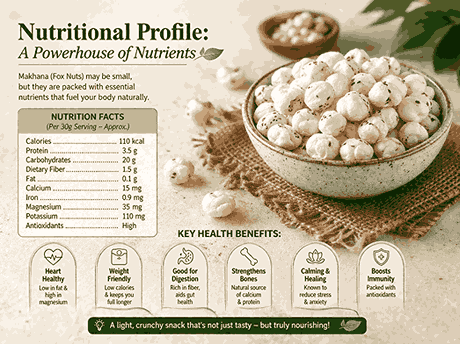
Makhana’s “superfood” label stems largely from its impressive nutrient density. In a small 32 g cup of popped makhana (about 106 calories), you’ll find roughly 5 g of protein, 4.4 g fiber, and a variety of minerals. 100 g of makhana provides roughly 347 calories, 9.7 g protein, and 14.5 g fiber – much higher protein and fiber than other starchy snacks. It contains significant calcium, magnesium, and potassium (roughly 60–70 mg each per 100 g) and small amounts of iron and zinc. Notably, makhana is extremely low in fat (only ~0.1 g per 100 g) and very low in sodium when unseasoned.
The seed’s macronutrient breakdown is mostly complex carbohydrates (around 61–77% of its weight, depending on raw vs popped form). Its protein is plant-based and well-rounded: one analysis notes makhana includes all nine essential amino acids, a rarity among grains. Its starches and dietary fiber are digested slowly, contributing to a low glycemic index. Indeed, most sources list makhana’s GI around 30–55, lower than rice or regular grains, which means it causes a gentler rise in blood sugar.
The chart below compares makhana to common snacks/staples:
| Nutrient | Makhana (100 g, popped) | Air-Popped Popcorn (100 g) | White Rice, cooked (100 g) |
|---|---|---|---|
| Calories | 347 | 387 | 129 |
| Protein | 9.7 g | 12.94 g | 2.66 g |
| Fat | 0.1 g | 4.54 g | 0.28 g |
| Carbs | 76.9 g | 77.78 g | 27.9 g |
| Fiber | 14.5 g | 14.5 g | 0.4 g |
This comparison highlights key points: Per calorie, makhana packs more protein and fiber than cooked rice and almost as much fiber as popcorn, with far less fat than either. Unlike popcorn or chips, makhana’s crunch comes with minimal oil. Nutritionists note that 100 g of fox nuts has nearly zero saturated fat and no cholesterol, making it a heart-healthy snack choice. And compared to nuts like almonds, fox nuts has far fewer calories and fat while still providing protein (about 10 g per 100 g). In short, each bite delivers vitamins and minerals along with beneficial plant protein and fiber.
Health Benefits: Why Makhana Can Be a “Super” Snack
1. High in Protein and Fiber. The combination of protein and fiber makes fox nuts filling and nutritious. Protein helps build and repair tissues, and contributes to satiety, while fiber supports digestion. One study notes that adding 100 g of fox nuts provides a solid protein boost with very low fat. This helps curb hunger and can aid weight management. In fact, Indian nutritionists emphasize makhana’s role in weight control: its high fiber and low-calorie nature mean you feel full on fewer calories
2. Rich in Minerals. A single serving of makhana brings in minerals often lacking in modern diets. It is a good source of magnesium and potassium, both vital for heart health and blood pressure regulation. For example, the magnesium (Mg) in makhana helps muscle and nerve function and may lower blood pressure. Potassium (K) aids in controlling heart rhythm and fluid balance. Not surprisingly, healthcare experts list makhana as beneficial for those concerned about hypertension or heart disease. It also contains calcium and phosphorus for strong bones, plus trace iron to support red blood cells.
Harvested makhana seeds (below) are white when puffed and naturally low in salt and fat. Roasting them with spices creates a crunchy snack. The abundance of minerals and phytonutrients gives makhana antioxidant properties too. Studies show the seeds contain flavonoids and polyphenols like kaempferol, gallic acid, and ellagic acid. These antioxidants neutralize free radicals in the body, which can reduce inflammation and may protect against chronic diseases like heart disease and cancer. In fact, diets rich in antioxidants are linked to lower risks of cardiovascular disease and cancer, so adding antioxidant-rich makhana to meals can be a smart move.
3. Low Glycemic Index – Diabetes-Friendly. Makhana’s carbs are complex and break down slowly. As a result, it has a low glycemic load, meaning it causes only a mild rise in blood sugar. This is especially beneficial for people managing diabetes or blood-sugar issues. Early animal research supports this: a 2023 mouse study found that germinated makhana seeds helped improve blood sugar regulation and boost antioxidant enzymes in diabetic mice. Another 2019 study on rats identified a compound in the seeds that improved insulin sensitivity. While more human research is needed, the evidence so far aligns with centuries of practice: makhana has been recommended as a fasting food for diabetics in Asian medicine due to its gentle effects on blood glucose.
4. Heart and Circulatory Health. The combined low-fat, high-fiber, mineral-rich profile of makhana makes it good for heart health. Magnesium and potassium in makhana help relax blood vessels and lower blood pressure, while fiber helps lower cholesterol levels. The seed’s antioxidants also protect arteries from oxidative damage. In Ayurveda, makhana is considered cardio-protective; modern nutritionists echo this, noting that its folate and magnesium content supports cardiovascular function.
5. Skin, Aging and Wellness. Thanks to antioxidants like kaempferol, makhana is often promoted as an “anti-aging” snack. Antioxidants can reduce oxidative stress on skin and tissues, potentially slowing age-related damage. Plus, it’s gluten-free and easy to digest, making it suitable for many special diets. In South Asia, it’s even touted as a postpartum food and general tonic.
Cautions: Moderation and Considerations
No food is perfect for everyone. Some dietitians advise that, despite its benefits, makhana should still be eaten in moderation. For instance, a 2025 article in Times of India notes that makhana is low in fiber (surprisingly, given its crunch) and high in potassium. Eating large quantities could exacerbate constipation in sensitive individuals, and its potassium might be a concern for those with kidney issues. Also, if you mindlessly snack bowlfuls, the calories can add up. (A calorie-cautious person might stick to a small handful or 100 g serving when dieting.) The takeaway: as one nutritionist aptly put it, even superfood snacks aren’t one-size-fits-all. Still, for most people, the health benefits far outweigh the downsides. Just be mindful of portion size and personal dietary needs.
Cautions: Moderation and Considerations
No food is perfect for everyone. Some dietitians advise that, despite its benefits, makhana should still be eaten in moderation. For instance, a 2025 article in Times of India notes that makhana is low in fiber (surprisingly, given its crunch) and high in potassium. Eating large quantities could exacerbate constipation in sensitive individuals, and its potassium might be a concern for those with kidney issues. Also, if you mindlessly snack bowlfuls, the calories can add up. (A calorie-cautious person might stick to a small handful or 100 g serving when dieting.) The takeaway: as one nutritionist aptly put it, even superfood snacks aren’t one-size-fits-all. Still, for most people, the health benefits far outweigh the downsides. Just be mindful of portion size and personal dietary needs.
From Tradition to Trend: Makhana on the Modern Menu
Makhana’s unique texture and mild taste make it incredibly versatile. Traditional recipes include kheer (rice pudding) made with makhana, or matar makhana (peas cooked with puffed seeds). In Bihar, makhana kheer or khichdi is a staple at festivals. Today, chefs and home cooks are finding creative uses. For example, makhana can replace croutons in salads, thicken soups and curries, or even be ground into flour for flatbreads. On upscale menus, one sees dishes like Paneer Makhana Curry (creamy cheese with puffed nuts) or Makhana Halwa (a sweet fudge with milk and sugar). The photo below shows one such gourmet spin – a rich paneer-makhana curry, illustrating how an ancient food meets new-fangled cuisine.
Chefs are getting creative: here a creamy paneer-makhana curry pairs the nutty seeds with cheese and spices. Modern dishes like this illustrate makhana’s rising gastronomic appeal.
Beyond cooking, makhana has simply become a snack food category. Companies now sell roasted makhana in flavors like masala, cheese, BBQ, even sweet caramel. The expansion has been swift. One recent industry report called makhana one of the “snack stars” of healthy snacking, alongside nuts and dried fruits. Marketing campaigns highlight its protein punch and low-fat nature, which fitness influencers love. According to IBEF, makhana consumption in India grew ~7% per year (2019–2023) and is projected to accelerate. The U.S., Australia and the Middle East are seeing growing imports. In short, what was once a local fasting food has become a trendy “guilt-free crunch” worldwide.
Incorporating Makhana Into Your Diet
Given its versatility and nutrition, makhana is easy to add to a balanced diet:
- Roast as a Snack: Simply dry-roast makhana in a skillet with a little ghee or oil and your favorite spices (salt, pepper, turmeric, chaat masala, etc.). The result is a crunchy popcorn-like snack with about 30–40 calories per small cup.
- Sweet Treat: Make a healthy dessert by cooking makhana with low-fat milk, cardamom, and minimal sugar – similar to rice kheer.
- Savory Dishes: Add roasted makhana to vegetable curries or stir-fries at the end for texture. Or grind lightly to thicken soups and gravies.
- Trail Mix and Salads: Toss popped makhana into trail mix or use in salad bowls instead of croutons. They soak up dressings and provide protein.
- Makhana Flour: Mills in India produce makhana powder that can go into energy bars or baked goods for extra protein and crispness.
Regardless of how you enjoy them, remember to season lightly. The health profile benefits – low fat, high fiber – only hold if they aren’t drenched in butter or salt.
Summary: Makhana’s rise to “superfood” fame is backed by solid science: it’s nutrient-rich, low in bad stuff, and boasts compounds with real health effects. While moderation is wise (like any snack), most people can safely relish its crunchy texture and mild flavor. Whether you knew it as “phool makhana” in religious feasts or are hearing about it for the first time, this humble seed certainly has earned its nickname as a powerhouse snack.
Try Makhana Today!
Have you tried fox nuts in your cooking or snacking? Share your favorite recipe or experience below! If this article sparked your interest, subscribe for more superfood insights, or explore our related posts on healthy eating. Enjoy the crunch – and good health – of this ancient superfood.
[mc4wp_form id=1048]
[…] snack packs of makhana can run even higher. In short, expect to pay 2–3 times more per gram for fox nuts than for bulk almonds. However, if you buy makhana locally where it’s grown (e.g. parts of India […]