

Introduction: Crunchy Fox Nuts in the Diabetes Story
If you or someone you care about has diabetes, finding a healthy snack that doesn’t spike blood sugar can feel like a treasure hunt. Fox Nuts (also known as makhana or phool makhana) have popped onto social media and health blogs as a promising option. These little puffed lotus seeds are light, crunchy, and often billed as “diabetic-friendly” because they’re low in fat and rich in fiber. But does science back up these claims? In this article I’ll dive into the research and share fresh perspectives — including what nutrition experts say and a personal tip or two — so you can decide if fox nuts deserve a place on your snack plate.
What Are Fox Nuts (Makhana)?
Fox nuts are the edible seeds of an aquatic plant (Euryale ferox), harvested mainly in South Asia. They’re white puffs made by roasting the seed’s core until it “pops” into a crunchy round shape. In Indian tradition, makhana is often eaten during fasting periods or tossed into curries and desserts. Lately, dietitians and diabetes educators are eyeing it as a snack substitute for chips or sweet biscuits because of its unique nutritional profile.
These snacks have a mild, neutral taste (think like a very mild popcorn), which means we can season them many ways – a pinch of salt and pepper, turmeric and cumin, or even a dash of chaat masala. Because they’re so low in fat and contain good fiber, people say makhana is “light yet filling.” Let’s unpack the nutrients to see why.
Nutritional Profile: What’s Inside a Fox nut ?
Fox nuts pack a surprising amount of nutrients for their size. Per 100 grams (about 3–4 cups puffed), you get roughly:
- Calories: ~340–350 kcal
- Carbohydrates: ~77–77 g (mostly complex carbs)
- Fiber: ~7–14 g
- Protein: ~9–10 g
- Fat: ~0.1–0.5 g (very low)
- Minerals: High in magnesium (~210 mg), phosphorus, potassium; modest calcium and iron.
Key points for diabetes: fox nuts are high-fiber and very low in fat. That fiber content (often listed as 7–14g per 100g, depending on the source) slows digestion. In fact, one nutrition site notes that “76.9g carbs with 14.5g fiber per 100g” means most of the carbs in makhana are digested slowly.
- Fiber helps by bulking up your snack and slowing sugar absorption.
- Low fat means the calories and glycemic effect are kept moderate.
Think of fox nuts as mostly starchy snack with a good boost of fiber and some protein. Unlike chips or cookies, there’s very little added sugar or fat (unless you add oil while roasting).
Fox Nuts and Blood Sugar: What Science Says
The big question: Will makhana spike your blood sugar? The research looks promising but is still emerging.
- Low Glycemic Index (GI): A 2021 human study found that roasted fox nuts had a GI of about 37. (For context, a low GI is 55 or below.) This means blood glucose rises slowly after eating makhana. Most nutrition guides confirm a low to moderate GI for plain makhana.
- Fiber & Slow Carb: The high fiber and complex carbs mean glucose gets released gradually. According to a CDC guideline, “eating carbs with foods that have protein, fat, or fiber slows down how quickly your blood sugar rises”. So fox nuts naturally fit this advice by combining with their own fiber and a bit of protein in each handful.
- Antioxidants: Fox nuts aren’t just carbs. They contain phenolic compounds and flavonoids with antioxidant activity. In laboratory studies, these antioxidants have shown potential to reduce oxidative stress and inflammation – factors linked to diabetes complications. While not a direct “glucose effect,” it means makhana might have broader health benefits, similar to other nut and seed snacks.
- Animal Studies: In diabetic animal models, extracts from Euryale ferox seeds (or shells) have been shown to improve glucose metabolism and even insulin signaling. This hints that compounds in the seeds could have blood sugar–lowering effects. However, these were concentrated extracts in mice, not the popped snack itself, so we can’t assume the same effect in humans without more evidence.
Bottom line: Fox nuts have a body of indicators (low GI, fiber, antioxidants) that suggest they’re gentle on blood sugar. A human trial directly measuring GI confirmed they act more like a “low GI” snack. But remember: any carbohydrate can raise glucose if you eat too much. Moderation is key.
Fox Nuts vs. Other Snacks: A Quick Comparison
| Snack | Glycemic Impact | Key Nutrients | Satiety (Fullness) |
|---|---|---|---|
| Fox Nut (plain, roasted) | Low (GI ≈ 37) | High fiber, moderate protein, very low fat | Moderate – crunchy + fiber keeps you full. |
| Potato Chips | High | Mostly fat & starch (little fiber) | Low – easy to overeat, high salt triggers more eating. |
| Popcorn (air-popped) | Medium (GI ~55) | Fiber, some protein, little fat | Moderate – bulky snack but often eaten plain. |
| Nuts (almonds, walnuts) | Low | High healthy fats & protein, fiber | High – fats and protein strongly curb hunger. |
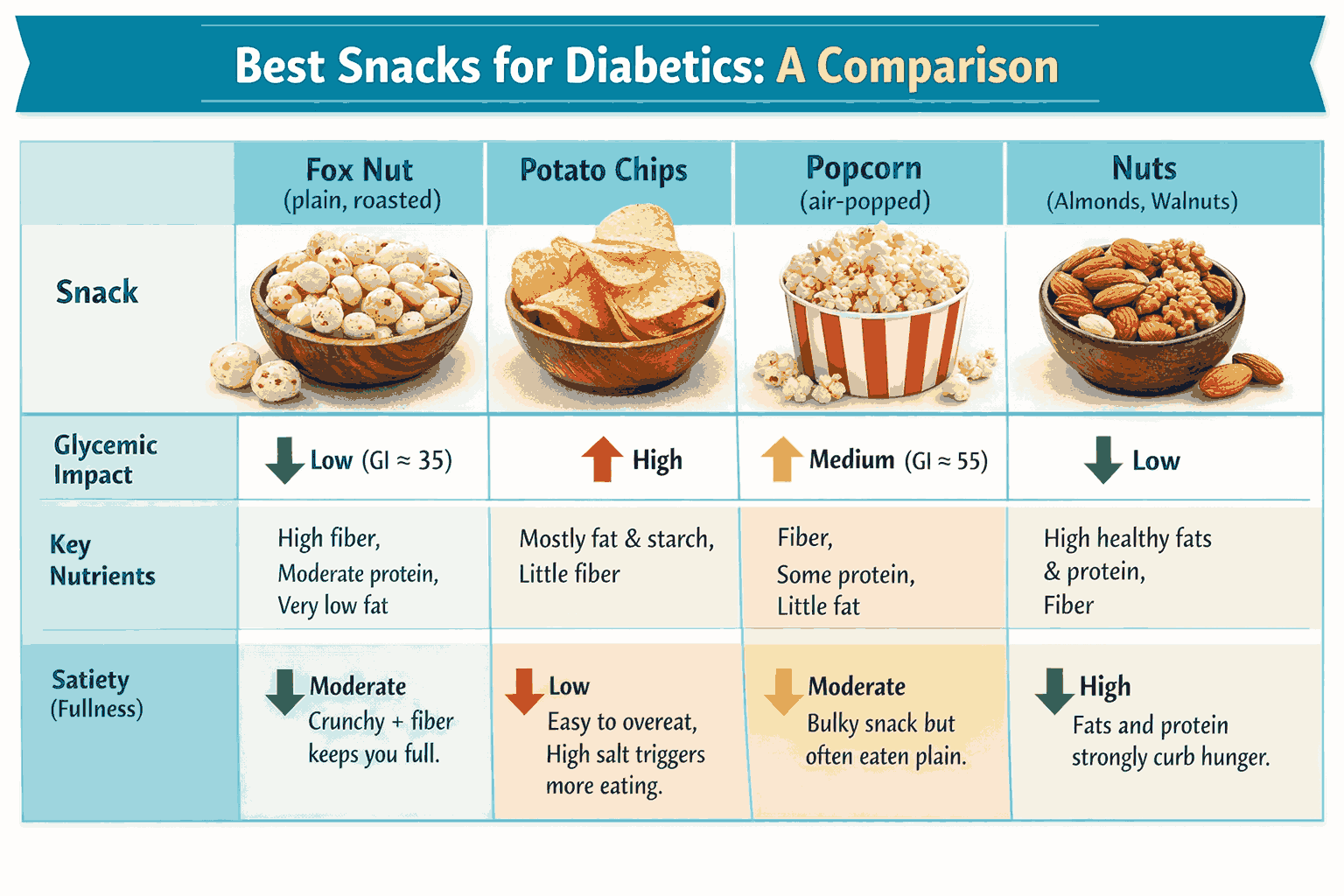
Compared to chips or cookies, fox nuts are a clear winner for blood sugar control. They outrank popcorn or puffed rice, too, because of the higher fiber and protein. The above table is qualitative, but it shows: Fox nuts are a healthier swap for most carb-heavy or fatty snacks, since their glycemic impact is lower and they provide extra nutrients like magnesium and antioxidants.
(For example, the glycemic index trial found makhana’s GI ~37, while French fries or chips run 70+.)
Best Ways to Enjoy Fox Nuts for Diabetes
It’s not enough that makhana can be “good” for diabetes – how you eat them matters. Here are practical tips:
- Portion Control: Stick to about 30–40 grams per snack (roughly a small bowl or handful). Even with low GI, the carbs add up. Many nutritionists suggest counting this snack into your meal plan as you would rice or bread.
- Dry Roast, Don’t Fry: Roast them on a pan or in an oven with just a tiny spray of oil (or a teaspoon of ghee). Avoid deep-frying or adding sugar, as those turn makhana into a calorie bomb. Plain dry-roasted or very lightly spiced makhana keeps fats low.
- Pair With Protein/Fat: Follow the CDC tip – eat carbs (fox nuts) with some protein or healthy fat to slow digestion more. For instance, dip roasted makhana in yogurt or sprinkle with crushed nuts. Even a handful of peanuts or a cube of paneer on the side makes it more blood sugar-friendly.
- Be Aware of High-Carb Variants: Some flavored versions (like candy-coated or caramel-coated makhana) ruin the low GI benefit. Stick to savory, unsweetened preparations.
- Use as Replacement: Swap fox nuts for a higher-GI snack. For example, have makhana instead of a bag of chips during your tea break. Don’t layer them on top of your usual snacks, otherwise calories and carbs will be higher.
With these strategies, fox nuts become a tool you use smartly – not a “free food.”
Real-World Tip: How I Use Fox Nuts
In my own kitchen, I experimented with makhana as a “chip substitute.” I noticed after lunch I craved something crunchy. Instead of reaching for biscuits, I roasted some makhana with a bit of turmeric, salt, and black pepper. Paired with a spoon of plain yogurt, it was surprisingly satisfying. Over a few days, this routine cut my afternoon snacking by half.
One colleague also with diabetes tried adding makhana to her salad. She said the crunch kept her from feeling deprived. Of course, these are anecdotes, not medical advice – results vary. But they highlight a key point: small, consistent swaps (chips → makhana) and mindful portions can make a real difference in long-term blood sugar control.
Fox nut : What Experts Say & Cautions
Most dietitians agree: makhana can fit into a diabetic diet as long as you keep portions reasonable. Here’s why professionals aren’t ringing alarm bells:
- Its low-fat, high-fiber profile matches the ADA recommendation to eat more fiber-rich foods and use fat wisely.
- The Canadian Diabetes Association even encourages low-GI foods to improve insulin sensitivity.
However, a couple of caveats:
- Calories and Carbs Still Count: 30g of makhana is still ~100 kcal and ~15–20g carbs. Too many servings could raise blood sugar. So if you’re tracking carbs (45–60g/meal typical), factor makhana in.
- Digestive Sensitivity: Some people find the dried nature a bit hard on digestion if eaten very dry. That’s why I like them with yogurt or salad – moisture helps.
- Not a Cure-All: Don’t let “low GI” fool you into eating them nonstop. They should replace other snacks, not add on top.
Fox nut Beyond Diabetes: Other Benefits
Even if diabetes weren’t on your mind, makhana has other perks:
- Heart and Blood Pressure: Low in sodium (unless salted) and containing magnesium, fox nuts support normal blood pressure and vascular health.
- Weight Management: The fiber and volume can help you feel full for fewer calories (especially compared to chips). Many find it easier to portion-control makhana than fatty snacks.
- Bone and Pregnancy Nutrition: Makhana has calcium and phosphorus which support bone health (even for expecting mothers or growing kids).
- Antioxidant Support: The antioxidants may protect cells and slow aging – a bonus benefit especially important in chronic disease prevention.
Conclusion: Are Fox Nuts Good for Diabetes?
In moderation, yes – fox nuts can be a friendly snack choice for people with diabetes. They won’t magically cure diabetes, but their low GI, fiber content, and nutrient mix make them far preferable to many common junk-food snacks. The evidence (human GI trials and nutrition data) shows that plain roasted makhana releases energy slowly. Also, research hints at beneficial compounds that may even help insulin function.
The key is how you eat them: keep portions reasonable, roast them dry, and pair them with protein or veggies to stabilize your plate. By swapping a bag of chips or sugared popcorn for a bowl of spiced makhana, you’re choosing a snack that literally unfolds (pops) fewer blood sugar spikes. Over time, that can help keep your A1C in check and reduce cravings.
Call to Action: Your Turn!
Have you tried fox nuts as a snack? Do you have a favorite makhana recipe or tip? Share in the comments below how making this switch (or another smart snack swap) worked for you! 🙌
Enjoyed this guide? > Share it with someone looking for better diabetes snacks. Curious for more? Check out our related posts on healthy eating and diabetes management or subscribe for weekly diet tips. Stay tuned – your blood sugar (and taste buds) will thank you
[…] to meals: Toss roasted makhana into salads for crunch or sprinkle over soups instead of […]
[…] you’re building a content cluster on your site, Fox Nut kheer pairs beautifully with internal links like a snack post (Roasted Fox Nut snack) and a festive […]
[…] Fox Nuts (often sold as makhana) come from an aquatic water-lily plant, and the seeds are typically roasted so they “pop” in a popcorn-like way. […]
[…] Fox Nuts until you have coarse crumbs (not […]