Premium Makhana from Bihar - festival offer - up to 25% OFF!

Why Fox Nut deserves a place in your snack jar

Introduction
If you’re searching for a crunchy snack that’s lightweight on calories but heavy on benefits, Fox Nut (also called makhana or phool makhana) is quietly becoming the hero of healthy munching. Roasted, spiced, or tossed into a salad, these popped water seeds deliver surprising protein, fiber and minerals while keeping fat and sodium low — a combo that’s rare in ready-to-eat snacks. After reviewing nutrition databases and recent analyses, this post breaks down exactly what’s in fox nuts, how they compare to other snacks, and how to use them practically in daily eating.
Quick snapshot: Nutrition per 100 g (puffed/ready to eat)
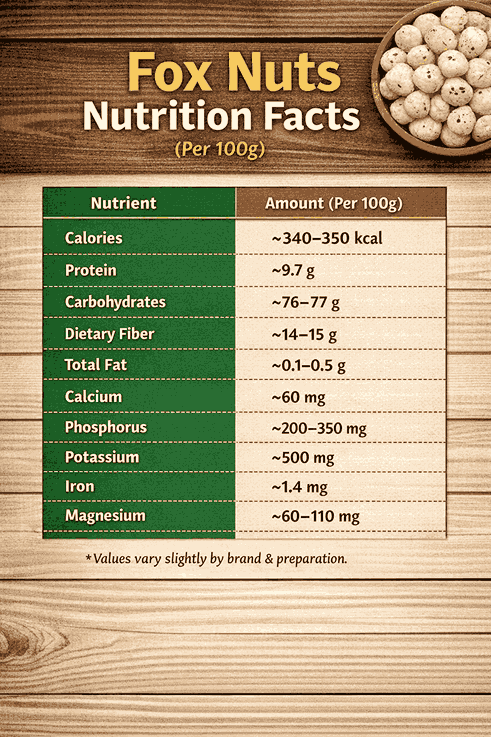
Below is a practical table you can paste into your article or product page. Values are aggregated from nutrition listings and industry sources (puffed makhana serves slightly fewer calories than raw seeds).
| Nutrient (per 100 g) | Amount |
|---|---|
| Calories | ~340–350 kcal |
| Protein | ~9.7 g |
| Carbohydrates | ~76–77 g |
| Dietary fiber | ~14–15 g |
| Total fat | ~0.1–0.5 g |
| Calcium | ~60 mg |
| Phosphorus | ~200–350 mg |
| Potassium | ~500 mg |
| Iron | ~1.4 mg |
| Magnesium | ~60–110 mg |
How to read the numbers — what they mean for your health
- Low fat, moderate calories: With near-zero fat but ~340 kcal per 100 g, fox nuts are calorie-dense mainly because they’re mostly carbohydrate (complex starch). However, a typical snack portion is much smaller (20–30 g), keeping real serving calories low.
- Protein punch for a plant food: ~10 g protein per 100 g is impressive for a popped seed. More importantly, the amino-acid profile is reported to be high quality compared with many cereals, giving fox nuts a surprisingly good protein quality for plant eaters. This makes them useful as a topping or snack for vegetarians.
- High fiber = better satiety: 14–15 g fiber per 100 g means that even small portions help fullness and digestion — useful if you’re replacing fried snacks.
- Mineral value: They contribute calcium, phosphorus, magnesium and potassium — helpful for bone, nerve and muscle function. Again, exact amounts vary with soil and processing.
Fox Nut vs common snacks: Where it wins (and where it doesn’t)
Short comparison to guide readers choosing snacks:
- Vs. Potato chips: Much lower in fat and typically lower in sodium when unsalted — better for heart and weight goals.
- Vs. Peanuts/mixed nuts: Peanuts and tree nuts have more protein and far higher healthy fats, so they’re more calorie-dense and better for essential fatty acids. Fox nuts win if you want a low-fat, high-fiber snack.
- Vs. Popcorn: Both can be low-fat if air-popped / dry-roasted, but fox nuts bring more protein and minerals per 100 g than plain popcorn.
Evidence-backed benefits — what research and analyses say
Researchers and nutrition compendia highlight a few promising areas for fox nuts:
- Weight & satiety: The combination of fiber and protein can help keep you full between meals, which may support better weight management when eaten in proper portions.
- Antioxidants & anti-inflammatory compounds: Makhana contains natural antioxidants like phenolic compounds and flavonoids, and some studies indicate that roasting can enhance their availability. These bioactives may help lower oxidative stress in lab studies, though human trials are limited.
- Mineral support: The calcium, magnesium and potassium content supports bone and cardiovascular function when included as part of a varied diet.
Caveat: most strong health claims need human clinical trials; current evidence is supportive but not definitive. Use fox nuts as part of an overall healthy diet rather than a miracle food.
Practical serving sizes & snack ideas
A helpful, realistic approach for readers:
- Recommended serving: 20–30 g (about a small handful or ½ cup) — ~70–100 kcal depending on processing. A small serving provides a good amount of protein, fiber, and essential minerals while keeping calorie intake relatively low.
- Healthy ways to eat: Dry roast with a pinch of salt and chaat masala; toss with roasted zucchini & paneer for texture; blend into a kheer or make a savory trail mix with roasted chana. Avoid deep-frying or heavy caramelization if you want to keep calories/fats low.
- For special diets: Naturally gluten-free and low in saturated fat — good for gluten-free eaters and those avoiding dairy/animal products.
Quick recipe: Spicy Roasted Fox Nut (30 g serving)
- 30 g fox nuts, dry roast 3–4 min in a heavy pan till crisp.
- Toss with ¼ tsp ghee or ½ tsp olive oil, pinch of salt, ¼ tsp chili powder and ¼ tsp roasted cumin.
- Serve warm for a crunchy snack that offers around 90 calories along with protein and fiber.
Final takeaways — TL;DR
- Fox Nut is a low-fat, high-fiber, moderate-protein snack with useful minerals — great for smart snacking and vegetarian diets.
- It compares favorably to chips and popcorn for health, but nuts (peanuts, almonds) provide more healthy fat and higher protein per calorie.
- Use 20–30 g portions, roast or spice lightly, and combine with other nutrient-dense foods for balanced meals.
Unique Health Benefits You Might Not Know (fox nut)
We know they are healthy, but let’s get specific about how regular consumption of Fox Nuts can alter your physiology.
1. The Anti-Aging Agent
Fox Nuts contain a high concentration of antioxidants, particularly kaempferol—a flavonoid also found in tea and broccoli. According to a study published by the National Institutes of Health (NIH), kaempferol has neuroprotective and anti-inflammatory properties. Eating these seeds can help combat oxidative stress, which is the primary driver of aging at a cellular level.
2. A Diabetic’s Best Friend
The glycemic index (GI) of Makhana is relatively low (around 25-30). This means the carbohydrates are broken down slowly, releasing glucose into the bloodstream gradually rather than in a rush. For those managing type 2 diabetes, a handful of lightly roasted Fox Nuts can be a safe way to quell hunger without requiring a spike in insulin.
3. Heart Health and Ama
In Ayurveda, “Ama” refers to toxic waste that clogs the channels of the body—a concept similar to arterial plaque in Western medicine. The magnesium and potassium content in Fox Nuts help regulate blood pressure and reduce LDL cholesterol, effectively cleansing the circulatory system.
How to Incorporate Fox Nuts into Your Daily Life
One of the best things about this ingredient is how versatile it is. While they are delicious straight out of the bag, treating them as a blank canvas can elevate your culinary game.
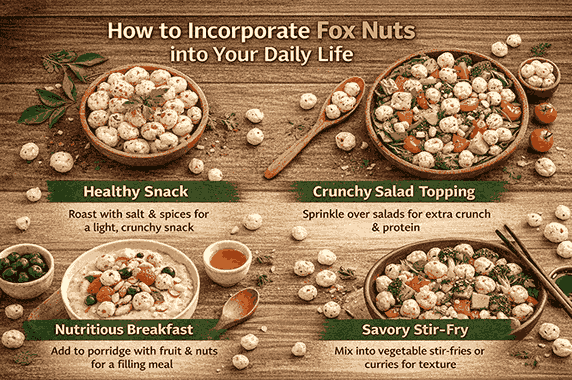
- The Savory Cracker: Pulse Fox Nuts in a food processor until they resemble coarse breadcrumbs. Mix with flaxseed meal and water, roll flat, and bake to create gluten-free crackers.
- The Dairy Substitute: Soak Makhana in warm milk overnight. The next day, blend them. This creates a surprisingly creamy base for vegan smoothies or “nice” creams, adding thickness and nutrients without the nutty flavor of almonds or cashews.
- The Dessert Topper: In Indian households, Makhana is often cooked in ghee and jaggery to make a simple dessert. This combination of healthy fat (ghee), iron (jaggery), and protein (Makhana) creates a satisfying and warming winter treat.
A Word on Quality and Preparation (fox nut)
Not all Fox Nuts are created equal. If you wander through the snack aisle, you’ll find them coated in “Masala” or “Creamy Onion” flavorings. While tasty, these often negate the health benefits by adding MSG, excessive sodium, and vegetable oils.
For optimal health benefits:
- Look for white or off-white puffs: A pure white color often indicates bleaching or excessive processing.
- Roast them yourself: Buy plain, dried Fox Nuts. Toss them in a pan with a teaspoon of ghee (clarified butter) and a pinch of black salt or cumin powder. This ensures you control the oil and sodium content.
- Store them properly: Because they are hygroscopic (they absorb moisture from the air), they can lose their crunch. Store them in an airtight jar immediately after opening.
Conclusion: The Timeless Crunch (fox nut)
In a world obsessed with novelty, the Fox Nut stands as a testament to the wisdom of our ancestors. It bridges the gap between the spiritual practice of fasting and the modern need for convenient, macro-friendly nutrition.
Whether you are an athlete looking for a post-workout recovery snack, a busy professional needing a desk-drawer staple, or simply someone seeking a lighter alternative to dinner-time nibbles, Makhana (fox nut)offers a solution that is both delicious and deeply nourishing.
So, the next time you reach for a bag of something crunchy, remember that little white puff. It’s not just a snack; it also carries a long history, valuable minerals, and a satisfying crunch that supports your health.
Have you tried roasting Fox Nuts with a unique spice blend?Tell us which flavor combinations you enjoy the most. Drop a comment below and share your Makhana magic with the community!
[…] packed with minerals, and part of traditional medicine for centuries. That’s the charm of the Fox Nut (also called makhana). In this post I’ll walk you through what science says about fox nuts and […]
[…] you’ve ever opened a bag of Fox Nuts, popped a few into your mouth, and thought, “Okay… now what?” — you’re not […]
[…] it works: Crushing Fox Nuts into crumbs gives you a crunchy coating that’s dramatically lower-fat than nut-based crusts, […]