

Introduction
If you’ve ever opened a bag of Fox Nut ( makhana) and thought, “Why is this sometimes perfectly crunchy… and other times weirdly chewy?”—you’re not imagining it. The magic isn’t in buying the “right” bag. It’s in roasting Fox Nut correctly at home, so every bite lands crisp, light, and toasty instead of stale or squeaky.
Here’s the twist most people miss: what we buy as makhana is already a popped/expanded kernel from the gorgon nut plant (botanically Euryale ferox). That means home roasting isn’t about “cooking it from raw”—it’s about driving off residual moisture and boosting flavor, like refreshing day-old chips in an oven.
And yes, you’ll see the naming confusion everywhere—“fox nuts,” “lotus seeds,” “water lily seeds.” Even official industry discussion notes that “gorgon nut” is the more accurate term and that the common labels can be misleading because they’re not the same botanical source. That confusion matters because it affects expectations: makhana roasts fast, goes from pale to toasted quickly, and needs gentle heat + movement.
Comparison
Home roasting Fox Nut is simple—but the “best” method depends on what you value: hands-off convenience, maximum crunch, or quick small batches.
Here’s a practical comparison, based on established Indian snack methods (stovetop roasting) and common modern alternatives (air fryer/oven).
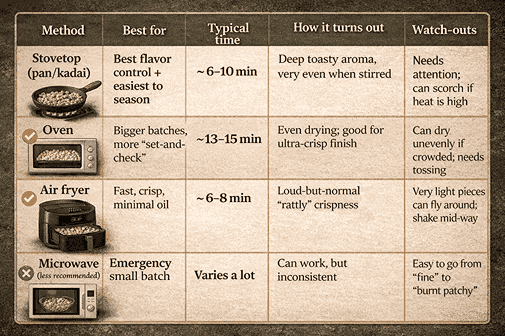
If you want the most reliable “blog-worthy” result, stovetop wins—because you can feel, hear, and smell the moment Fox Nut hits peak crunch (and you can season it without guessing timing). That’s why classic snack recipes emphasize pan-roasting first, then adding ghee/spices briefly.
Key Insights
What roasting Fox Nut is really doing
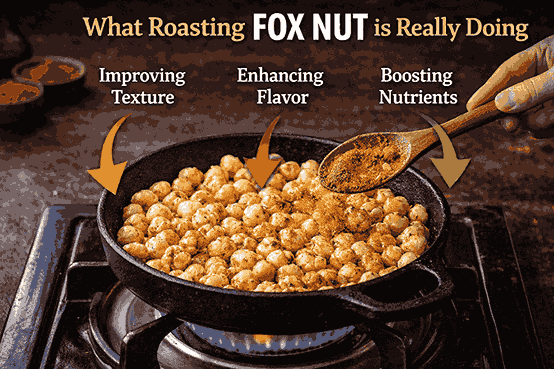
Think of Fox Nut as a tiny, airy starch-and-protein foam that’s already been puffed—so the goal isn’t browning like a cookie. The goal is moisture management + a little toasty chemistry.
Two research-backed ideas make this make sense:
- Moisture and “water activity” shape browning and texture. In many dry foods, the right low-moisture environment helps generate better roasted aromas and texture while avoiding steaming. Food chemistry literature on browning reactions emphasizes how moisture conditions influence reactions and sensory outcomes.
- Fox Nut/makhana is naturally very low in fat, and largely carbohydrate with moderate protein—so it won’t self-fry or self-brown the way peanuts or cashews do. Reviews of Euryale ferox commonly report high carbohydrate content with low fat content, which is one reason it’s so snackable and light.
That’s also why adding a little ghee or oil at the right moment works so well: fat helps carry spice flavor, improves mouthfeel, and lightly “lubricates” the surface so salt and masala actually stick. Traditional recipe methods repeatedly use this sequence—dry roast first, then add fat + spices briefly.
The foolproof stovetop roast method for Fox Nut
This is the method I recommend if you want that “store-bought flavored makhana” crunch—without the mystery additives or the uneven roasting.
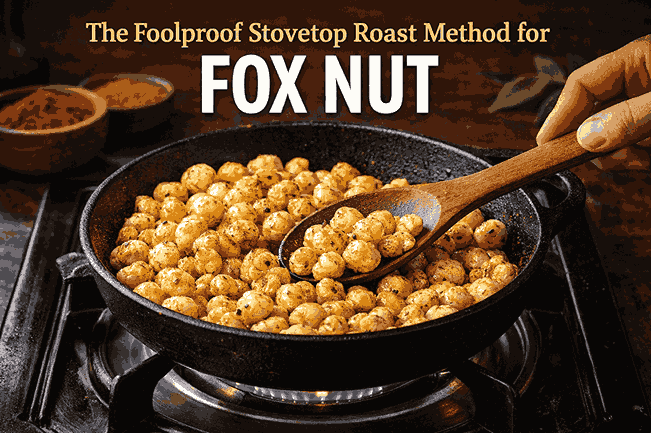
What you need (1 medium bowl / 3–4 cups Fox Nut):
- 3–4 cups Fox Nut (makhana)
- 1–2 tsp ghee or neutral oil (optional but highly recommended for seasonings)
- Salt
- ½–1 tsp spice blend of your choice (ideas below)
Step-by-step (with the cues that actually matter):
Warm the pan, then go low and slow.
Use a heavy pan/kadai and preheat it briefly. Add Fox Nut dry (no oil yet) and roast on low heat, stirring constantly, until it starts to feel lighter and sound slightly “hollower” as it tumbles. Many established recipes put this dry-roast window around 6–10 minutes depending on pan and batch size.
Do the crush test—don’t trust color.
Fox Nut can look almost the same before and after roasting. The more reliable test used in multiple home methods is: take one piece, cool it for a second, and press it between fingers.
- If it crushes or snaps easily, you’re close.
- If it bends or feels chewy, keep roasting.
This aligns with practical recipe guidance that defines “done” as crispness rather than significant browning.
Now add ghee/oil (quickly), then spices.
Once the Fox Nut is crisp, reduce heat to low (or briefly switch off), add ghee, and immediately add spices so they bloom for only a short moment. Then toss the roasted Fox Nut back in and stir to coat. Several standard methods follow this exact pattern to avoid burning spices while still getting even coating.
Finish with a short “set” roast.
After coating, roast another 2–5 minutes on low, stirring, just to set the seasoning and re-crisp the surface. Then cool completely before storing. This “second roast” is specifically called out in some classic snack approaches to ensure crispness after seasoning.
A small but game-changing insight:
If your Fox Nut tastes seasoned but still gets soft in 20 minutes, it usually means one of two things:
- You didn’t dry-roast long enough (moisture left inside), or
- You added fat too early and essentially “sealed” in steam.
Dry roast first. Fat second. Always.
Seasoning and storage that keep Fox Nut crunchy
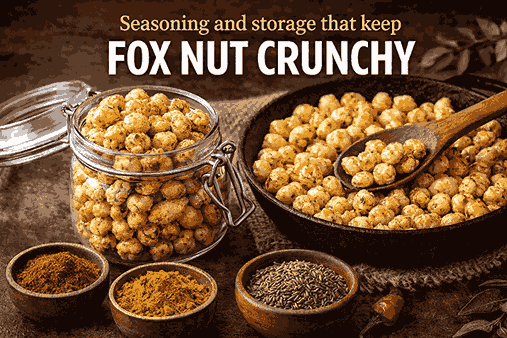
Seasoning logic (why some mixes flop):
Fox Nut is mild—so it loves bold flavors—but some seasonings burn or turn bitter if cooked too long. The safest approach is:
- Dry roast for crunch
- Add fat
- Add spices for seconds, not minutes
That’s exactly how many well-tested snack recipes structure it.
Here are three seasoning profiles that feel fresh (and actually stick):
Savory “Chaat-style” (classic but unbeatable)
- Salt + chaat masala + a pinch of red chili
This is a common, widely used flavor direction in established roasted makhana methods.
Pepper-turmeric “clean snack”
- Salt + black pepper + turmeric
This straighter, less tangy seasoning combo is also used in traditional-style snack preparations.
Sweet-leaning “cinnamon crunch”
- Ghee + pinch of salt + cinnamon + a dusting of powdered sugar after cooling
(If sugar goes into a hot pan, it can melt and scorch fast. Cooling first keeps it clean and clump-free.)
Storage (the part that decides if your work was worth it):
- Cool completely before sealing. Warm Fox Nut in a closed jar = trapped steam = soft snack.
- Store airtight, away from humidity. Crunch loss is often moisture-driven, even in low-fat snacks.
General food storage guidance for dry ingredients and nuts emphasizes moisture control and airtight containers to preserve quality.
If your kitchen is humid, a surprisingly effective trick is to store roasted Fox Nut with a food-safe desiccant pack (the kind that comes in many snack packages) outside direct contact with food, or simply roast smaller batches more often.
Conclusion
Roasting Fox Nut at home is one of those “small skills” that pays off fast: a 10-minute routine that turns an okay snack into a genuinely craveable one. The key is understanding what you’re doing—refreshing a popped kernel by driving off moisture, then adding fat + spices at the end for flavor and adhesion.
If you want a simple rule to remember, make it this:
Crunch is made in the dry roast. Flavor is locked in at the finish.
CTA:
Have you tried roasting Fox Nut at home—team plain + salted, or team masala everything? Drop your favorite seasoning combo in the comments, and if you want more snack-science posts like this, subscribe so you don’t miss the next crunchy obsession.
[…] Fox Nut Chivda (Spicy Trail […]
[…] short, think of Fox Nuts as a clean, portable fuel pellet: enough carbs to energize and enough protein/fiber to satisfy […]