

Today, many people want to avoid unhealthy chips and fried snacks. But the big question is — what is a healthy alternative? This is where phoolmakhana becomes a perfect choice. Light, crunchy, and packed with nutrition, phool makhana is not just a fasting food but a powerful superfood.
If you want to manage weight, support heart health, or control blood sugar, phoolmakhana deserves a place in your diet. In this article, we will understand what phoolmakhana is, its benefits, and how you can include it in your daily routine.
What Exactly Is PhoolMakhana?
Despite its trendy “superfood” label, phoolmakhana is anything but new. Derived from the seeds of the Euryale ferox plant—a species of water lily native to Asia—these seeds are harvested from stagnant water bodies, typically ponds and wetlands.
The process of turning a hard, dark seed into a light, crunchy snack is an art form. Traditionally, the seeds are roasted in a furnace at high temperatures. The heat causes the moisture inside to expand rapidly, causing the kernel to puff up—much like popcorn. This is why it’s often referred to as “fox nut” or “gorgon nut.”
In India, particularly in the state of Bihar, makhana cultivation is not just an agricultural activity; it is a legacy. For generations, farmers have waded through chilly waters to collect these seeds, a practice that is now being recognized by geographical indication (GI) tags to protect this indigenous crop.India is one of the largest producers of makhana, especially the state of Bihar, which is often called the hub of makhana production.
PhoolMakhana vs Regular Snacks (Comparison Table)
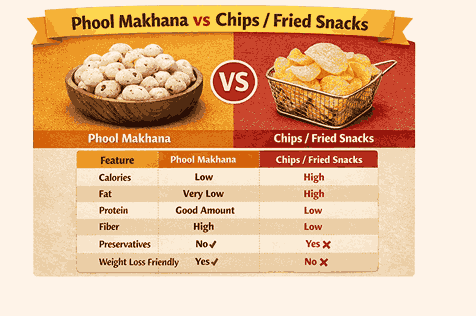
From this comparison, it is clear that phool makhana is a smarter snacking option.
10 Powerful Benefits of phool Makhana
1. Phool makhana Supports Weight Loss
Phool makhana is low in calories and high in fiber. It keeps you full for a longer time and helps control overeating.

If you go to the gym or follow a diet plan, roasted makhana can be a perfect evening snack.
2. Phool makhana Good for Heart Health
It contains low sodium and a good amount of magnesium, which helps in maintaining healthy blood pressure levels.

Regular consumption may support overall heart health.
3. Helpful for People with Diabetes
Phool makhana has a low glycemic index. This means it does not cause a sudden spike in blood sugar levels.
People with diabetes can include it in moderate amounts (consult a doctor if needed).
4. phool makhana Good Source of Plant Protein
For vegetarians, protein options can be limited. Phool makhana provides a decent amount of plant-based protein.
5. phool makhana Anti-Aging Properties
It contains antioxidants that protect the body from free radicals. This helps maintain healthy skin and may slow signs of aging.
6. phool makhana Strengthens Bones
Due to the presence of calcium and phosphorus, phool makhana can support strong bones.
7. phool makhana Beneficial During Pregnancy

It is a light and nutritious snack option during pregnancy. However, it is always best to consult a doctor before making dietary changes.
8. phool makhana Improves Digestion
The fiber content helps in better digestion and may reduce constipation problems.
9. Phool makhana Boosts Energy
Feeling tired in the afternoon? Instead of fried snacks, try a handful of roasted phool makhana for a natural energy boost.
10. phool makhana Perfect for Fasting
Phool makhana is widely consumed during fasting periods like Navratri. It is filling, light, and nutritious.
Nutritional Value of Phool Makhana (Approx. per 100g)
| Nutrient | Approximate Quantity |
|---|---|
| Calories | 350 kcal |
| Protein | 9–10 g |
| Carbohydrates | 75 g |
| Fat | 0.5 g |
| Fiber | 7–8 g |
| Calcium | Good Amount |
(Note: Exact values may vary depending on brand and processing method.)
Phool Makhana vs. The Modern Diet Culture
We live in an era of dietary extremes—keto, vegan, paleo. It can be exhausting trying to find a food that fits all these boxes. Interestingly, phool makhana stands out as one of the rare ingredients that meets almost every key nutritional and lifestyle need.
- Gluten-Free: Naturally, it contains no gluten, making it safe for those with celiac disease.
- Vegan: It is a plant-based product.
- Low Glycemic Index: For diabetics, this is crucial. The complex carbs in makhana break down slowly, preventing sudden spikes in blood sugar levels. According to the American Diabetes Association, incorporating low-GI foods is key to managing diabetes.
| Feature | Phool Makhana | Potato Chips | Almonds |
|---|---|---|---|
| Calories (per 30g) | ~100-110 | ~160-170 | ~170-180 |
| Fat Content | Low (Good Fats) | High (Unhealthy Fats) | High (Healthy Fats) |
| Primary Use | Snack/Thickener | Snack | Snack/Topping |
| Shelf Life | Long (if kept dry) | Moderate | Long |
| Cost Efficiency | Moderate | Low | High |
As the table shows, makhana sits perfectly in the middle. It is lighter than nuts (which can be expensive and calorie-dense) but infinitely healthier than processed chips.
How to Eat Phool Makhana?
1. Simple Roasted Snack
Roast in a small amount of ghee or olive oil. Add salt or black pepper for taste.
2. Makhana Kheer
Cook with milk and dry fruits to make a healthy dessert.
3. Makhana Chaat
Mix with chopped onions, tomatoes, and lemon juice for a healthy, tangy snack.
4. Powder Form
Grind into powder and mix with milk for children.
Why is Phool Makhana Becoming a Trending Superfood?
Today’s health-conscious generation prefers clean and natural foods over processed snacks. Plant-based and gluten-free foods are gaining popularity.
Phool makhana is:
- Gluten-free
- Vegan-friendly
- Low in fat
- Easy to digest
That is why many fitness trainers and diet experts recommend it as a healthy snack.
What to Check Before Buying Phool Makhana?
✔ Choose medium or large-sized pieces
✔ Color should be white
✔ No bad smell
✔ Should feel light and crunchy
Avoid makhana that looks yellowish, sticky, or smells bad.
Can You Eat Phool Makhana Daily?
Yes, but in moderation.
Around 30–50 grams per day is enough. Eating too much may increase overall calorie intake.
Conclusion: Is Phool Makhana Really Healthy?
The simple answer is — Yes.
Phool makhana is a natural, light, and nutrient-rich snack. It supports weight management, heart health, digestion, and blood sugar control.
If you want to avoid unhealthy snacks, start including phool makhana in your daily diet.
How to Buy and Store Makhana
With the rise in popularity, you will find phool makhana in almost every supermarket and online store. However, quality varies.
- The Crunch Test: Good quality makhana should be crisp. If you squeeze it and it feels rubbery or soft, it means it has absorbed moisture. Skip it.
- The Color: Look for a pure white or off-white color. Yellowish tints indicate age or poor processing.
- Storage: This is the most important part. Makhana is hygroscopic—it loves to absorb moisture from the air. If you buy a big pack, transfer it immediately to an airtight container. If they go stale, don’t throw them away! Just pop them in a hot oven for 3-4 minutes, and they will crisp right back up.
A Simple Recipe to Fall in Love
If you are ready to try phool makhana but don’t know where to start, here is my foolproof “Magic Masala Makhana” recipe that converts even the biggest skeptics.
Ingredients:
- A pinch of Asafoetida (Hing) – optional, but adds a garlicky depth.
- 2 cups Phool Makhana
- 1.5 tbsp Ghee or Coconut Oil
- 1/2 tsp Turmeric Powder
- 1 teaspoon red chili powder, or adjust according to your spice preference
- 1 tsp Mango Powder (Amchur)
- Salt to taste
Instructions:
- Heat a heavy-bottomed pan on low flame. Add the ghee.
- Add the asafoetida and makhana. Roast them gently, stirring continuously for 5-7 minutes. You may notice a light popping sound as they roast. They should become crispy but not burn.
- Turn off the heat. Now, add all the powdered spices (turmeric, chili, mango, salt).
- Toss well. The residual heat will cook the spices slightly without burning them.
- Let them cool completely before storing—they become crunchier as they cool.
Conclusion
Phool makhana is more than just a health trend. It is a testament to the wisdom of ancient food systems. In our rush to find the next exotic superfood from the Amazon or the remote islands of Indonesia, we often overlook the treasures growing in our own backyards.
It bridges the gap between taste and health, between tradition and modernity. Whether you are a fitness enthusiast counting macros, a parent looking for a healthy snack for your kids, or just someone who loves good food, I urge you to give this “popped lotus seed” a second chance.
Call to Action (CTA)
How do you like to eat phool makhana — roasted or in kheer? Share your thoughts in the comments.
If you want more healthy snacking tips, subscribe to our newsletter and share this article with others.
Makhana seeds are the seeds of the lotus plant that grow in water. They are commonly known as makhana or fox nuts. In India, the highest production of makhana seeds takes place in the state of Bihar.
[…] food for centuries, particularly during religious fasting periods. However, the modern iteration—FoxNutSnack—takes this humble ingredient and elevates it with gourmet seasonings, transforming it from a […]