Introduction:
The idea sounds tempting: eat a handful of makhana every day, and your skin will start looking clearer, fresher, and more radiant. It is the kind of claim that spreads fast because it is simple, hopeful, and easy to remember.
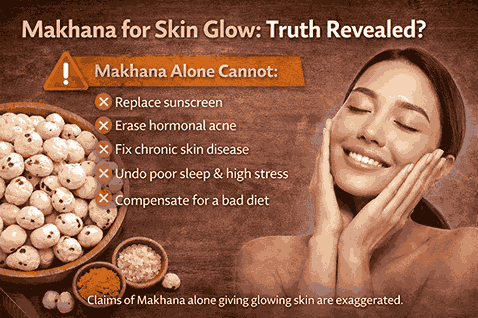
But skin does not work like a magic switch. A “glow” usually reflects a mix of factors: hydration, sleep, sun protection, hormones, stress, skincare habits, and overall diet. So the real question is not whether makhana is a miracle beauty food. The better question is this: can makhana support skin health as part of a balanced routine? Based on current nutrition and dermatology evidence, that is the more honest and useful answer. Reviews of fox nut nutrition describe fox nuts as a nutrient-dense food containing carbohydrates, protein, fiber, minerals, and polyphenols, while dermatology guidance emphasizes that healthy skin is supported by overall nutrition rather than one single food.
So yes, makhana may have a place in a skin-friendly diet. But no, it should not be sold as a direct shortcut to instant glow.
The Real Meaning of “Skin Glow”
When people say their skin is “glowing,” they usually mean one or more of these things:
- skin looks hydrated rather than dull
- texture appears smoother
- Irritation is lower
- The face looks fresher and less tired
- The overall complexion appears healthier
Dermatology sources consistently tie healthy-looking skin to broader lifestyle foundations such as balanced nutrition, hydration, gentle skin care, and sun protection. The American Academy of Dermatology says that if you are a healthy adult without deficiencies, the best way to get the nutrients your skin needs is from a well-balanced diet, not from chasing miracle supplements. Mayo Clinic similarly recommends healthy eating, hydration, and daily skin-protection habits for better skin appearance.
That is why makhana should be seen as one useful food in the bigger picture, not the whole picture.
Makhana vs Beauty Claims: Where the Hype Goes Too Far
This is where many articles get carried away. Some websites directly claim that makhana gives “radiant skin” or “anti-ageing glow,” but those claims often leap beyond what the strongest evidence actually proves. What research does support is that fox nuts contain antioxidant-related compounds and useful nutrients. What it does not clearly prove is that eating makhana alone will noticeably brighten your skin in a dramatic or guaranteed way.
That distinction matters.
A smarter, more credible claim is this:
Makhana may support skin health indirectly because it contributes antioxidants and fits well into a balanced, less-processed diet.
That is a strong statement because it is realistic.
What in Makhana Could Support Skin Health?
1) Antioxidants may help reduce oxidative stress
One reason makhana gets linked to skin glow is its antioxidant profile. Reviews of Euryale ferox describe the presence of polyphenols and other bioactive compounds, and lotus-seed research also highlights antioxidant activity in seed extracts. Oxidative stress is relevant to skin because it is associated with premature aging and visible damage over time. Nutrition-in-skin reviews note that antioxidants are among the dietary factors studied for their role in supporting skin health.
This does not mean antioxidants from makhana act like a cosmetic filter. It means makhana can contribute to an eating pattern that helps the body handle oxidative stress better.
2) Minerals matter more than people think
Skin health is not just about “glow foods.” It is also about whether your body has enough of the nutrients involved in repair, immunity, and barrier function. Broad nutrition guidance from the NHS and NIH notes the importance of minerals such as zinc and other micronutrients in normal body function, while nutritional dermatology reviews identify zinc and vitamins A, C, D, and E as key nutrients connected to skin health.
Makhana is not the only source of those nutrients, and it is not necessarily the richest one either. But as a minimally processed snack, it can help move your diet in a better direction than ultra-processed alternatives.
3) A better snack choice can improve the “skin environment”
Sometimes the skin benefit of makhana is less about what it adds and more about what it replaces.
If makhana replaces heavily fried chips, sugar-heavy biscuits, or refined packaged snacks, your overall diet quality improves. Mayo Clinic notes that diets high in refined carbohydrates and heavily processed foods may contribute to poorer skin-aging outcomes, while balanced eating supports overall skin appearance.
That is a practical point many people miss:
the glow benefit may come partly from upgrading your snack habits, not from makhana acting like a skincare treatment.
Comparison: Makhana vs Common Snack Choices for Skin-Friendly Eating
| Snack | What it often offers | Skin-friendly perspective |
|---|---|---|
| Fried chips | High palatability, easy to overeat | Often more processed and oily |
| Cream biscuits | Sugar + refined carbs | Low satiety and not nutrient-dense |
| Namkeen mixtures | Tasty and crunchy | Can be heavy in oil and salt |
| Makhana | Light, airy, easy to roast | Better fit for a cleaner snack routine |
This table does not mean makhana is “perfect.” It simply shows why it has earned a healthier reputation. Reviews describe makhana as nutrient-dense and rich in bioactive compounds, making it easier to include in a whole-food eating pattern than many heavily processed snack foods.
Can Makhana Directly Make Skin Glow?
Here is the truth revealed: not directly in the way social media often suggests.
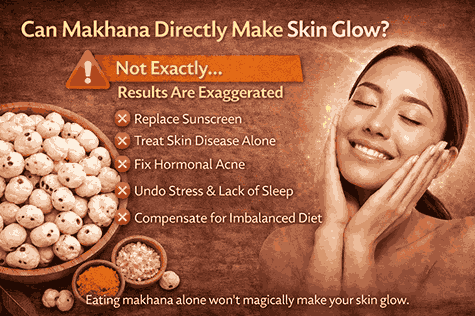
There is no strong dermatology evidence showing that eating makhana alone will reliably create a visible “glow” in the short term. However, it can support several background processes that influence how skin looks over time:
- It contributes antioxidants and polyphenols
- It may help you cut down on more processed snack options
- It fits into a balanced diet that supports skin health
- It is easy to eat without excess grease if prepared simply
So the honest answer is:
Makhana may support healthier-looking skin, but it is not a stand-alone glow hack.
A Fresh Perspective: Glow Is Usually a Pattern, Not a Product
This is where makhana becomes more interesting.
The real skin story is not about one snack. It is about consistency. People often search for a single “beauty food” because it feels easier than fixing five daily habits at once. But dermatology and nutrition guidance point in the opposite direction: skin responds best to patterns. Balanced food. Enough sleep. Sun protection. Hydration. Less smoking. Less stress. Gentle skincare.
In that pattern, makhana works well because it is simple. It is easy to roast, easy to portion, and easy to swap in for less helpful snacks.
That is why I would describe makhana not as a “skin-glow secret,” but as a smart support food.
Best Ways to Eat Makhana if You Care About Skin
If your goal is healthier-looking skin, the way you eat makhana matters.
Keep it light
Roasted makhana with minimal oil is a better choice than versions drenched in butter, sugar, or very salty seasoning.
Pair it with a balanced plate
Skin-friendly eating comes from combinations, not isolated foods. Pair makhana with:
- fruit
- yogurt
- nuts and seeds
- vegetables
- enough water through the day
Balanced-diet guidance from NHS and AAD supports this whole-diet approach rather than relying on one “miracle” ingredient.
Use it as a replacement, not an add-on
If you already snack a lot and just add makhana on top, that may not help much. Replacing a low-quality snack is often the smarter move.
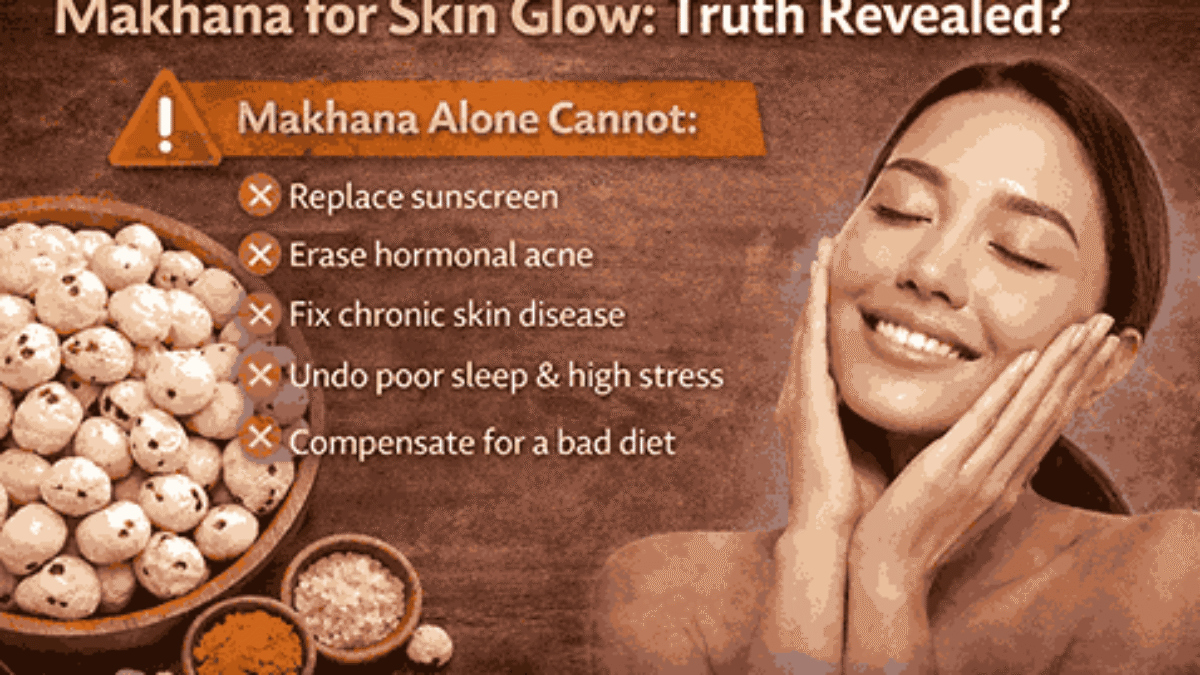
What Makhana Cannot Do for Your Skin
To keep this article credible, here is what makhana cannot realistically promise:
- it cannot replace sunscreen
- it cannot erase acne caused by hormones
- it cannot fix chronic skin disease on its own
- it cannot undo poor sleep and high stress overnight
- it cannot compensate for a badly imbalanced diet
If someone tells you makhana alone will make your face glow in a dramatic way, that claim is too strong.
Who May Benefit Most?
Makhana may be especially useful for people who:
- want a lighter evening snack
- are trying to reduce processed snacking
- want more variety in a balanced diet
- prefer simple foods over heavily fried options
The benefit here is practical: a cleaner snack routine may support better overall nutrition, and better nutrition can support healthier-looking skin.
Conclusion: Is Makhana Good for Skin Glow?
Yes, but with an important correction.
Makhana is not a magic beauty snack. It will not transform dull skin overnight or replace proper skincare. What it can do is support a more skin-friendly eating pattern thanks to its nutrient density, antioxidant-related compounds, and role as a better alternative to many processed snacks. That makes it useful, but not miraculous.
So if you enjoy makhana, keep eating it as part of a balanced lifestyle. Think of it as a quiet helper, not a glowing promise.
That is the real truth.
CTA
Have you tried adding makhana to your daily snack routine? Share how you like to eat it, and explore our other guides on makhana benefits, makhana nutrition, and healthy makhana recipes for more practical ideas.