
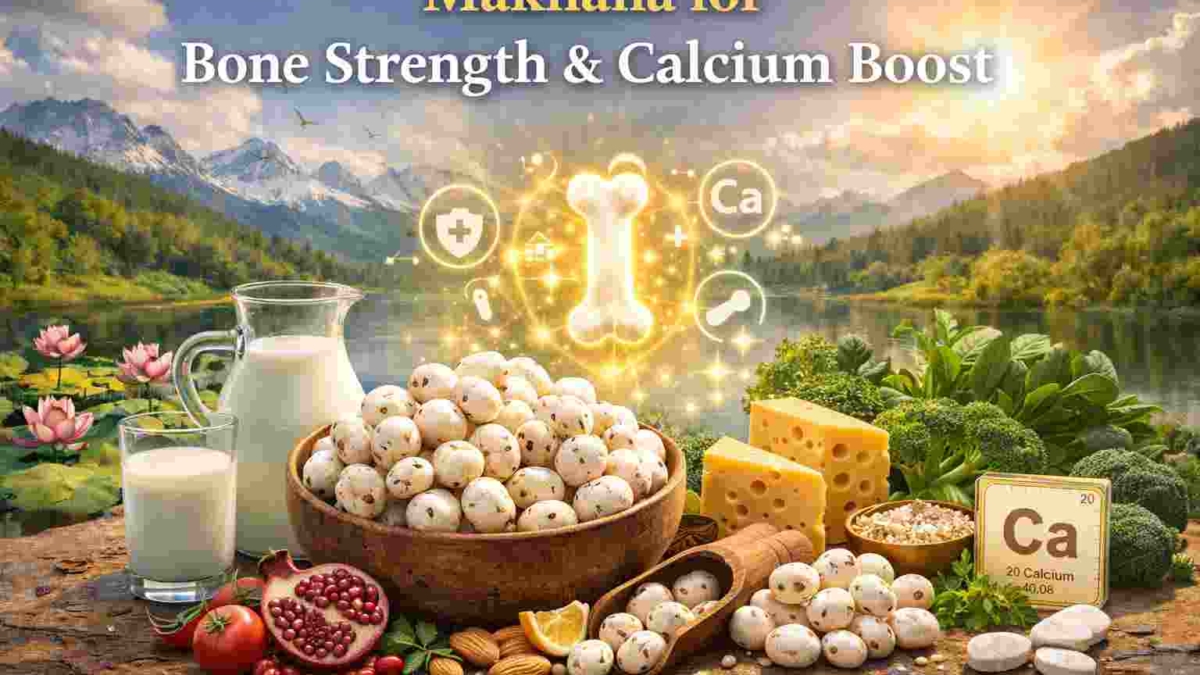
Makhana (also called fox nuts or lotus seeds) are popped, crunchy seeds from aquatic lotus plants. A popular snack in India, fox nuts offers more than just flavor – it’s packed with nutrients crucial for bone health. In fact, lotus seeds contain calcium, magnesium, iron and antioxidants that can support stronger bones and overall wellness. This superfood has been used in traditional diets for centuries, and modern nutrition science is now confirming its benefits. For example, one cup (about 32 g) of dried fox nuts delivers ~52 mg of calcium, which translates to roughly 163 mg per 100 g. Beyond calcium, fox nuts provides protein, fiber, phosphorus and magnesium – all of which work synergistically to strengthen bone structure. Let’s explore how makhana compares to other calcium-rich foods and why it’s worth adding to your diet for a calcium boost.
What Is Makhana?
Makhana (Euryale ferox) are the edible seeds of the prickly water lily. Also known as phool makhana (flower lotus seeds), they are harvested from ponds, sun-dried, and “popped” like popcorn to become a light, airy snack. Traditionally eaten during religious fasts and festivals, fox nuts are increasingly recognized as a nutrient-dense superfood. A 100 g serving of dried fox nuts provides about 347–356 kcal, with roughly 9.7 g protein, 76.9 g carbohydrates, 14.5 g fiber, and only 0.1 g fat. They are particularly valued for minerals: per 100 g, fox nuts delivers about 60–163 mg of calcium (depending on source), 67–70 mg magnesium, 188–200 mg phosphorus, and 500 mg potassium. (For reference, one cup of milk has ~300 mg calcium, while 100 g almonds have ~264 mg.) In short, fox nuts are a low-fat, high-fiber snack that packs significant bone-friendly minerals along with protein.
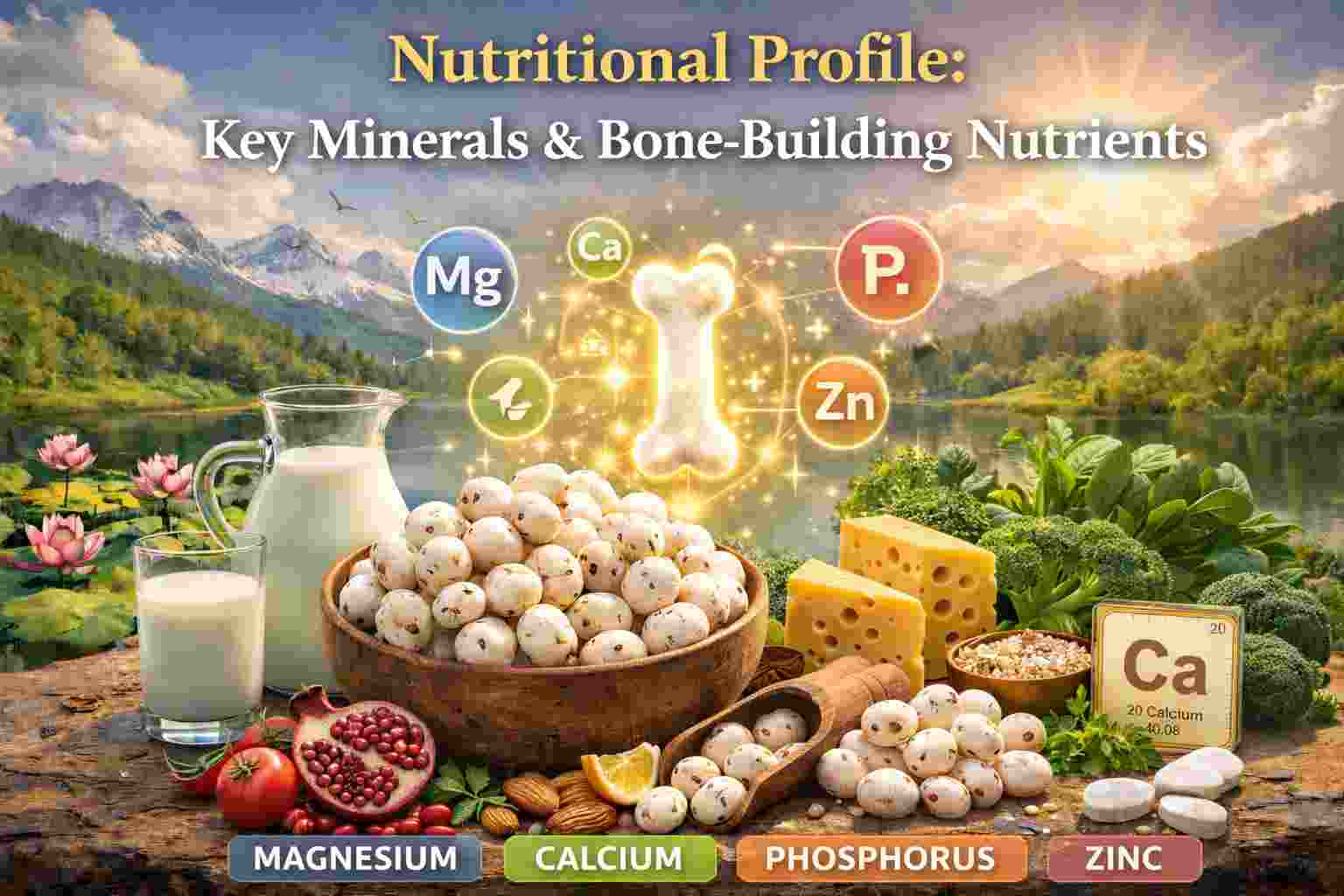
Nutritional Profile: Key Minerals & Bone-Building Nutrients
Makhana’s nutritional composition makes it a “mineral-rich” snack that can support bone health:

- Calcium: About 163 mg per 100 g of dried makhana (52 mg per 1-cup serving).
- Magnesium: ~67 mg per 100 g. Magnesium helps with calcium absorption and bone density.
- Phosphorus: ~188–200 mg per 100 g. Works with calcium to form bone mineral hydroxyapatite.
- Protein: ~9.7 g per 100 g. Provides amino acids needed for bone matrix.
- Fiber: ~14.5 g per 100 g. Aids nutrient absorption and gut health.
- Antioxidants: Contains flavonoids (like kaempferol), gallic and ellagic acid to reduce inflammation. Less inflammation can benefit bone health indirectly.
These nutrients mean makhana isn’t just empty carbs; it’s a wholesome snack. For example, Healthline notes that lotus seeds are “an excellent source of several important nutrients” including calcium, magnesium and phosphorus. Medanta’s nutrition breakdown similarly highlights makhana as low-fat, high-fiber and mineral-rich. In practical terms, snacking on makhana can help you meet part of your daily mineral needs. Just remember, while they supply some calcium, you’d need other sources to hit the full Recommended Dietary Allowance (1000–1200 mg/day for adults).
Calcium in Context: How Makhana Compares
It helps to see how makhana’s calcium stacks up against other foods. The table below highlights calcium in makhana and a few common sources:
| Food | Serving Size | Calcium (mg) |
|---|---|---|
| Makhana (dried) | 100 g | 163 |
| Almonds (raw) | 100 g | 264 |
| Sardines (canned) | 60 g | 240 |
| Kale (raw) | 50 g | 32 |
Compared to dairy products (e.g. milk has ~300 mg per cup) and fortified foods, makhana’s calcium is modest, but still meaningful as a plant-based source. Notably, some vegetables (like kale or broccoli) are touted for calcium, but their actual content can be lower and less bioavailable. For example, raw kale has only ~32 mg per 50 g (and much of that is bound by oxalates). By contrast, a 100 g serving of fox nuts supplies roughly half as much calcium as 240 g yogurt (which is ~300 mg) – quite impressive for a crispy snack. Moreover, fox nuts provides other bone-friendly minerals (Mg, P) and protein, making it synergistic for bone maintenance.
How Makhana Supports Bone Strength
Calcium is the star mineral for bone strength, and NIH notes that most of the body’s calcium is stored as bone mineral (hydroxyapatite). Makhana’s calcium contributes to this pool. Medanta emphasizes that “Makhana offers protection through its mineral-rich composition” – its calcium “betters bone density, reduces fracture risks & prevents osteoporosis, especially in older adults.”. In other words, regular intake of calcium-rich foods like fox nuts can help maintain bone mass as we age.
But makhana’s benefits go beyond raw calcium content. Its magnesium helps the body absorb and use calcium effectively. Phosphorus from fox nuts combines with calcium to form the very structure of bone tissue. This trio (Ca-Mg-P) is critical: without enough magnesium or phosphorus, even a calcium-rich diet can’t fully build strong bones. In addition, makhana’s protein and amino acids (like lysine) support the collagen matrix of bone. Its antioxidants (e.g. kaempferol) reduce inflammation, which may indirectly support bone remodeling and healing.
Emerging research is even exploring makhana’s direct impact on bone health. A recent clinical trial protocol outlines giving fox nuts supplements to postmenopausal women (a group at high osteoporosis risk) to see if bone mineral density improves. The researchers anticipate that makhana’s nutrients might raise serum calcium and vitamin D levels and lower parathyroid hormone (PTH), all favoring bone retention. While final results are pending, this reflects scientific interest in makhana as a functional food for bones.
Getting Creative: Makhana Recipes & Tips
Including makhana (fox nuts) in your daily diet is an easy, nutritious, and delicious way to improve your health.They can be enjoyed simply as a roasted snack or fused into meals. For example, you can dry-roast makhana with spices (salt, pepper, turmeric or chaat masala) for a crunchy, guilt-free snack that’s much lower in fat than popcorn or chips. Mixing them with nuts and seeds boosts the calcium content – try a trail mix of roasted makhana, almonds, and sesame seeds. A popular idea is makhana laddoo (energy balls): blend roasted makhana with jaggery, nuts (like cashews or almonds) and a touch of ghee. This “nutty sweet” is naturally calcium-rich and kid-friendly. In fact, as one health blog notes, “Makhanas are a storehouse of nutrition, especially calcium”, making laddoos and other treats a smart way to deliver bone nutrients.
Breakfast and beverages are other opportunities. Makhana kheer (lotus seed pudding) is made by cooking crushed makhana in milk and sweetener; it combines dairy and nuts for a double calcium boost. For a smoothie, try blending soaked, roasted makhana with milk (or fortified plant milk), almonds, dates and a banana – this makhana almond milkshake is ultra-creamy and calcium-packed. Even savory dishes work: toss roasted makhana into raita (yogurt dip) or chutney, or simmer them in a curry with spinach and tofu. The Economic Times highlights recipes from spicy makhana chaat to a makhana-sesame bar – all aimed at increasing calcium intake. Even a warm makhana soup (pureed with milk and mild spices) can make a soothing, bone-nourishing meal.
Tips for Maximizing Benefits
- Moderation: 30–50 g of makhana per day is a healthy snack portion. Overeating (like 100 g) could cause bloating.
- Combine with Vitamin D: For best calcium absorption, pair makhana with vitamin D sources (sunlight, fortified foods) to help the body use the calcium.
- Pair with Other Calcium Foods: Enjoy makhana alongside leafy greens, dairy or fortified products to meet daily calcium goals. For example, a yogurt-makhana salad or smoothie.
- Mind Oxalates: Makhana is low in oxalates, but many plant foods are not. If your diet has spinach or rhubarb (high oxalates), balance with makhana which offers calcium with fewer absorption inhibitors.
- Storage: Keep roasted makhana crisp by storing in an airtight container to preserve texture.
Conclusion
Makhana is more than a crunchy snack – it’s a natural, plant-based source of bone-building calcium and minerals. Incorporating a handful into your daily diet can support bone strength over time, especially when combined with other nutrient-rich foods. As research continues to explore makhana’s benefits, the evidence already highlights its value for bone health.
Try It Yourself: Have you tried makhana for its health benefits? Share your favorite makhana recipes or bone-boosting snack ideas in the comments below. Don’t forget to subscribe for more nutrition tips and easy recipes. Your bones will thank you!