
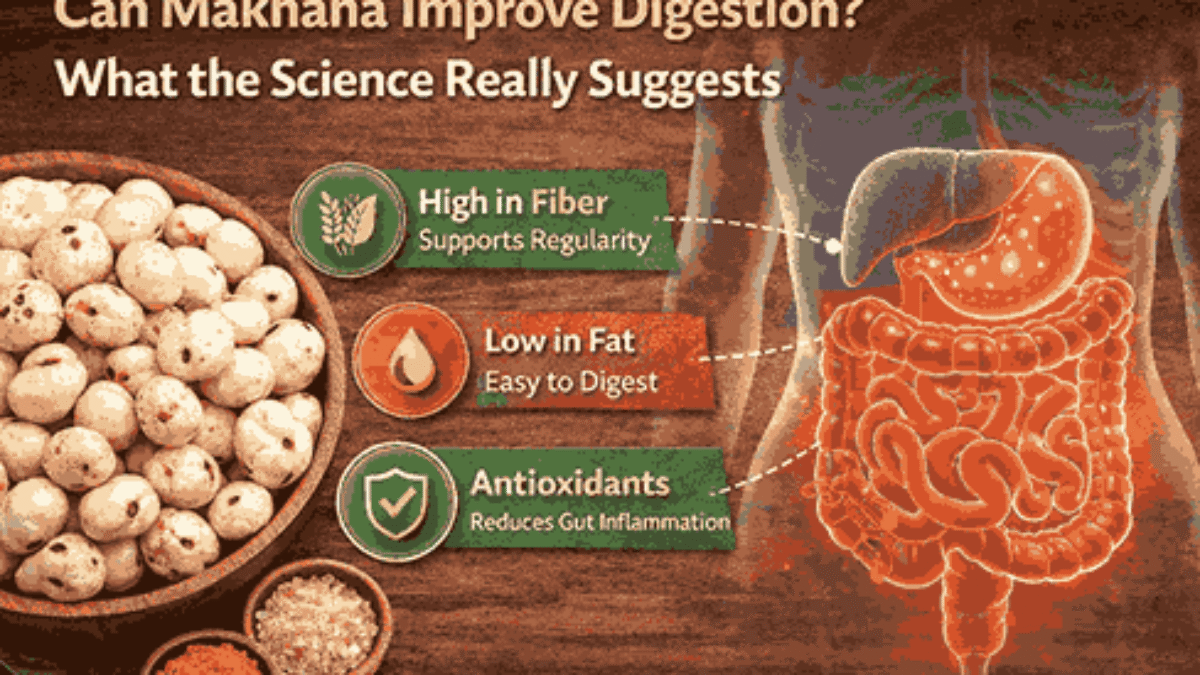
If your stomach feels heavy after regular snacks, makhana can feel like a small relief. It is light, crunchy, easy to season, and far less greasy than many packaged munchies. But can fox nuts really improve digestion, or is that just another healthy-snack claim?
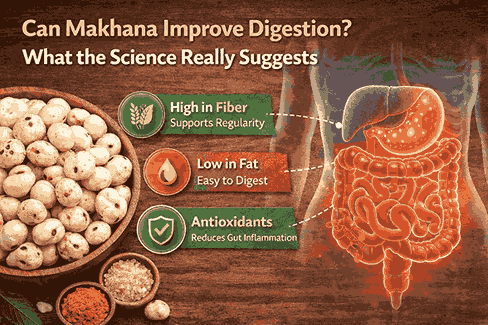
The honest answer is this: makhana is not a miracle fix for digestive issues, but it may support better digestion in a few practical ways. Research suggests fox nuts are low in fat, contain fiber, and may provide some resistant starch. Those qualities matter because fiber helps stool move more easily through the digestive system, while resistant starch can act like food for beneficial gut microbes. Low-fat foods may also feel gentler for people who struggle with heaviness after oily snacks.
That means the better question is not “Does fox nuts cure digestion problems?” but “Can makhana be a smarter snack choice for digestive comfort?” For many people, the answer is yes.
Makhana vs Typical Snacks: Why Digestion Feels Different
A lot of digestion trouble starts with the snack itself. Heavy namkeen, fried chips, overly spicy mixtures, and sugary treats can leave you feeling bloated, sluggish, or oddly unsatisfied. Makhana works differently because its basic profile is much simpler: low fat, decent fiber, and easy portion control. Research and industry summaries describe fox nuts as a low-fat, high-fiber food with strong protein digestibility.
Quick comparison table
| Snack | How it often feels after eating | Digestion-friendly angle |
|---|---|---|
| Deep-fried chips | Heavy, greasy, easy to overeat | Often harder on people who dislike oily foods |
| Sugary biscuits | Quick energy, low satiety | Not much fiber; easy to snack mindlessly |
| Spicy namkeen | Tasty, but can feel irritating for some | Salt, oil, and spice may not suit sensitive stomachs |
| Makhana | Light, airy, easier to portion | Low fat, some fiber, versatile seasoning |
This does not mean makhana works the same way for everyone. If you roast it in too much butter, drown it in masala, or eat a huge bowl too fast, even fox nuts can feel uncomfortable. Digestion is not only about the ingredient; it is also about quantity, cooking style, and your own triggers.
What in Makhana May Support Digestion?
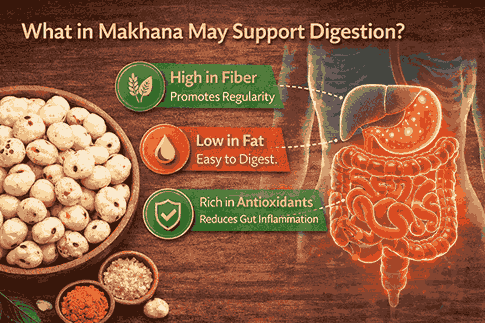
1) Fiber may help bowel regularity
One of the strongest reasons people link makhana with digestion is fiber. Lotus seed reviews report notable fiber content, and broad digestive-health guidance from NIDDK, NHS, and Mayo Clinic explains that fiber helps support bowel movement, adds bulk to stool, and lowers the risk of constipation when paired with enough fluid.
So if your usual snacks are low in fiber, replacing some of them with makhana can be a practical improvement.
Why this matters in real life
Many people do not have a dramatic “digestive disease.” They just deal with:
- mild constipation
- irregular bowel habits
- a heavy feeling after oily snacks
- random evening bloating from poor food choices
In that everyday context, a lighter, fiber-containing snack can make a difference over time.
2) Resistant starch may help feed the gut microbiome
A review on underutilized therapeutic foods noted that fox nut starch contains resistant starch. Resistant starch is important because it escapes digestion in the small intestine and reaches the colon, where gut microbes ferment it. Mayo Clinic Press and a 2024 review describe resistant starch as a type of fuel for beneficial gut bacteria.
This is one of the most interesting parts of the makhana story.
Why that is exciting
Resistant starch does not mean instant symptom relief. What it suggests is that fox nuts may fit into a gut-friendly eating pattern, especially when paired with other smart foods like curd, fruit, oats, or vegetables.
In simple words:
fox nuts may not “fix” your gut overnight, but it can play a supportive role in a digestion-friendly diet.
3) It is low in fat, which can feel lighter
Digestive comfort is not only about fiber. For many people, greasy foods are the real problem. NIDDK notes that fatty or greasy foods can worsen indigestion symptoms in some people. Since makhana is naturally low in fat, it often feels easier than fried snacks, especially as an evening option.
That “light” feeling is one reason makhana has such a strong word-of-mouth reputation.
4) Good digestibility adds to the appeal
Recent reviews describe makhana as having good protein digestibility and high starch digestibility, which supports the idea that it can be a practical, easy-to-use snack ingredient.
That does not make it medicinal. It simply means makhana is nutritionally easier to work into a balanced meal plan than many heavily processed alternatives.
When Makhana May Help Digestion Most
Makhana can be especially useful in these situations:
As a replacement snack
If you swap fried namkeen or chips for dry-roasted makhana, your stomach may feel less burdened simply because you reduced grease and improved snack quality.
For portion-controlled snacking
Makhana looks voluminous, so a modest serving can feel satisfying without the heaviness of oily snacks.
In a simple gut-friendly combo
Try makhana with:
- plain curd
- warm herbal tea
- fruit on the side
- a small homemade trail mix
The overall meal pattern matters more than one “superfood.”
When Makhana May Not Help
This is where many blog posts become too generic, so let’s be real.
Makhana may not help if:
- you eat it in very large amounts
- it is loaded with butter, chili, or excess masala
- you already have severe IBS, reflux, or chronic digestive symptoms
- your hydration is poor
- the rest of your diet is ultra-processed and low in fiber
Also, adding more fiber too quickly can increase bloating for some people. Public health guidance recommends increasing fiber gradually and drinking enough fluids so your body adjusts properly.
So yes, makhana can support digestion, but only inside a broader routine.
Best Ways to Eat Makhana for Digestion
Keep it simple
The more heavily flavored it becomes, the less “gentle” it usually feels.
Better options
- dry roasted with a pinch of rock salt
- lightly roasted with ghee and cumin
- makhana mixed with curd and herbs
- makhana chaat with cucumber and mint
Less helpful options
- extra-spicy peri peri style if spice triggers you
- too much oil or butter
- very sweet caramel-coated versions
- eating it late at night in a huge quantity
Chew it properly
This sounds basic, but it matters. Eating too fast can make even light snacks feel uncomfortable.
Pair it with water
Fiber works better when your overall fluid intake is decent.
A Fresh Perspective: Makhana Is Best Seen as a “Digestive Upgrade,” Not a Cure
One reason makhana is worth talking about is that it solves a modern problem: people want a snack that feels enjoyable without wrecking their stomach.
That is the real power of makhana.
It is not a medicine. It is not a guaranteed remedy for bloating. It is not a substitute for seeing a doctor if you have persistent constipation, reflux, pain, or IBS-like symptoms.
But as a digestive upgrade, it makes sense:
- lighter than fried snacks
- more useful than empty-calorie munching
- flexible enough for sweet or savory recipes
- easier to include in daily eating
In a world full of harsh, oily, ultra-processed snacking, makhana stands out because it feels simple.
And sometimes, simple is exactly what digestion needs.
Conclusion: Can Makhana Improve Digestion?
Yes—makhana may help support digestion, especially when it replaces greasy snacks and is eaten in a simple, balanced way. Its fiber content, possible resistant starch, low fat profile, and good digestibility make it a smart option for people who want lighter snacking and better digestive comfort.
The key is to keep expectations realistic.
Think of makhana as a gut-friendlier snack choice, not a magic digestive cure. Eat it in moderation, season it wisely, and support it with water, balanced meals, and regular movement.
That is where the real benefit begins.
CTA
Have you noticed that makhana feels lighter than chips or namkeen? Share your experience in the comments, and explore our other guides on makhana benefits, how to roast makhana at home, and makhana vs popcorn for more healthy-snacking ideas.