
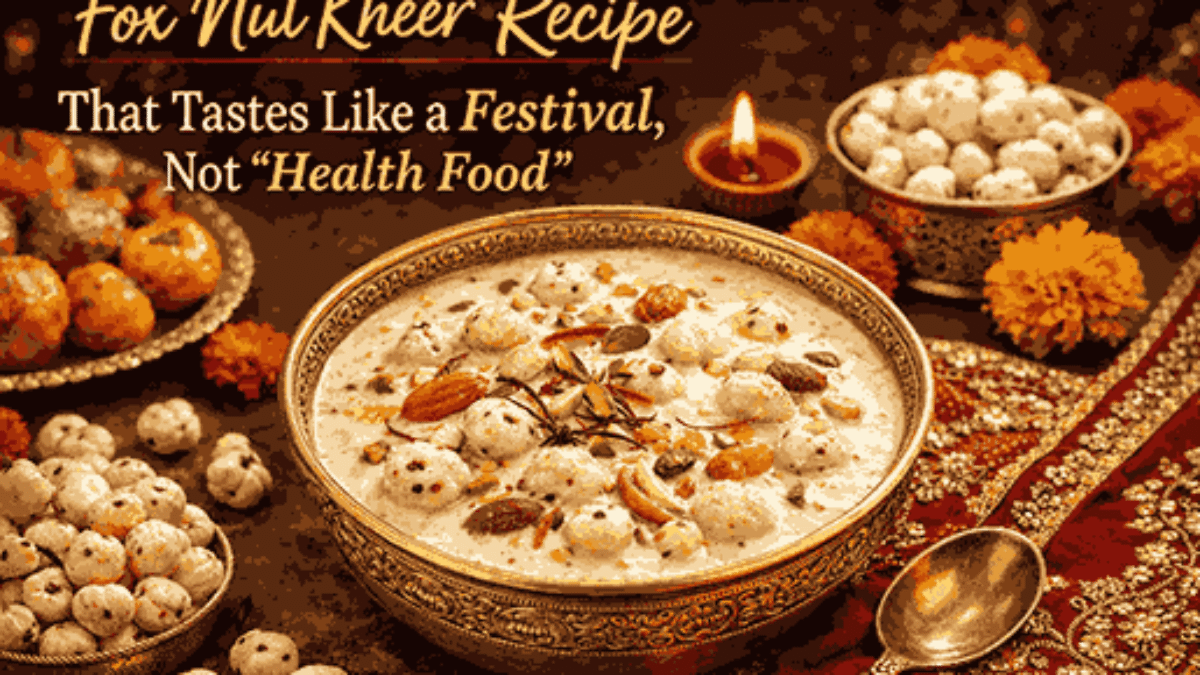
Introduction
The first time I tried making Fox Nut kheer, I expected “light and healthy.” What I got was… oddly spongy milk with floating puffs—not exactly the dreamy dessert I’d pictured.
Then I learned the real secret: Fox nuts (often sold as makhana or phool makhana) aren’t meant to be treated like rice or vermicelli. They’re (1) a popped aquatic seed, and (2) a starch-forward ingredient that needs roasting + a texture strategy to become truly luxurious.
Also, quick clarity that makes shopping easier: Fox nuts are the edible seeds of Euryale ferox, a prickly water-lily plant. They’re sometimes labeled “lotus seeds,” but that’s more of a marketplace habit than botanical precision.
And there’s a story behind that humble packet, too. In Bihar, makhana cultivation supports livelihoods for thousands of farmers and is marketed widely as popped makhana (makhana lawa).
Comparison
Kheer is basically “milk slow-cooked into comfort,” but the starring ingredient changes the experience. What I love about Fox Nut kheer is that it can feel as celebratory as traditional kheer while being faster and more forgiving—if you handle texture correctly. Many Indian home-cooking references also position it as a go-to sweet for fasting days (like Navratri), because it’s simple, gluten-free by nature, and doesn’t rely on grains in the same way rice kheer does.
Here’s a practical comparison you can use to decide which kheer fits your mood (and schedule):
| Kheer type | “Hero” ingredient | Typical effort | Texture | When it shines |
|---|---|---|---|---|
| Fox Nut kheer | Roasted makhana + milk | Quick (about 30–35 min) | Creamy with a nutty bite (if roasted well) | When you want “festival vibes” on a weeknight |
| Rice kheer | Rice + milk | Longer simmer | Classic thick pudding | When you want traditional comfort |
| Seviyan kheer | Vermicelli + milk | Medium | Silky, noodle-soft | When you want a lighter mouthfeel |
| Sabudana kheer | Tapioca pearls + milk | Medium | Glossy, chewy pearls | When you want something playful and very “vrat-friendly” |
If you’re building a content cluster on your site, Fox Nut kheer pairs beautifully with internal links like a snack post (Roasted Fox Nut snack) and a festive roundup (Navratri desserts).
Key insights
The ingredient isn’t “just a puff,” it’s a starch + protein seed
Official horticulture documentation describes makhana as low-fat but rich in carbohydrates and containing notable protein/mineral content; it’s also commonly used in milk-based foods like kheer.
That matters in the kitchen because it explains two things:
- Why it thickens milk so nicely (starch).
- Why it can turn soggy or bland if you skip roasting (it needs flavor development).
A food-science study on roasted fox nuts notes that roasting/seasoning were explored specifically to improve acceptability, and it reports a low glycemic index figure for roasted fox nuts in human subjects (important context: that’s for roasted nuts, not a sugar-sweetened milk dessert).
Buy Fox Nut like you’d buy nuts: freshness beats brand
Recipe developers repeatedly emphasize a simple rule: use makhana that’s fresh and not rancid—because stale packets make the kheer taste “flat,” no matter how much cardamom you add.
My quick freshness test (learned after wasting one too many batches): crush one Fox nut between your fingers.
- If it smells faintly sweet/neutral and snaps cleanly, you’re good.
- If it smells oily, “old,” or slightly bitter, save it for compost—not kheer.
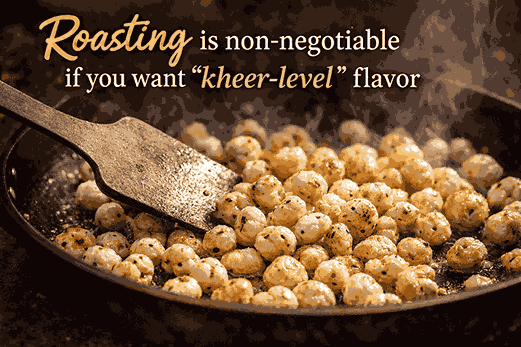
Roasting is non-negotiable if you want “kheer-level” flavor
In traditional methods, fox nut seeds go through heat processing and popping; state documentation even describes high-temperature stages in the popping process (including roasting at very high heat).
In home cooking, we’re not popping raw seeds—we’re working with already-puffed makhana—so roasting becomes your flavor lever:
- It drives off leftover moisture (less soggy texture).
- It adds toasted notes that make the dessert taste richer, even before sugar.
The “two-texture” trick that makes Fox Nut kheer feel expensive
This is my favorite fresh perspective—and the one that changed my results overnight:
Keep some makhana whole, and grind some into powder.
Why it works:
- Whole pieces give you that gentle “bite.”
- Powder works like a built-in thickener, making the milk feel naturally creamy (without needing condensed milk).
A well-known approach is to reserve a portion of roasted makhana, grind the rest (often with cardamom/saffron), and add it back for body.
Sweetener strategy: sugar warms, jaggery flatters, dates deepen
Sugar is the most predictable in milk desserts. But if you want a more “caramel-spiced” profile, jaggery or date paste can be stunning—with one important technique note: many cooks advise adding jaggery off the heat to reduce the risk of curdling.
A practical guideline from payasam/kheer troubleshooting is:
- Switch off heat (or cool slightly), then add jaggery syrup/paste.
(If you’ve ever had grainy kheer after using jaggery, this is usually why.)
A nutrition perspective that stays honest
You’ll often hear Fox nuts described as “nutritious,” and credible nutrition summaries back that up with minerals like magnesium, phosphorus, and potassium per serving.
At the same time, kheer is still a dessert. Whether you sweeten with sugar, jaggery, or dates, you’re making a celebratory bowl of milk + sweetness. My personal approach is to make it truly satisfying—so you don’t need a huge portion.
Fox Nut Kheer Recipe
This recipe aims for what most people actually want: thick, creamy kheer with a toasted-nut aroma—without feeling heavy or overly sweet.
Serves: 4
Time: ~30 minutes (active + simmer)
Ingredients
- 2 cups Fox nuts (makhana / phool makhana)
- 4 cups whole milk (full-fat gives the best texture)
- 1½–2 tbsp ghee (for roasting)
- ¼ cup sugar (adjust to taste) or jaggery/date paste (see notes)
- 3–4 green cardamom pods, crushed (or ½ tsp cardamom powder)
- Pinch of saffron (optional but “special-occasion magic”)
- 2–3 tbsp chopped nuts (almonds, cashews, pistachios) + raisins for garnish
- Optional: ½ tsp rose water or kewra (add at the end)
Method
Roast the Fox nuts properly
Warm ghee in a heavy pan over medium-low heat. Add Fox nuts and roast, stirring, until they feel lighter and crisp when pressed (about 5–7 minutes). The goal is toasted, not browned.
Personal cue I swear by: if your kitchen starts smelling faintly like roasted nuts (not popcorn), you’re there.
Build the “two-texture” base
Scoop out about ⅓ cup roasted makhana and set aside.
Grind the remaining makhana into a coarse powder. If you like, grind cardamom and a pinch of saffron along with it for stronger aroma distribution.
Simmer milk and thicken naturally
In a thick-bottomed pot, bring milk to a gentle boil, then lower to a simmer. Stir frequently so it doesn’t scorch.
Add the ground makhana powder and whisk gently. Simmer 10–12 minutes until the milk thickens.
Add whole Fox nuts for bite
Add the reserved whole roasted makhana. Simmer another 5–7 minutes until the pieces soften slightly but don’t disappear.
Sweeten and finish
Add sugar and stir until dissolved. If using saffron, you can rub strands between fingers and add now for better bloom.
If using rose water/kewra, add it only at the end, off heat, for a clean aroma.
Serve warm or chilled. Note: it thickens further as it cools—many recipes warn you to expect that.
Sweetener notes: jaggery or dates without curdling drama
If using jaggery:
- Finish simmering first.
- Switch off heat and cool 2–5 minutes.
- Add jaggery (or jaggery syrup), stir well, and avoid re-boiling.
If using date paste: Use the same “cool slightly, then sweeten” principle—several cooks recommend this to reduce curdling risk.
Variations that still taste like dessert
| Variation | What to change | Why it works |
|---|---|---|
| “Rich festival” Fox Nut kheer | Add a few tbsp of khoya/mawa near the end | Deepens creaminess and gives halwai-shop vibes |
| Vegan Fox Nut kheer | Use thick oat milk or soy milk; add ground nuts for body | Keeps it creamy even without dairy |
| “Nut-forward” | Increase almonds/cashews; lightly toast nuts in ghee first | Adds aroma and texture contrast |
Storage and serving
A common guideline across recipes is to refrigerate leftovers and enjoy within about a day for best texture.
If your chilled kheer becomes too thick, loosen with a splash of milk and stir gently while warming (low heat).
Conclusion
Fox Nut kheer is one of those rare recipes that can be both deeply traditional and quietly modern: a pond-grown seed with real cultural weight in Mithila, now marketed globally with protected identity as “Mithila Makhana” under India’s GI system.
That blend—heritage plus technique—is exactly why this dessert deserves more than a “healthy kheer” label. Roast boldly, thicken cleverly (powder + whole), and you’ll get a bowl that tastes like it belongs on a festive table.
CTA: If you try this Fox Nut kheer recipe, tell me your version—do you prefer saffron-cardamom, rose, or a jaggery twist? Share your tweaks in the comments, and if you’re building a makhana recipe series, link this post with your Roasted Fox Nut snack and festival dessert roundup to keep readers exploring.
[…] (makhana) – the popped lotus seeds often called makhana – have surged in popularity as a superfood snack. They’re naturally low in calories and fat, yet rich in protein, fiber and minerals. In fact, […]
[…] Euryale ferox) are the edible seeds of the water lily. Commonly known as makhana, lotus seeds, or phool makhana, they have a crunchy, popcorn-like texture when roasted. In India, they’re often eaten during […]